


Content last revised on June 25, 2026
LM201U05-SLL1: In-Depth Engineering Review of the 20.1" UXGA S-IPS Display
A Reference-Grade Panel for High-Stakes Visual Applications
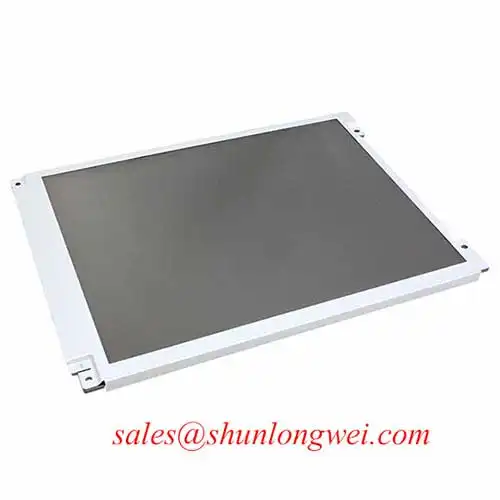
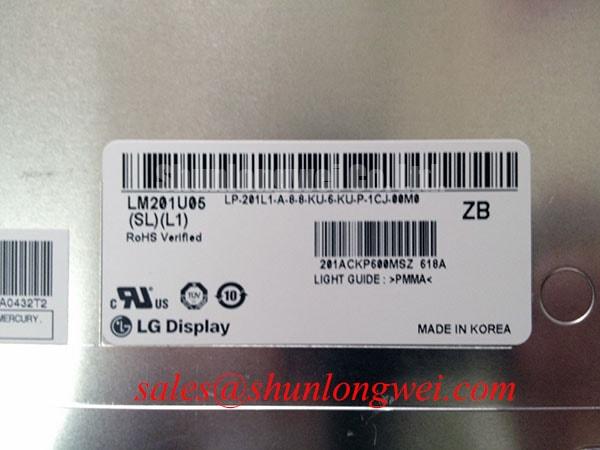
Engineered to deliver superior image fidelity and color consistency for critical viewing applications, the LG Display LM201U05-SLL1 is a high-performance 20.1-inch UXGA panel. It combines three core specifications crucial for professional environments: 1600x1200 Resolution | S-IPS Technology | 89/89/89/89 Viewing Angle. This feature set directly translates into two primary engineering benefits: it ensures diagnostic-level accuracy and significantly reduces operator visual fatigue during prolonged use. Its Super-IPS technology provides symmetrical 178° viewing angles, ensuring absolute image integrity from any perspective. For legacy medical imaging or Air Traffic Control (ATC) systems requiring a 4:3 aspect ratio without compromising on visual performance, the LM201U05-SLL1 is the definitive panel choice.
Key Parameter Overview
Decoding the Specifications for Visual Performance and System Integration
The technical specifications of the LM201U05-SLL1 are tailored for applications where visual detail and reliability are non-negotiable. The following table highlights key parameters and interprets their direct engineering implications for your design.
| Parameter | Value | Engineering Implication |
|---|---|---|
| Display Technology | a-Si TFT-LCD, S-IPS | Provides elite color accuracy and eliminates off-axis color and contrast shift, critical for multi-viewer or variable-position applications. |
| Resolution | 1600 x 1200 (UXGA) | Offers high pixel density in a 4:3 aspect ratio, enabling sharp, detailed visualization of complex data, schematics, or medical scans. |
| Brightness | 300 cd/m² (Typ.) | Ensures clear readability in typical indoor industrial and medical environments. |
| Contrast Ratio | 800:1 (Typ.) | Delivers deep blacks and bright whites, enhancing the clarity of grayscale images. Think of it as the difference between a faded newspaper photo and a professional glossy print; the high contrast makes every detail distinct. |
| Viewing Angle (L/R/U/D) | 89/89/89/89 (Min.) | Guarantees consistent image quality across a full 178° cone, which is essential for collaborative diagnostics or control room settings. |
| Signal Interface | LVDS (2 ch, 8-bit) | A robust and standardized LVDS Interface simplifies integration with a wide range of industrial motherboards and display controllers, reducing EMI concerns. |
| Operating Temperature | 0 ~ 50 °C | Suitable for deployment in controlled environments such as medical facilities, laboratories, and control rooms. |
Download the LM201U05-SLL1 datasheet for detailed specifications and performance curves.
Application Scenarios & Value
System-Level Benefits in Medical Diagnostics and Industrial Process Control
The LM201U05-SLL1 is not a general-purpose display; it is a specialized component designed for systems where visual information is the primary output. Its value is most evident in applications demanding uncompromising accuracy.
A prime engineering scenario is in the development or maintenance of a medical diagnostic workstation, such as a PACS (Picture Archiving and Communication System) review station. The challenge for engineers is ensuring the display can accurately represent grayscale medical images, like CT or MRI scans, in compliance with the DICOM standard. A lower-quality TN panel could exhibit contrast shifts when viewed from a slightly different angle, potentially masking subtle pathologies. The LM201U05-SLL1's S-IPS technology directly solves this problem. Its stable, high-fidelity image reproduction across all viewing angles gives clinicians the confidence to make accurate diagnoses, regardless of their viewing position. This panel is also a critical component for legacy Air Traffic Control (ATC) Console upgrades and high-resolution Industrial HMI applications where detailed schematics must be legible without error. For applications requiring a modern widescreen format, the related LM215WF3-SLA1 offers a Full HD alternative.
Industry Insights & Strategic Advantage
The Enduring Value of Legacy Formats in Long-Lifecycle Equipment
In a market dominated by widescreen formats, the 4:3 aspect ratio of the LM201U05-SLL1 represents a significant strategic advantage for specific sectors. High-value capital equipment in medical, aviation, and industrial automation often has a service life exceeding 15-20 years. Replacing or upgrading these systems is prohibitively expensive, not just in hardware costs but also in software redevelopment and recertification. The 4:3 aspect ratio acts as a "standard key" for these existing systems. Integrating a widescreen panel would require redesigning the graphical user interface and the mechanical enclosure—a complex and costly endeavor. By providing a form-fit-function replacement, the LM201U05-SLL1 allows engineers to extend the operational life of vital equipment, enhance its visual performance with modern IPS (In-Plane Switching) technology, and maximize the return on the original investment. This focus on Total Cost of Ownership (TCO) is a cornerstone of designing sustainable industrial systems.
Frequently Asked Questions (FAQ)
How does the S-IPS panel technology benefit multi-viewer environments like a surgical suite or control room?
S-IPS (Super In-Plane Switching) technology ensures that color and contrast remain exceptionally consistent even at extreme viewing angles. Unlike older TN panels where colors can invert or wash out when not viewed head-on, the LM201U05-SLL1 allows multiple team members to view the exact same high-fidelity image simultaneously, which is critical for collaborative decision-making.
What is the primary advantage of the 1600x1200 resolution in an Industrial HMI?
The UXGA resolution packs 1.92 million pixels into the display. For an Industrial HMI showing a complex process diagram (P&ID) or multiple data trend lines, this high pixel density allows for sharper text and finer details, reducing the need for zooming and panning. This enhances operator efficiency and minimizes the risk of misinterpretation.
Why is the 4:3 aspect ratio still relevant for certain system designs?
The 4:3 aspect ratio is crucial for backward compatibility. Many legacy industrial control systems, military applications, and medical devices were designed around this squarer format. Using the LM201U05-SLL1 allows for a direct panel replacement or upgrade without requiring costly and time-consuming changes to the system's software GUI or physical enclosure.
What considerations should be made for the CCFL backlight system in long-term applications?
The LM201U05-SLL1 utilizes a CCFL (Cold Cathode Fluorescent Lamp) backlight. While known for excellent color reproduction, CCFLs have a finite lifespan and require an inverter. For long-term system design, engineers should account for the specified backlight lifetime and ensure the system design allows for potential service or replacement of the backlight unit to maximize the equipment's operational life.
Does the dual-channel LVDS interface offer any advantages over a single-channel interface?
Yes, a dual-channel LVDS interface provides double the data bandwidth of a single-channel one. This is essential to support the high data rate required by the UXGA (1600x1200) resolution at a standard refresh rate. It ensures a stable, flicker-free image and is a standard for high-resolution industrial and medical panels.
An Engineer's Perspective on the LM201U05-SLL1
From a design engineering standpoint, the LM201U05-SLL1 is a problem-solver for a very specific set of challenges. It's the component you select when your project involves upgrading a piece of high-value legacy equipment and the primary mandate is to improve visual performance without breaking the existing software and mechanical infrastructure. Its combination of a classic form factor with reference-grade IPS display technology provides a direct, high-value path to extending system longevity and enhancing user effectiveness. It represents a low-risk, high-impact integration for mission-specific applications.