
Content last revised on August 28, 2026
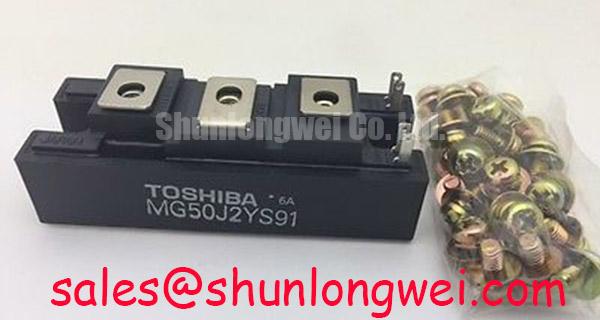
Toshiba MG50J2YS91 600V 50A IGBT Module: Engineering for High-Speed Switching Efficiency
The Toshiba MG50J2YS91 is a 600V 50A N-channel IGBT module engineered to minimize losses in high-frequency power conversion systems. With key specifications including a maximum collector-emitter saturation voltage of VCE(sat) 2.7V, this module is designed to reduce overall power loss and enable higher power density. For engineers focused on improving inverter efficiency, the MG50J2YS91 provides a robust solution through its optimized balance of low conduction losses and fast switching times. For high-frequency industrial applications up to 50A, the MG50J2YS91 is the optimal choice for balancing efficiency and power density.
Application Scenarios & Value
Achieving System-Level Benefits in High-Frequency Power Conversion
The MG50J2YS91 IGBT module is engineered for demanding applications where efficiency and power density are critical design drivers. For systems requiring robust performance under 600V and up to 50A, this module delivers significant value. What is the primary benefit of its fast switching speed? Reduced switching losses, enabling higher frequency operation.
A prime application is in Variable Frequency Drives (VFDs). In a modern VFD, high carrier frequencies are used to reduce motor noise and improve dynamic response. However, this increases Switching Loss , generating excess heat. The MG50J2YS91's fast typical fall time of 0.30 µs directly mitigates this challenge by minimizing energy loss during each turn-off event. This allows the VFD to operate more efficiently or at higher frequencies without requiring an oversized, costly heatsink, ultimately leading to a more compact and reliable motor control system. Similarly, its capabilities are highly valued in Uninterruptible Power Supplies (UPS) and high-frequency welding power supplies, where minimizing power loss translates directly to lower operating costs and enhanced durability.
For applications with similar voltage requirements, the BSM50GP60 may also be considered for design evaluation.
Key Parameter Overview
Decoding the Specs for Switching Performance and Thermal Stability
The technical specifications of the MG50J2YS91 are central to its performance in high-speed applications. A low saturation voltage and fast switching characteristics are key indicators of its efficiency. What does a low VCE(sat) signify? Lower conduction losses and improved system efficiency.
| Parameter | Symbol | Test Condition | Value (Max unless specified) | Engineering Significance |
|---|---|---|---|---|
| Collector-Emitter Voltage | VCES | VGE = 0V | 600V | Provides the necessary voltage margin for operation in 200/230V line-powered systems. |
| Gate-Emitter Voltage | VGES | VCE = 0V | ±20V | Defines the safe operating range for the gate drive circuit, ensuring device integrity. |
| Collector Current (DC) | IC | Tc = 25°C | 50A | Specifies the maximum continuous current handling capability under ideal cooling. |
| Collector-Emitter Saturation Voltage | VCE(sat) | IC = 50A, VGE = 15V | 2.7V | A low VCE(sat) directly reduces conduction losses, leading to higher efficiency and less heat generation. |
| Turn-On Time | ton | IC = 50A | 0.35µs (Typ.) | Indicates fast activation, which helps to minimize energy loss during the turn-on transition. |
| Turn-Off Time | toff | IC = 50A | 0.55µs (Typ.) | Critical for reducing turn-off losses, which often dominate at higher switching frequencies. |
| Thermal Resistance | Rth(j-c) | IGBT | 0.5°C/W | Represents the efficiency of heat transfer from the semiconductor junction to the case, vital for effective Thermal Management . |
Technical Deep Dive
A Closer Look at Switching Characteristics and Loss Mitigation
A deeper analysis of the MG50J2YS91's dynamic characteristics reveals its suitability for high-frequency designs. Total power loss in an IGBT Module is a combination of conduction losses (determined by VCE(sat)) and switching losses (determined by turn-on and turn-off events). This module strikes a deliberate balance between the two.
Think of switching loss like the fuel burned while accelerating and braking a car. The faster you can complete the acceleration (turn-on) and braking (turn-off), the less fuel you waste in transition. The MG50J2YS91's fast switching times are like having a highly responsive engine and brake system, minimizing the energy 'wasted' during each switching cycle. This efficiency allows designers to push operating frequencies higher to shrink the size of magnetic components like inductors and transformers, thereby increasing the overall power density of the final product without incurring a severe thermal penalty.
Frequently Asked Questions
How does the VCE(sat) of 2.7V max impact the thermal design of a power converter?
A lower VCE(sat) directly translates to lower power dissipation (P = VCE(sat) * IC) during the on-state. For a 50A load, this value minimizes heat generation, which can lead to the selection of a smaller, more cost-effective heatsink and improves the overall reliability of the system by keeping junction temperatures lower.
What is the significance of the integrated free-wheeling diode (FWDi) in the MG50J2YS91?
The integrated FWDi is co-packaged and optimized to work with the IGBT. This simplifies the circuit design by eliminating the need for an external diode, saving board space and assembly cost. More importantly, it ensures a well-matched diode for handling inductive load currents, which is critical for reliability in motor drive and inverter applications.
For which types of applications are the fast switching times of the MG50J2YS91 most beneficial?
Its high-speed characteristics are most advantageous in applications operating at higher switching frequencies (typically >10 kHz), such as high-frequency welding power supplies, switch-mode power supplies (SMPS), and VFDs aiming for high dynamic performance and reduced audible noise.
What are the key considerations for the gate drive circuit for this IGBT module?
A proper Gate Drive design is crucial. It should provide sufficient peak current to charge and discharge the gate capacitance quickly to achieve the specified switching speeds. It's also important to adhere to the ±20V VGES rating to prevent damage to the gate oxide layer.
Is the MG50J2YS91's package isolated, and what advantage does this offer?
Yes, the datasheet confirms that the mounting base is electrically isolated from the device terminals. This is a significant advantage as it allows the module to be mounted directly onto a grounded heatsink without the need for an additional, thermally-insulating pad. This simplifies assembly and improves heat transfer, enhancing overall thermal performance and system reliability.