
Content last revised on September 18, 2026
PDMB 200E6 Operational Boundaries: Evaluating AC Input Transient Overvoltage Clamping Limits
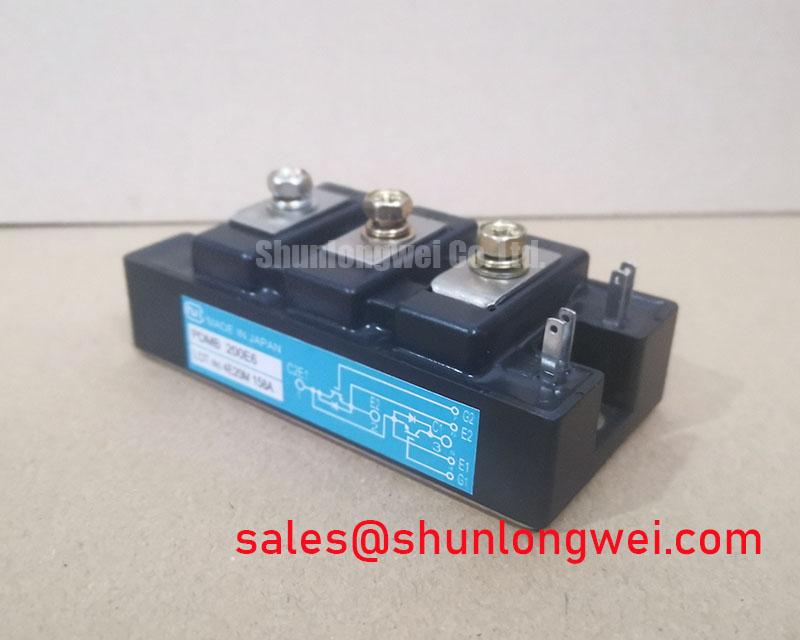
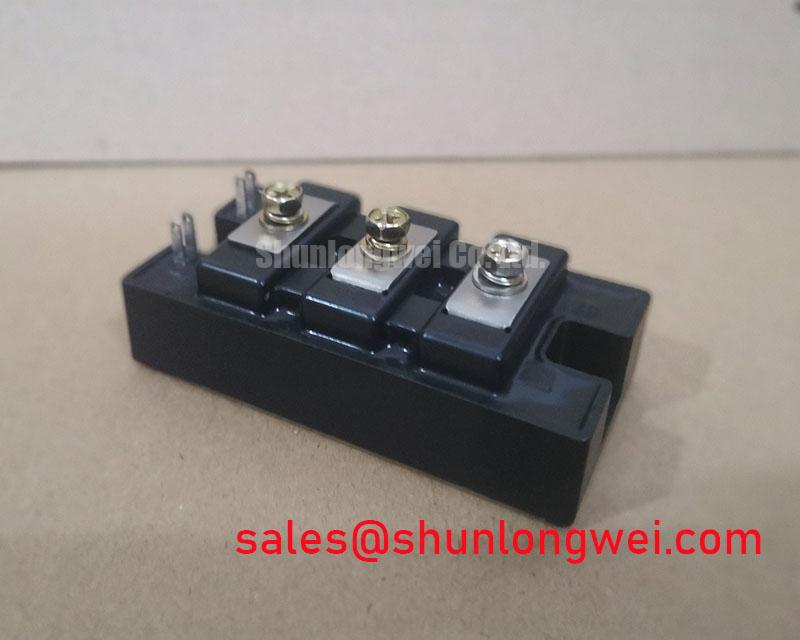
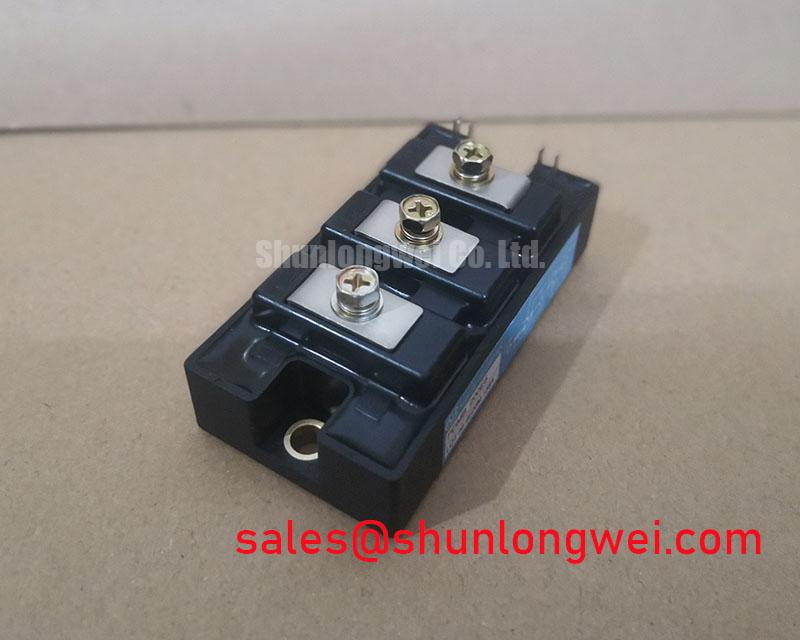
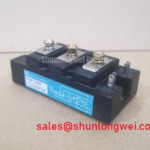
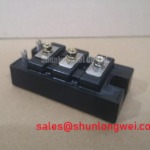
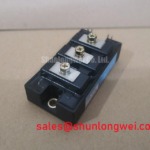
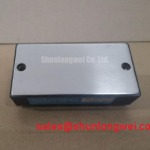
With the cabinet isolated and discharged, first compare the installed terminal layout and cold-state semiconductor junction measurements against the original circuit drawing before fitting PDMB 200E6. This SanRex, also known as Sansha Electric, thyristor/diode power module carries official ratings of 600 V and 200 A in a SanRex Power Module housing. Those two ratings establish the electrical identity of the part, but they do not by themselves confirm circuit function, terminal allocation, firing arrangement, fuse coordination, or heatsink compatibility. A repair decision should therefore begin with the equipment schematic and the original module documentation.
For an AC input rectifier or controlled power stage, the 600 V official voltage rating is the primary boundary to protect. In induction melting and hardening furnace supplies, incoming line disturbances, transformer leakage inductance, contactor operations, and commutation events can create transient conditions that require assessment at the assembled equipment level. The PDMB 200E6 should be evaluated only within the voltage limits stated by its official specification, with actual peak voltage verified at the installed terminals during representative operating conditions.
Metal oxide varistors and RC snubber networks are commonly reviewed ahead of thyristor junctions where surge suppression and commutation control are required. This is a Design Consideration, not a factory-specified accessory list for PDMB 200E6. The suppression network must be selected from the measured AC supply condition, topology, wiring inductance, and the surge environment addressed by the equipment design, including the relevant IEC 61000-4-5 test requirements where applicable.
Before energizing a repaired cabinet, inspect terminal hardware for discoloration, damaged threads, uneven contact surfaces, and evidence of conductor movement. Confirm that the upstream fuse type and its time-current and I²t characteristics are coordinated by the system designer with the protected circuit. No fuse I²t value, surge-current value, or mounting-torque value is asserted here as an official PDMB 200E6 parameter because those values are not included in the provided factory data.
⚠️ Field Alert: Isolate and verify discharge of all stored DC-link energy before removing or reconnecting the power terminals, then tighten hardware only to the equipment manufacturer’s specified torque.
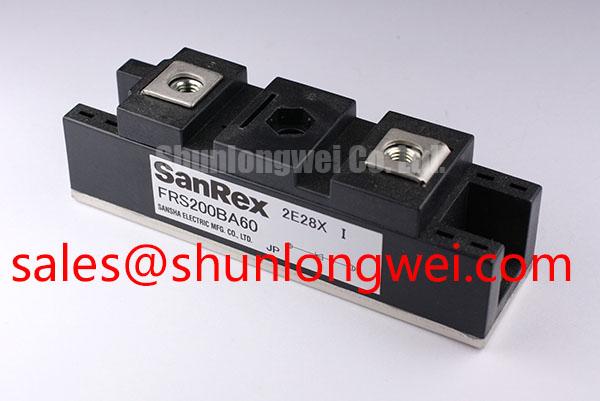
Where a repair requires comparison against another 200 A-class power part, the terminal map, semiconductor arrangement, thermal interface, and ratings must all be checked rather than relying on current rating alone. The FRS200CA100 can serve as a neutral reference point for documentation comparison, but it is not stated as a drop-in substitute for PDMB 200E6.
PDMB 200E6 Thermal-Electrical Optimization: Harmonic Current Injection and Line Filter Practical Tuning
The official 200 A current rating identifies the nominal current class of PDMB 200E6; it does not define a complete furnace power supply output, permissible overload profile, firing-angle envelope, or cooling requirement. In a phase-controlled rectifier, conduction changes as firing angle changes. That affects source current waveform, displacement power factor, reactive-power demand, transformer loading, and the heating of conductors, magnetic parts, and semiconductor assemblies.
During a service inspection, capture line current and DC output behavior while the furnace controller moves through its normal operating range. A distorted or unstable input-current waveform may involve firing synchronization, line impedance, transformer condition, filter connections, control-board reference integrity, or load variation. It should not be attributed to the module from one symptom alone. Engineers should compare measurements with a known-good machine or with the original commissioning records where those are available.
Line filter adjustment is an Engineering Recommendation that must remain at system level. The practical objective is to reduce undesirable conducted disturbance and excessive harmonic current without compromising the controlled rectifier’s commutation behavior. Filter capacitance, inductance, damping, and wiring arrangement depend on the supply network and firing control, so final values must be validated by the system engineer using installed measurements.
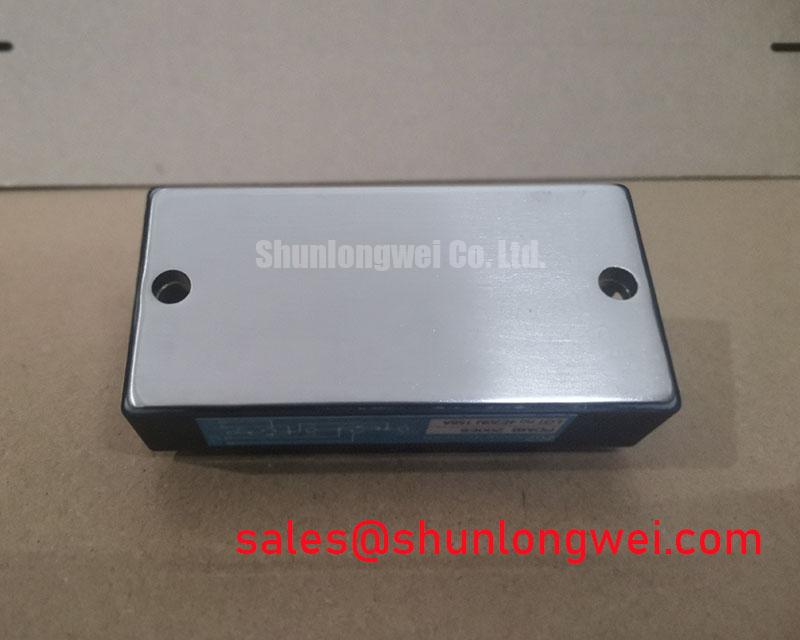
Check the heatsink interface whenever the module has been removed. A flat, clean mating surface and a continuous thin thermal compound layer help avoid localized contact variation. The original equipment documentation should govern clamping hardware and assembly sequence. If the system includes a separate front-end rectifying stage, a part such as PK55FG120 may be relevant to the wider power-path review, but it must be assessed according to its own datasheet and circuit role.
PDMB 200E6 Circuit Protection & Reliability: Calibrating Reverse Recovery Charge
Commutation performance in a thyristor/diode assembly depends on the actual diode and circuit conditions, including reverse recovery behavior, source inductance, temperature, current slope, and snubber response. Reverse-recovery peak current and recovery time are not provided in the stated official parameters for PDMB 200E6. They should therefore not be assumed, calculated from the 600 V and 200 A ratings, or used as fixed values for an EMI remedy.
A practical fault check begins with the supply locked out. Inspect the snubber capacitor and resistor connections, look for loose bus connections, and compare diode-path readings with the equipment schematic. When controlled testing is safe and appropriate, use an oscilloscope and properly rated probes to observe commutation voltage and current against the known-good signal path. Ringing or excessive switching disturbance may indicate a network, wiring, control timing, or layout issue requiring wider investigation.
This is a Design Consideration: minimizing the effective commutation-loop inductance can reduce inductive overshoot during turn-off, provided the complete circuit is tested to verify voltage margins against the DC-link and line conditions. Claims of standalone EMC compliance cannot be made for PDMB 200E6 because electromagnetic compatibility is determined by the complete equipment, enclosure, cables, filters, controls, and installation.
Current-measurement feedback deserves equal attention during power-stage troubleshooting. Hall, GMR, and TMR sensing technologies are often considered in industrial current-monitoring designs; background on the sensor physics is available through this GMR and TMR sensor reference. The installed sensor’s scaling, isolation arrangement, bandwidth, and controller interface must be verified from the original equipment design before any adjustment is made.
PDMB 200E6 Operational Boundaries: Preventing Localized Gate Hotspot Burnout Limits
Where PDMB 200E6 is used in a controlled thyristor circuit, gate-drive behavior must be checked from the original schematic and manufacturer documentation. The provided factory information confirms the module’s 600 V and 200 A ratings and SanRex Power Module housing, but does not provide gate-trigger current, gate pulse rise-time, holding current, latching current, or multi-pulse firing limits. Those characteristics must not be invented or inferred from the part number.
For a medium-frequency induction melting or hardening furnace power supply, examine whether the firing command reaches the expected terminal at the expected point in the sequence, while observing all applicable safety procedures. A missing or malformed firing pulse can arise from isolation transformers, pulse transformers, driver devices, controller synchronization, interlocks, connector contact, or the load-side commutation environment. Verify the signal path against the original circuit rather than treating the semiconductor assembly as the sole cause.
Multi-pulse firing and gate-drive conditioning are Design Considerations. Their acceptable timing, pulse energy, and repetition behavior are determined by the specific thyristor characteristics, supply waveform, controller architecture, and thermal conditions. The system integrator should verify these conditions using the original PDMB 200E6 documentation and the equipment-level test procedure.
For broader maintenance teams handling both power electronics and control displays, The Ultimate Guide to Industrial TFT LCD Technology provides related engineering context for evaluating industrial operator-interface hardware separately from the power module. PDMB 200E6 remains identifiable here by its official 600 V, 200 A, and SanRex Power Module specifications.