
Content last revised on December 2, 2025
TM080TDHG01-40: An In-Depth Engineering Review
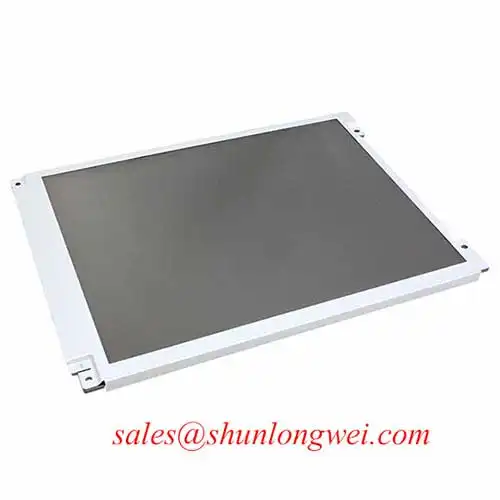
The TM080TDHG01-40 is an 8.0-inch a-Si TFT-LCD module from Tianma, engineered for robust performance in demanding visual applications. With key specifications of 1024x768 XGA resolution, a typical brightness of 400 cd/m², and a wide operating temperature range from -20°C to 70°C, this display balances high-resolution imagery with exceptional environmental resilience. Its core strengths lie in delivering consistent visual clarity and operational stability under fluctuating thermal conditions. The design prioritizes reliability, making it a strong contender for integration into long-lifecycle industrial and commercial equipment. For industrial HMI systems requiring consistent visual performance across a wide thermal spectrum, the TM080TDHG01-40 is an excellent engineering choice.
Key Parameter Overview
Decoding the Specs for Environmental Reliability
The technical specifications of the TM080TDHG01-40 underscore its suitability for industrial-grade applications where both visual performance and durability are critical decision factors. The combination of resolution, thermal tolerance, and optical quality provides a solid foundation for developing reliable human-machine interfaces.
| Parameter | Specification | Engineering Value |
|---|---|---|
| Panel Size | 8.0 inches | Compact form factor for space-constrained industrial panels and portable devices. |
| Resolution | 1024 x 768 pixels (XGA) | Provides sharp, detailed imagery suitable for complex GUI, data-rich dashboards, and diagnostic screens. |
| Brightness | 400 cd/m² (Typical) | Ensures clear readability in typical indoor industrial and commercial lighting environments. |
| Operating Temperature | -20°C to 70°C | Critical for systems deployed in non-climate-controlled environments, ensuring reliable startup and operation in cold factories or hot enclosures. |
| Storage Temperature | -30°C to 80°C | Enhances logistical flexibility and reduces risk of damage during transport or storage in extreme conditions. |
| Viewing Angle (CR≥10) | 80/80/80/80 (Typ.) | Delivers consistent image quality and color accuracy from wide, off-axis viewing positions, crucial for control panels accessed by multiple operators. |
| Contrast Ratio | 700:1 (Typical) | Offers distinct differentiation between blacks and whites, improving text legibility and image depth. |
| Interface | LVDS (1 channel, 6/8-bit) | A standard, low-noise interface that simplifies system integration and supports reliable data transmission. |
| Backlight Lifetime | 20,000 hours (Min.) | Indicates a long operational life for the WLED backlight, contributing to lower maintenance overhead and total cost of ownership. |
Application Scenarios & Value
Achieving System-Level Benefits in Industrial Environments
The TM080TDHG01-40 is optimally designed for applications where operational reliability cannot be compromised by environmental factors. For an engineer designing a Human-Machine Interface (HMI) for a factory floor CNC machine, the primary challenge is ensuring the display remains functional and readable whether the facility is cold on a winter morning or hot during peak summer operations. The display's broad -20°C to 70°C operating temperature range directly addresses this, guaranteeing stable performance without requiring complex and costly external heating or cooling systems. Its 1024x768 XGA resolution on an 8.0-inch screen provides the necessary pixel density to render intricate machine schematics and control menus with clarity, reducing operator error.
This display is a prime candidate for a range of systems, including:
- Industrial Automation and Control Panels
- Medical Diagnostic Equipment
- Point-of-Sale (POS) and Kiosk Systems
- Test and Measurement Instruments
- Transportation and Marine Displays
The robust thermal design and reliable visual characteristics make it a workhorse for these embedded applications. While this 8.0-inch model is ideal for compact interfaces, for systems requiring a slightly smaller footprint with higher resolution, the related TM070JDHG30 offers a 7.0-inch panel with 1280x800 resolution.
Technical Deep Dive
A Closer Look at the Engineering for Thermal Stability
The standout feature of the TM080TDHG01-40 is its ability to operate reliably across a 90°C thermal window. This isn't just a number on a spec sheet; it's a result of deliberate design choices in materials and components. Think of it like the difference between a standard consumer-grade smartphone screen and an automotive-grade dashboard display. While the former is designed for a comfortable 0°C to 35°C range, the latter must endure freezing nights and scorching days. The TM080TDHG01-40 is built with that same philosophy of resilience. The selection of liquid crystal fluid, driver ICs, and backlight components is optimized to maintain stable electro-optical properties—such as response time and contrast—at both temperature extremes. For an engineer, this translates to predictable performance and eliminates a significant failure point in systems deployed outside of climate-controlled rooms, directly impacting the product's field reliability and long-term service costs. For further reading, explore guides on reliable displays in heavy machinery.
Frequently Asked Questions (FAQ)
Engineering and Integration Insights
How does the -20°C to 70°C operating temperature benefit my industrial application?
This wide temperature range ensures your device can be deployed in harsh environments, such as unheated warehouses, outdoor-facing kiosks, or enclosed control cabinets with significant heat buildup, without the need for auxiliary thermal management. It guarantees reliable display startup in cold conditions and prevents performance degradation or damage at high temperatures, enhancing overall system robustness.
What is the significance of the 80/80/80/80 viewing angle for an HMI panel?
Symmetrical wide viewing angles mean that the image remains clear, and colors do not shift, even when viewed from significant off-axis positions—up, down, left, or right. In an industrial setting, where an operator might be standing, moving, or viewing the panel from a distance, this ensures that critical information is always legible, improving both safety and operational efficiency. You can learn more about display technologies in the ultimate guide to TFT-LCD.
Is the LVDS interface on the TM080TDHG01-40 suitable for high-noise environments?
Yes, the LVDS (Low-Voltage Differential Signaling) interface is inherently more resistant to electromagnetic interference (EMI) than single-ended interfaces like TTL RGB. Its differential nature helps reject common-mode noise, which is prevalent in industrial settings with motors, drives, and power supplies. This leads to a more stable and reliable video signal path, reducing the risk of data corruption or display flicker.
With a 20,000-hour backlight lifetime, what does this mean for total cost of ownership (TCO)?
A 20,000-hour minimum backlight lifetime translates to approximately 2.2 years of continuous, 24/7 operation before the brightness is expected to degrade to 50% of its initial value. In typical 8-hour-per-day industrial use, this extends to over 6.8 years. This longevity reduces the need for costly maintenance, panel replacements, and system downtime, directly lowering the total cost of ownership over the product's lifecycle.
Strategic Integration & Longevity
Designing for the Long Haul
Integrating the TM080TDHG01-40 into a system design is a strategic choice for long-term product reliability. Its adherence to standard form factors and interfaces like LVDS simplifies the hardware engineering process, while its proven thermal resilience and extended backlight life align with the expectations for industrial and medical equipment lifecycles. This focus on durability and stable performance ensures that the display will not be the weak link in a system designed to operate for a decade or more, providing a dependable visual interface that supports the core function of the end product without compromise. This approach is central to building devices that are not only functional but also economically viable over their entire operational lifespan.