

Content last revised on July 10, 2026
243NQ100 High-Performance Schottky Rectifier: Engineering for Peak Efficiency and Thermal Stability
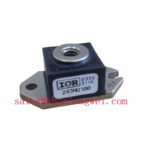
The 243NQ100 is a high-current Schottky rectifier engineered for maximum efficiency and thermal reliability in high-power conversion systems, achieved through its exceptionally low forward voltage drop and high operating temperature capability. This device delivers key specifications of **100V | 240A | Vf as low as 0.72V**. Its core engineering benefits include significantly reduced power loss and enhanced thermal reliability under demanding load conditions. The 243NQ100 is designed to minimize conduction losses, directly addressing the critical challenge of improving efficiency in high-current power supplies. For high-current SMPS output stages demanding minimal power loss, the 243NQ100 is the definitive choice for maximizing efficiency.
Application Scenarios & Value
Maximizing System Efficiency in High-Current Power Conversion
The 243NQ100 is engineered for deployment in high-stakes power systems where efficiency and thermal management are paramount. Its primary application is in the output rectification stage of high-current Switched-Mode Power Supplies (SMPS), where it excels at converting high-frequency AC to clean DC power. In this scenario, the engineer's primary challenge is minimizing power loss, which manifests as heat. The extremely low forward voltage drop (Vf) of the 243NQ100 directly confronts this challenge. A lower Vf translates to reduced conduction losses (Power Loss = Vf x If), leading to higher overall system efficiency, cooler operation, and the potential for a more compact thermal management system, such as a smaller heatsink. This performance is critical for systems designed to meet stringent energy efficiency standards.
Beyond SMPS, its robust characteristics make it an ideal component for:
- Redundant Power Systems: Used as an OR-ing diode to isolate power sources, its low Vf ensures minimal voltage drop and power waste in N+1 redundant configurations.
- Welding Power Supplies: The device's ability to handle high average forward current (240A) and large surge currents makes it highly suitable for the demanding, pulsed-load conditions found in modern welding equipment.
- Freewheeling Diodes: In converters and motor control circuits, it serves as a high-performance freewheeling diode, efficiently clamping voltage spikes from inductive loads.
For applications requiring a different package or current handling profile, devices such as the MBR60045CT may provide alternative solutions within a system design.
Key Parameter Overview
Interpreting the Specifications for Optimized Thermal and Electrical Performance
The performance of the 243NQ100 is defined by a set of specifications engineered for high-power environments. Understanding these parameters is key to leveraging the device's full potential in a design.
| Parameter | Value | Engineering Value & Interpretation |
|---|---|---|
| Peak Repetitive Reverse Voltage (VRRM) | 100 V | Provides a robust blocking capability, ensuring reliability and a sufficient safety margin in systems with nominal bus voltages like 48V, protecting against reverse bias conditions. |
| Average Forward Current (IF(AV)) | 240 A (at TC = 132°C) | This high current rating enables the device to be used in power conversion circuits for multi-kilowatt systems without requiring complex paralleling of multiple smaller diodes. |
| Forward Voltage Drop (VF) | 0.72 V (Typical, @ 240A, TJ = 125°C) | This is the cornerstone of the 243NQ100's high efficiency. This exceptionally low value directly minimizes conduction power losses. Think of it as electrical friction; the lower the friction, the less energy is wasted as heat during operation. |
| Operating Junction Temperature (TJ) | -55°C to 175°C | The ability to operate reliably at up to 175°C provides a significant thermal margin. This enhances system ruggedness, allowing for dependable performance under heavy electrical loads or in high ambient temperature environments. |
| Thermal Resistance, Junction-to-Case (RthJC) | 0.25 °C/W | This parameter quantifies how effectively heat is transferred from the active semiconductor to the device's mounting base. A low value like this simplifies thermal design by enabling more efficient cooling through the heatsink. |
Download the 243NQ100 datasheet for detailed specifications and performance curves.
Technical Deep Dive
A Closer Look at the Interplay Between Forward Voltage and Thermal Stability
The exceptional performance of the 243NQ100 is rooted in its Schottky barrier technology. Unlike standard PN-junction diodes, a Schottky diode uses a metal-semiconductor junction. This design intrinsically possesses a lower forward voltage threshold for current conduction. The engineering implication is profound: for every amp of current passing through the device, significantly less energy is converted into waste heat. This can be illustrated with a simple analogy: the low VF acts like a wider, smoother highway for electrical current. Compared to a standard diode's narrower road, there are fewer 'traffic jams' (resistance), so energy flows more freely as useful power instead of dissipating as thermal loss.
This inherent efficiency is directly linked to the device's high thermal stability. Because the 243NQ100 generates less heat internally, it operates cooler under the same load conditions compared to less efficient rectifiers. This gives designers a dual advantage: the high maximum junction temperature of 175°C provides a large safety margin, while the low heat generation ensures the device stays well below that limit during normal operation, dramatically improving long-term reliability and system lifespan.
Frequently Asked Questions (FAQ)
Engineering Questions on the 243NQ100
How does the 243NQ100's low forward voltage (Vf) benefit a power supply design?
Its very low Vf (typically 0.72V at 240A, 125°C) directly reduces conduction power loss (P = Vf * If). This results in higher power supply efficiency, less heat generation, a reduced need for bulky heatsinking, and ultimately allows for higher power density and lower operating costs.
What is the significance of the 175°C maximum operating junction temperature?
This high TJ rating provides a substantial thermal margin, making the device exceptionally robust. It ensures reliable operation under heavy electrical loads, in high ambient temperatures, or during unexpected thermal transients, thereby enhancing the overall ruggedness and lifespan of the end system.
Is the 243NQ100 suitable for paralleling to achieve higher current output?
While the 243NQ100 offers a high current rating of 240A, paralleling Schottky diodes requires careful design considerations. Due to the negative temperature coefficient of their forward voltage, thermal runaway can be a risk. Designers should ensure matched thermal and electrical paths and may need to consider slight derating to ensure balanced current sharing.
What design considerations are important when using the D-67 Half-Pak package?
The D-67 Half-Pak module is designed for excellent thermal performance via chassis mounting. Proper mounting is critical. This includes using a thermal interface material (TIM), ensuring a flat and clean heatsink surface, and applying the correct mounting torque to achieve the specified low thermal resistance and ensure efficient heat dissipation.
How does this Schottky rectifier compare to an ultrafast diode in an output rectification stage?
A Schottky rectifier like the 243NQ100 typically offers a much lower forward voltage drop (Vf) compared to an ultrafast silicon diode, resulting in superior efficiency for low-voltage, high-current outputs. While ultrafast diodes have excellent reverse recovery times, the near-zero reverse recovery of a Schottky makes it the preferred choice for high-frequency applications where minimizing both conduction and switching losses is critical.
As a distributor, we provide access to a wide range of electronic components. The information presented here is for technical reference and is based on publicly available documentation. For critical applications, we strongly recommend consulting the official manufacturer's datasheet. System designs should be validated by qualified engineers to ensure safety and performance.