Content last revised on September 21, 2026
1D200A-020 Installation Context and Identification
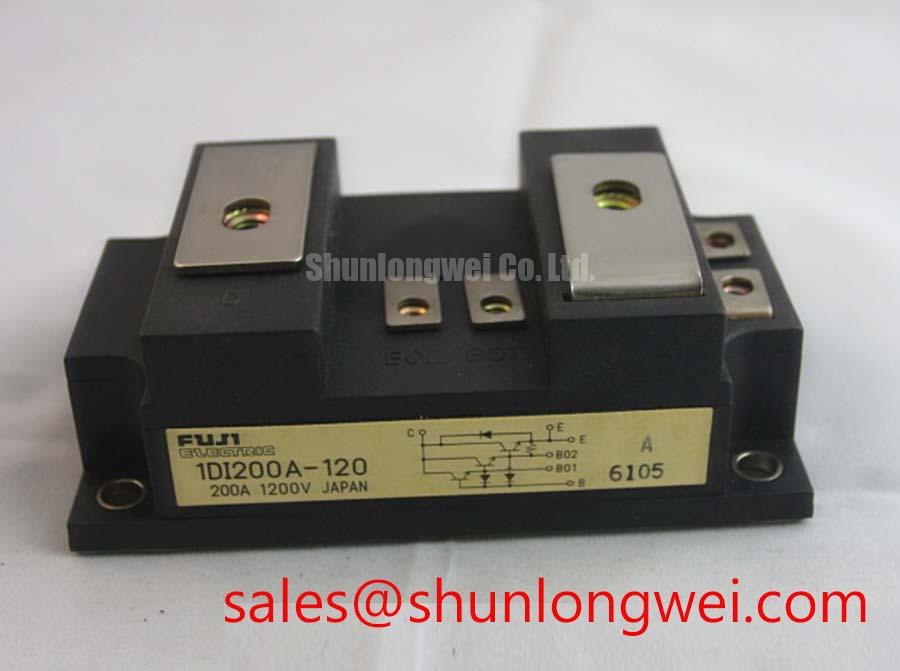
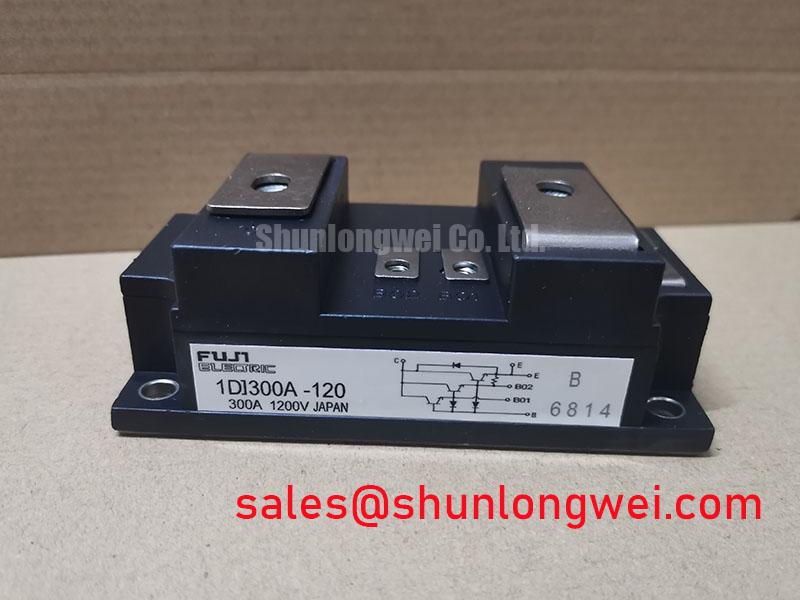
Before installation, verify that the equipment nameplate and service documentation identify 1D200A-020, then inspect the Fuji Power Module housing, terminals, mounting face, and connected buswork for mechanical distortion, contamination, or evidence of uneven contact. This unit is rated at 200.0 V and 200.0 A as specified ratings, and is identified as a Fuji Power Module diode module. These ratings define the electrical identity to preserve during repair evaluation, but they do not by themselves define a complete inverter, switching device, cooling assembly, or insulation system.
For a heavy duty variable frequency AC motor drive, the repair team should compare the installed electrical topology, switching-device interface, heatsink arrangement, and protection architecture against the original equipment documentation before fitting the module. Fuji Electric publishes broader module information through its Power Semiconductors Portal; equipment-specific documentation remains the controlling source for terminal assignment, operating conditions, and protection thresholds.
| Product model | 1D200A-020 |
| Manufacturer | Fuji Electric |
| Voltage rating | 200.0 V specified rating |
| Current rating | 200.0 A specified rating |
| Device type | Diode power module |
| Package | Fuji Power Module |
| Integration context | Evaluation for heavy duty variable frequency AC motor drives |
Assembly Integrity and Layout Architecture for 1D200A-020
A clean and stable thermal interface begins with the heatsink, not with the module terminals. Remove residual interface material using an approved cleaning process, inspect the mounting plane under suitable illumination, and check that no burr, raised fastener feature, trapped washer, or cable strain transfers force into the module body. A poor mechanical interface can increase thermal resistance, yet it can also introduce localized bending that makes later electrical diagnosis misleading.
Thermal interface material thickness should be controlled as a Design Consideration. A thin, continuous layer is generally used to fill unavoidable microscopic surface irregularities rather than create a thick insulating layer. Values in the 50 to 100 µm range are commonly discussed for suitable thermal compounds, but the selected material, flatness of the heatsink, mounting hardware, and original equipment service requirements determine the appropriate process. The installation team should avoid dry regions, trapped air, and excessive compound accumulation around the edges of the mounting area.
Where the heatsink surface has measurable curvature or prior service damage, replacing or reconditioning the mounting surface may be more reliable than attempting to compensate with excess thermal material. Baseplate contact should be assessed as an assembly relationship between the installed module and the actual cooling surface. It should not be inferred from an unrelated module family or generic package drawing.
Install mounting hardware in a cross pattern, progressing in small and even stages so contact pressure develops uniformly across the mounting face. The final tightening method and torque must follow the original equipment requirements and the applicable module documentation. ⚠️ Field Alert: Do not fully tighten one mounting point before the others, because uneven clamp loading can distort the contact plane and compromise heat transfer.
After assembly, inspect the busbar and cable routing before energization. The power path should remain mechanically supported, with no terminal being used to carry the weight or vibration load of a busbar. Design Consideration calls for compact, symmetric current paths where practical, because loop geometry influences commutation overshoot and electromagnetic coupling. Clearance and creepage distances must be verified against the complete drive voltage, enclosure contamination level, conductor geometry, and applicable system standards rather than assigned from the module voltage rating alone.
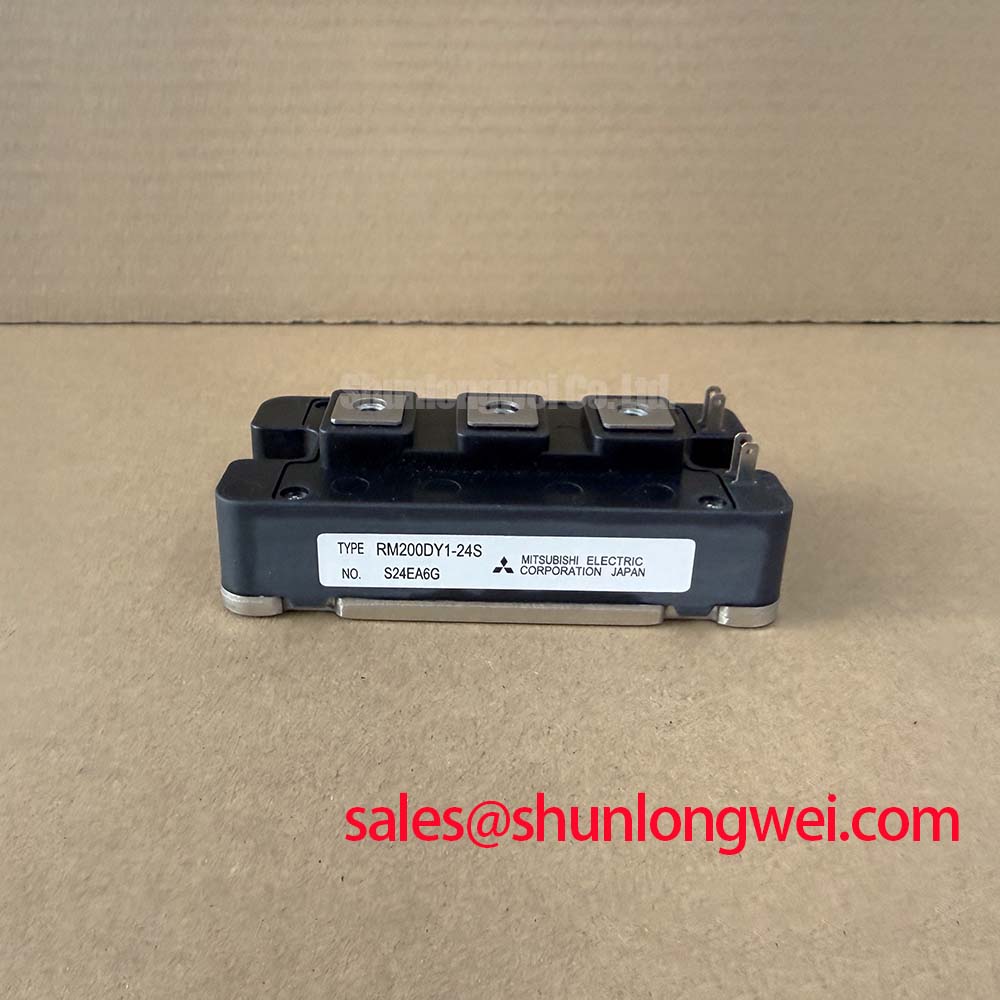
For repair comparison, engineers may also review the linked 3MBI50SX-120-02 as a separate power-module reference point. This link is not an instruction to substitute one module for another. Terminal arrangement, switching behavior, mechanical fit, internal circuit configuration, thermal path, and original driver compatibility must be validated at system level.
1D200A-020 Operational Boundaries and Commutation Control
The 200.0 V and 200.0 A ratings are specified ratings for the 1D200A-020. During service evaluation, these numbers should be checked against the DC link, load profile, current waveform, cooling condition, and protection response in the actual equipment. A module can be correctly rated on paper while the assembled drive still experiences excessive transient stress because of bus inductance, commutation layout, or a malfunctioning snubber and clamp network.
Because the 1D200A-020 is a diode module, it does not provide a gate-control interface. Its behavior in a drive depends on the surrounding switching devices, commutation path, applied reverse voltage, forward current, current slew rate, and cooling conditions. These system parameters must be taken from the original inverter circuit documentation and must not be transferred from a different Fuji Electric module merely because its current or voltage class appears similar.
Design Consideration is to keep high-current power paths compact and to control the commutation loop wherever the original terminal and circuit arrangement supports that approach. During high-rate current transitions, parasitic inductance can produce voltage overshoot across the diode and connected switching devices. A disciplined power layout, suitable snubber or clamp network where specified by the drive design, and appropriate protection margins help reduce sensitivity to this mechanism.
When investigating suspected commutation problems, capture the diode voltage and current waveforms with measurement equipment appropriate for the drive’s voltage environment. Compare operating and fault waveforms with a known-good channel or a documented reference condition. Unexpected ringing, overshoot, or reverse-current behavior may indicate layout inductance, snubber deterioration, a switching-device issue, a busbar connection problem, or measurement-probe interaction. It should not be assigned to a single cause without measurement.
Protection monitoring should also be inspected if the original drive uses overcurrent, overvoltage, desaturation, or other power-stage protection methods. Such protection is a system function, not an official specification of the module stated here. Its threshold, blanking behavior, shutdown response, and coordination with the switching devices need verification against the equipment controller documentation. A protection circuit that reacts too late, reacts spuriously, or no longer provides controlled shutdown can expose the power stage to conditions that static continuity checks will not reveal.
💡 Pro Tip: Keep DC bus conductors physically compact and symmetric around the commutation path, then verify switching peak margins with controlled operating tests under the actual drive conditions.
Transient Dynamics and Electrical Design for 1D200A-020 Insulation Integrity
Do not assume a reinforced isolation voltage capability, a specific galvanic barrier rating, or a common-mode transient immunity figure for the 1D200A-020 unless these values are confirmed in applicable Fuji Electric documentation for the exact product. The stated specifications are 200.0 V, 200.0 A, and the Fuji Power Module package. System insulation performance depends on the complete power stage, including the module mounting arrangement, switching-device and driver isolation barriers, current sensors, control power supplies, PCB layout, enclosure, and cable interfaces.
For equipment repair, inspect isolation components and wiring routes that bridge the power and control domains. This includes gate driver transformers or isolated power supplies where present, optically isolated interfaces where present, insulation sleeves, mounting hardware, and contamination around high-voltage nodes. Carbonized residue, conductive dust, coolant leakage, and damaged insulation barriers can change the behavior of the complete drive even when the module passes basic static checks.
Design Consideration is to preserve physical separation between switching nodes and sensitive control circuits, particularly around gate-driver inputs, current-feedback paths, and fault-sensing lines. The system engineer should validate immunity against the actual common-mode voltage transition and noise environment using the finished inverter assembly. It is not valid to represent a discrete power module as independently compliant with whole-equipment EMC standards.
Fuji Electric’s Power Semiconductor and IPM Modules information provides useful manufacturer context for power semiconductor product families. For the 1D200A-020, maintenance decisions should remain anchored to the verified 200.0 V and 200.0 A ratings, the documented Fuji Power Module package, and measured compatibility with the existing heavy duty variable frequency AC motor drive.