
Content last revised on January 24, 2026
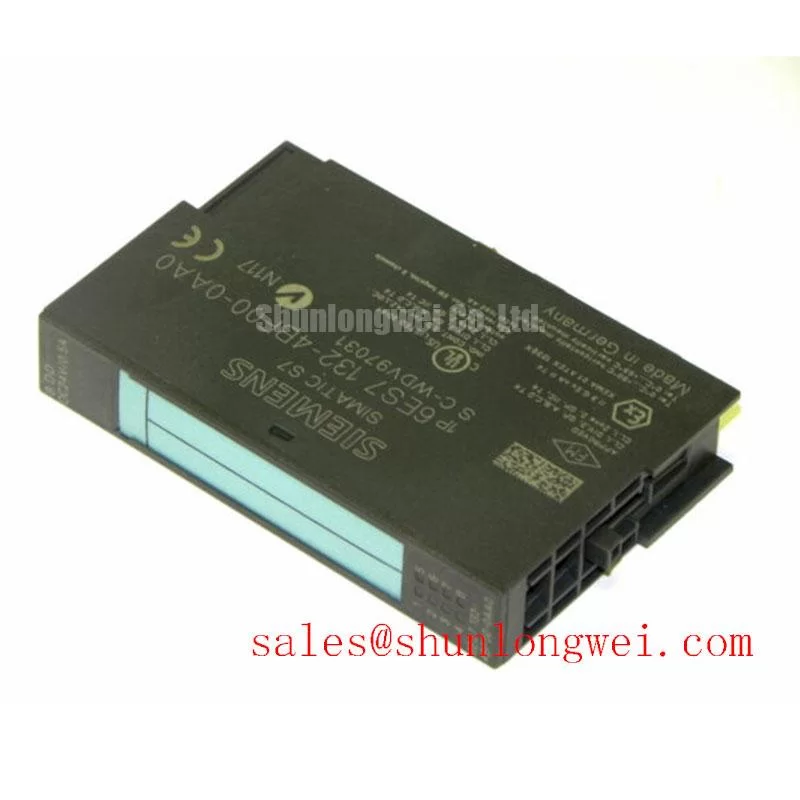
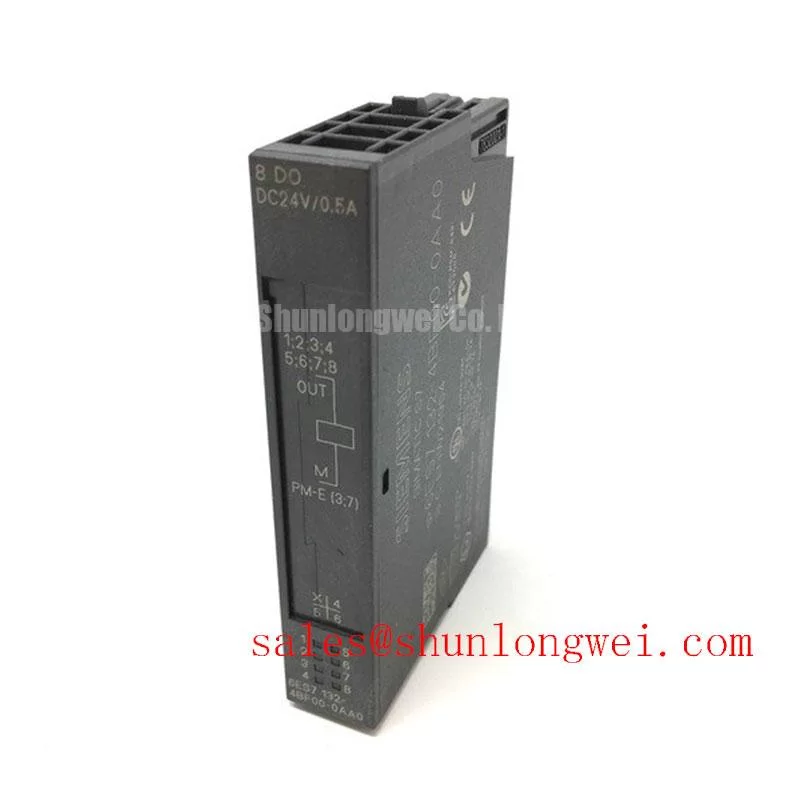
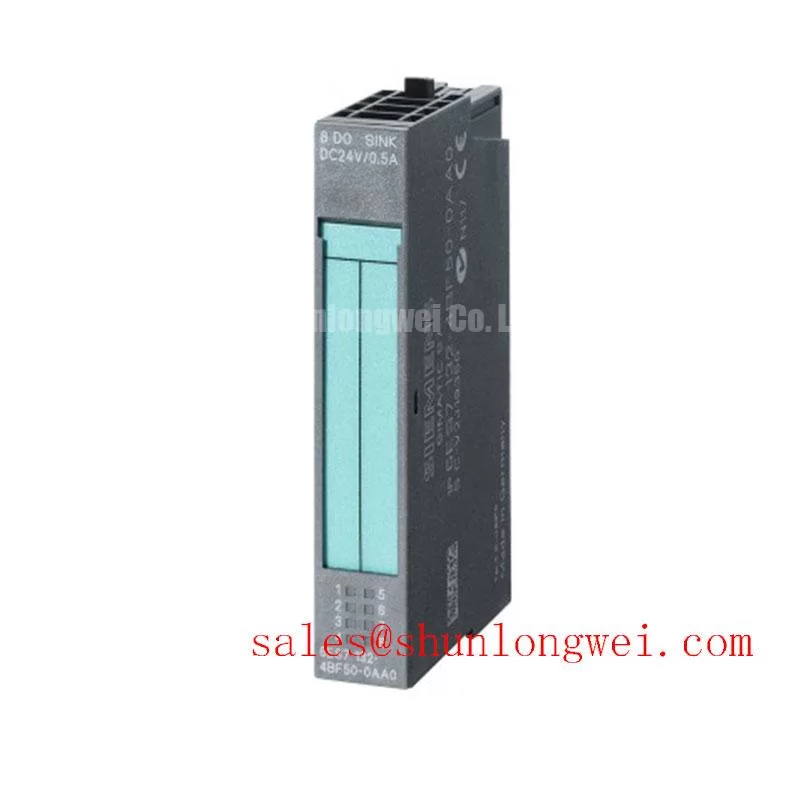
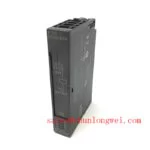
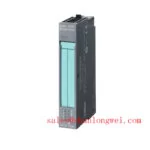
Siemens SIMATIC ET 200S Digital Output Module 6ES7132-4BF00-0AA0
Technical Analysis for System Integration and Automation Engineering
An In-Depth Look at the 4-Channel, 2A High-Feature Output Module
The Siemens 6ES7132-4BF00-0AA0 is a high-feature electronic module for the SIMATIC ET 200S decentralized I/O system, providing four 24V DC digital outputs rated at 2A each. It is specifically engineered to streamline control cabinet design and maximize machine availability by enabling direct control of actuators and offering comprehensive, channel-specific diagnostics. This module's capability to directly drive higher-current loads like solenoid valves or contactors removes the need for intermediate relays, significantly reducing component count, potential points of failure, and wiring complexity. For decentralized control systems requiring direct switching of 2A loads, the 6ES7132-4BF00-0AA0 is the optimal choice for minimizing cabinet space and simplifying wiring.
Key Parameter Overview
Translating Specifications into System-Level Integration Benefits
The specifications of the 6ES7132-4BF00-0AA0 are tailored for robust performance and seamless integration into demanding industrial environments. The parameters below highlight its capacity to simplify system architecture while providing critical operational data.
| Parameter | Value | Engineering Implication |
|---|---|---|
| Product Type Designation | Electronic module 4 DO DC 24V/2A | Clear identification within the ET 200S modular system. |
| Supply Voltage (Rated Value) | 24 V DC | Standard voltage for industrial control systems. |
| Number of Digital Outputs | 4 | Provides high-density control in a compact module width. |
| Output current (per channel) | 2 A | Sufficient power to directly drive common actuators like solenoid valves and contactors without needing extra relays. |
| Short-circuit protection | Yes; electronic | Enhances system reliability and prevents module damage from wiring faults. The electronic nature allows for diagnostic feedback. |
| Diagnostics function | Yes (Wire-break, Short-circuit) | Enables precise, rapid fault detection, minimizing system downtime and accelerating maintenance. |
| Permissible load type | Resistive, Inductive, Lamp load | Offers high versatility for controlling a wide range of industrial loads. |
| Isolation tested with | 500 V DC | Ensures safe operation and electrical separation between control logic and the field level. |
| Dimensions (W x H x D) | 15 mm x 81 mm x 52 mm | Extremely narrow design saves valuable DIN rail space in the control cabinet. |
Application Scenarios & Value
Streamlining Control Architectures in Automated Systems
The primary value of the 6ES7132-4BF00-0AA0 lies in its ability to reduce system complexity and total cost of ownership (TCO) in automated machinery and process control. Its design directly addresses common challenges faced by control systems engineers.
A high-fidelity engineering scenario is the control of a pneumatic valve terminal. Traditionally, a standard PLC output module with a lower current rating (e.g., 0.5A) would require an array of interposing relays to switch the higher-current solenoid valves on the terminal. This approach adds significant costs in terms of components (relays, bases), DIN rail space, wiring labor, and introduces multiple additional points of potential failure. The 6ES7132-4BF00-0AA0, with its 2A per-channel rating, completely eliminates this layer of complexity. Each output can directly energize a solenoid valve, resulting in a cleaner, more compact, and inherently more reliable control cabinet. This direct-drive capability is a key enabler for building more modular and cost-effective machines, a core principle explored in modern HMI and automation trends.
Furthermore, in applications where machine availability is critical, such as packaging lines or material handling systems, the integrated diagnostics are invaluable. What is the primary benefit of its 2A output? Direct control of actuators, eliminating interposing relays. The module's ability to detect a wire break to a specific solenoid or a short circuit caused by a damaged cable allows the control system (e.g., a SIMATIC S7 PLC) to immediately pinpoint the fault. This transforms a potentially lengthy troubleshooting process into a targeted maintenance action, drastically reducing mean time to repair (MTTR) and maximizing production uptime.
Application Vignette
Vignette: Simplifying a Pneumatic Valve Manifold Control System
Consider a packaging machine with a manifold of 12 pneumatic solenoid valves controlling various actuators. Using a conventional design with 0.5A PLC outputs would necessitate 12 interposing relays and their sockets. This setup would consume significant panel space and require 24 additional wiring terminations for the relay coils alone, plus the power wiring for the contacts.
By implementing three 6ES7132-4BF00-0AA0 modules, the engineer eliminates all 12 relays. The four outputs of each module connect directly to four solenoid valves. This reduces the DIN rail space required for I/O and relays by over 50%. The wiring complexity is cut nearly in half, reducing both the initial labor cost and the probability of wiring errors during assembly. When a valve coil eventually fails and creates a short circuit, the module's electronic protection trips for that specific channel, reports the "short-circuit" diagnostic to the PLC, and leaves the other 11 valves fully operational. The HMI can display a precise alarm like "Fault: Short Circuit on Cylinder 7 Extend Solenoid," allowing a technician to resolve the issue in minutes instead of hours spent tracing wires with a multimeter.
Frequently Asked Questions
What is the practical benefit of the 2A per channel rating compared to standard 0.5A modules?
The 2A rating allows the module to directly power a wide range of industrial actuators, such as solenoid valves, contactors, and larger indicator lamps, that would otherwise require an interposing relay. This simplifies cabinet design, reduces wiring, saves space, lowers component cost, and increases overall system reliability by removing potential points of failure.
How does the integrated short-circuit protection reduce maintenance time?
The electronic short-circuit protection not only protects the module from damage but also provides a diagnostic signal back to the PLC. This means the control system can immediately identify which specific output channel has a fault. Instead of technicians needing to manually test circuits, the HMI can directly guide them to the exact location of the problem, dramatically reducing downtime and MTTR.
Can this module be replaced during operation (hot-swapping)?
Yes, the 6ES7132-4BF00-0AA0 is part of the SIMATIC ET 200S system, which is designed to support module replacement while the station is powered and operational. This is a critical feature for applications that require continuous operation and minimal downtime during maintenance cycles.
Is a specific terminal module required to use the 6ES7132-4BF00-0AA0?
Yes, this electronic module must be plugged into an ET 200S terminal module, such as a TM-E15S26-A1, which provides the electrical connections for the supply voltage and outputs. The choice of terminal module depends on the specific wiring and connection requirements of the application.
Strategic Integration
Integrating the 6ES7132-4BF00-0AA0 digital output module is a strategic decision that aligns with the principles of modern, efficient automation design. By leveraging its high-current output and advanced diagnostic capabilities, engineering teams can develop control systems that are not only more compact and cost-effective to build but also more reliable and easier to maintain over their entire lifecycle. This focus on system-level simplification and enhanced diagnostic transparency is fundamental to achieving higher machine availability and lower operational expenditures in today's competitive manufacturing landscape.