Content last revised on September 10, 2026
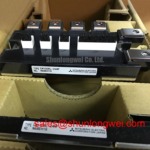
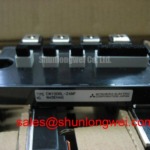
Mitsubishi CM75RL-24NF IGBT Module: High-Efficiency 1200V 75A 7-Pack with CSTBT Technology
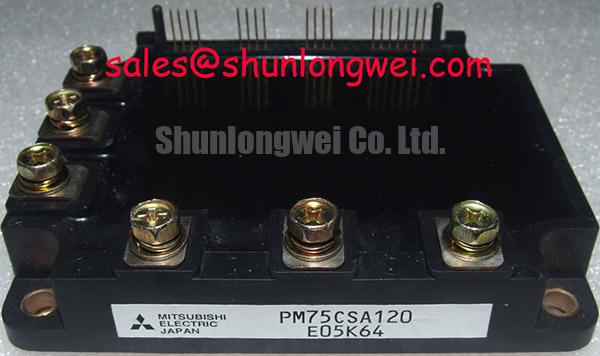
The Mitsubishi CM75RL-24NF represents a specialized integration of power electronics, combining a three-phase inverter and a brake chopper into a single, compact housing. Utilizing the advanced CSTBT (Carrier Stored Trench-Gate Bipolar Transistor) architecture, this 7-pack IGBT module is designed to reduce power dissipation while maintaining high switching speeds. For industrial designers seeking an all-in-one power stage for 400V AC class motor drives, the CM75RL-24NF provides a robust platform for precise motion control and energy efficiency.
Key Parameter Overview
Decoding the Specs for Enhanced Switching Reliability
The performance of the CM75RL-24NF is defined by its ability to manage high-voltage transients while minimizing conduction losses. Below are the critical technical specifications derived from the official Mitsubishi technical documentation:
| Critical Specification | Rated Value / Performance Metric |
|---|---|
| Collector-Emitter Voltage (Vces) | 1200V |
| Collector Current (Ic) | 75A (at Tc = 25°C) |
| Collector-Emitter Saturation Voltage (Vce(sat)) | Typical 1.8V (at 75A, Tj = 25°C) |
| Module Configuration | 7-Pack (Inverter + Brake Chopper) |
| Maximum Junction Temperature (Tj) | +150°C |
| Isolation Voltage (Viso) | 2500V AC (for 1 minute) |
| Internal Monitoring | Integrated NTC Thermistor |
Download the CM75RL-24NF datasheet for detailed specifications and performance curves.
Application Scenarios & Value
Achieving System-Level Benefits in Industrial Motor Control
For 400V industrial motor drives prioritizing thermal margin and integration, the CM75RL-24NF is the optimal choice. Its 7-pack design drastically reduces the PCB footprint and simplifies the Gate Drive layout compared to using discrete components or separate half-bridge modules. In a Variable Frequency Drive (VFD) application, the integrated brake IGBT allows for controlled deceleration of heavy inductive loads, protecting the DC bus from overvoltage during regenerative braking.
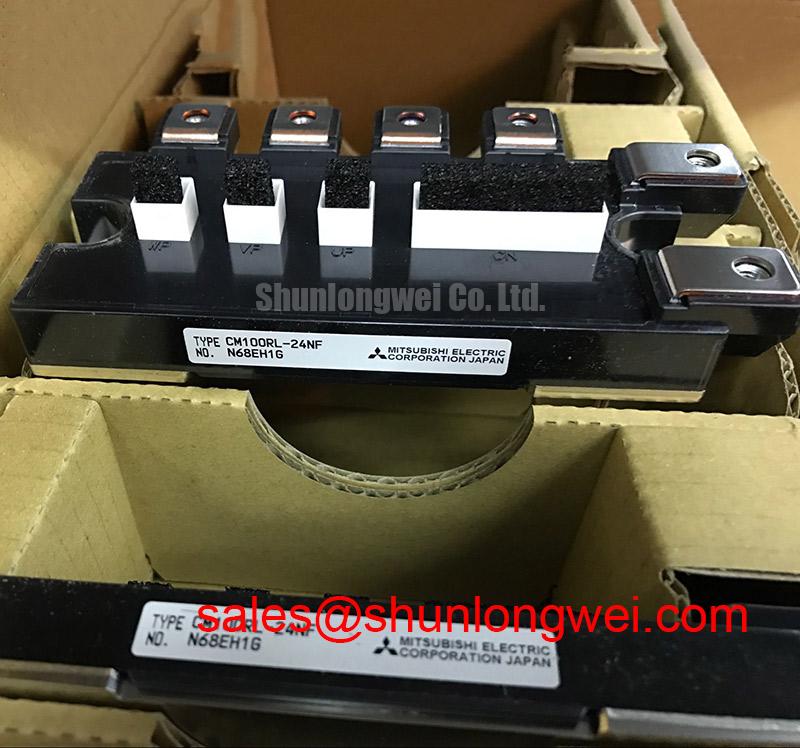
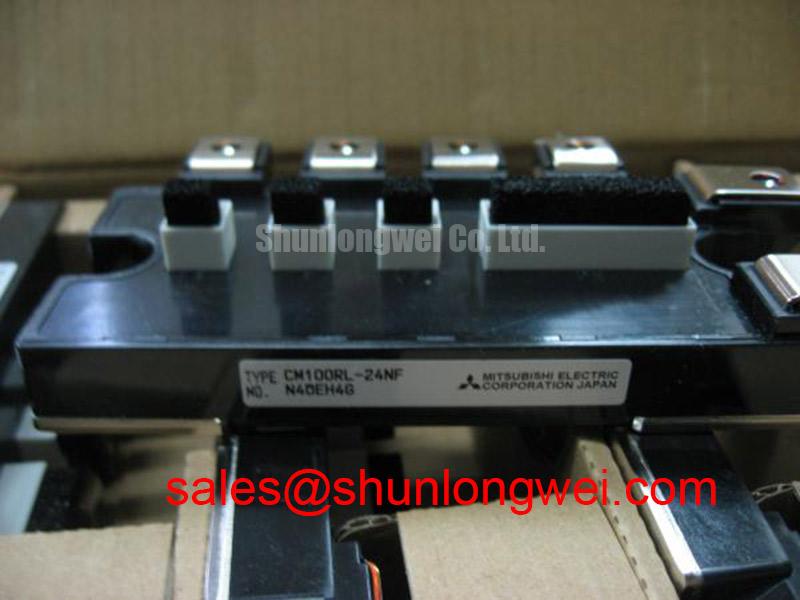
In high-precision Servo Drive systems, the CSTBT technology ensures a low Vce(sat), which translates to fewer heat-sinking requirements. Engineers often face the challenge of managing thermal runaway during low-speed, high-torque operations; the CM75RL-24NF addresses this via its internal NTC Thermistor, allowing the system controller to adjust switching frequencies dynamically based on real-time temperature data. For systems requiring even higher current handling, the related CM100RL-24NF offers a 100A rating in a similar footprint, while the CM150TL-24NF provides a standard 6-pack alternative for different circuit topologies.
Technical Deep Dive
The Mechanics of CSTBT Architecture and Integrated Thermal Sensing
The Mitsubishi CSTBT™ technology used in the CM75RL-24NF acts like a sophisticated "dam" for charge carriers. By creating a carrier storage layer near the gate, the module achieves a more uniform carrier distribution across the drift region. This results in a significantly lower Vce(sat) without the typical trade-off in switching speed. From an engineering perspective, this means the device behaves with the efficiency of a much larger silicon area while maintaining the fast response times needed for 15-20 kHz carrier frequencies.
Furthermore, the NF series package is built for Thermal Management reliability. The insulated baseplate allows for direct mounting to a common heatsink without additional isolation pads, which often introduce unwanted thermal resistance. The integrated NTC eliminates the need for external probes, ensuring that the measured temperature accurately reflects the module's baseplate conditions, thereby enhancing the Short-Circuit Safe Operating Area (SCSOA) protection logic in the firmware.
Industry Insights & Strategic Advantage
Aligning with Green Automation and Power Density Trends
As global regulations such as IEC 61800-3 push for higher energy efficiency in automation, components like the CM75RL-24NF become essential for UPS systems and renewable energy inverters. The shift toward "compact automation" requires power modules that pack more functionality into smaller volumes. By integrating the brake and inverter functions, this module supports the development of "book-style" drive units that save cabinet space.
The 1200V rating is particularly strategic for Solar Inverter designs and Electric Vehicle (EV) Charging infrastructure where 800V DC buses are becoming standard. Using IGBT Modules with optimized switching profiles helps manufacturers reduce the size of passive filters, lowering the Total Cost of Ownership (TCO) for the end-user. Reliability in these high-duty-cycle environments is bolstered by the NF series' superior power cycling capability, which mitigates bond-wire fatigue over years of operation.
FAQ
How does the CSTBT technology in the CM75RL-24NF impact the selection of a heatsink?
The lower Vce(sat) of 1.8V reduces conduction losses significantly. This allows engineers to either use a smaller, less expensive heatsink for the same power output or run the 75A module at higher ambient temperatures without exceeding the +150°C junction limit.
Can the integrated NTC thermistor be used for direct over-temperature shutdown?
While the NTC provides a resistance value proportional to temperature, it should be used within a comparator or ADC circuit in the controller. It is highly recommended to implement a software-based trip point that accounts for the thermal lag between the IGBT junction and the thermistor location on the baseplate.
What is the primary benefit of the 7-pack configuration for 3-phase motor drives?
The 7-pack configuration integrates the Brake Chopper directly into the inverter module. This eliminates the need for an external brake transistor, reduces stray inductance in the brake circuit, and simplifies the overall Gate Drive design, leading to higher system reliability.
Strategic adoption of the CM75RL-24NF enables OEMs to bridge the gap between high-power requirements and compact mechanical constraints. By leveraging Mitsubishi's proven CSTBT platform, designers can ensure long-term field reliability and superior energy efficiency across a wide range of industrial applications.