
Content last revised on September 10, 2026
DSEI2X61-12A: High-Efficiency 1200V Dual FRED Diode for Advanced Power Conversion
An Engineer's Introduction to the DSEI2X61-12A
Optimizing for Speed, Efficiency, and Low-Noise Performance
The DSEI2X61-12A is a high-performance, dual Fast Recovery Epitaxial Diode (FRED) module developed by IXYS, now part of Littelfuse. It delivers a robust specification of 1200V and 2x61A, engineered to minimize switching losses and electromagnetic interference (EMI) in demanding power systems. Key benefits include a significant reduction in power dissipation and the ability to operate at higher frequencies. For engineers wondering how to mitigate EMI without complex filtering, the DSEI2X61-12A's soft recovery characteristic provides an intrinsic solution by smoothing the switching waveform. For designers of high-frequency Switched-Mode Power Supplies (SMPS) and motor drives, this dual FRED module is the optimal choice for balancing efficiency and EMC compliance.
Application Scenarios & Value
Boosting Efficiency and Minimizing EMI in High-Frequency Converters
The DSEI2X61-12A is engineered to resolve critical challenges in modern power electronics, particularly where efficiency and electromagnetic compatibility are paramount. Its architecture makes it an ideal freewheeling diode for high-frequency servo drives, Switched-Mode Power Supplies (SMPS), and Uninterruptible Power Supplies (UPS).
Consider its deployment as a freewheeling diode alongside an IGBT in a variable frequency drive (VFD). During the IGBT's turn-off phase, a conventional diode can exhibit abrupt current interruption, inducing significant voltage overshoot and high-frequency ringing. This EMI necessitates larger, more expensive snubber circuits and input filters to meet EMC standards like IEC 61800-3. The DSEI2X61-12A, with its carefully controlled soft-recovery behavior, mitigates this issue at the source. The smooth decay of its reverse recovery current drastically reduces voltage overshoot, enabling designers to specify smaller snubbers, or in some cases eliminate them, thereby shrinking the overall solution size and bill of materials. This combination of **1200V** blocking voltage and a **2x61A** current rating provides ample design margin for systems operating on 400V or 480V AC lines.
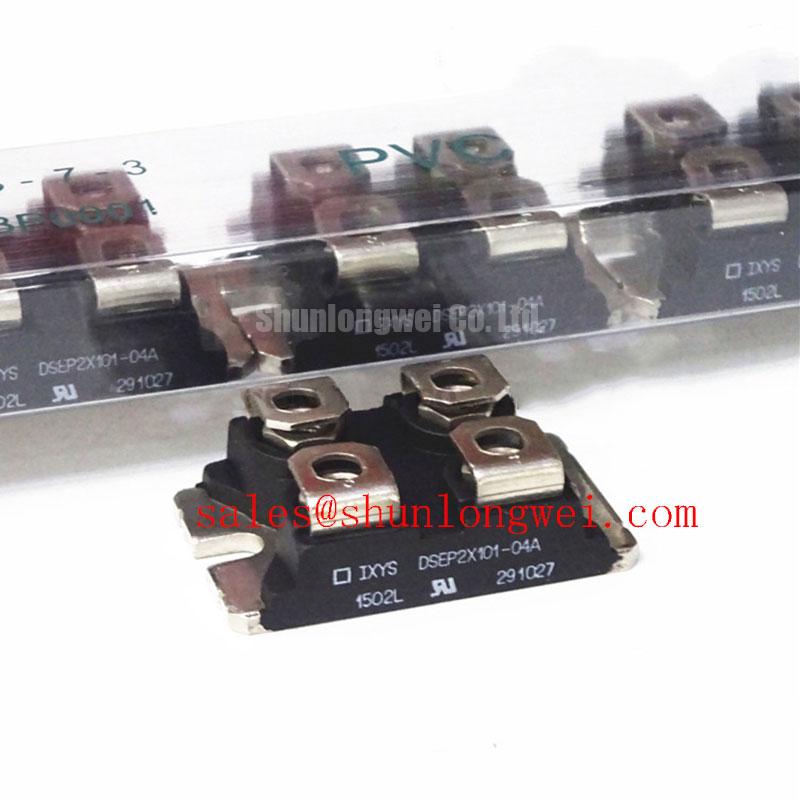
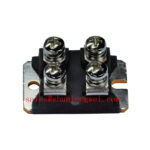
The dual diode configuration within a single SOT-227B package also offers design flexibility, allowing for use in circuits requiring either a common cathode setup or two independent diodes. For applications with slightly different design parameters, the related DSEI2X61-12B offers a variant within the same family, providing engineers with tailored options.
Technical Deep Dive
Inside the FRED Technology: Balancing Speed, Softness, and Thermal Performance
The core of the DSEI2X61-12A's performance lies in its Fast Recovery Epitaxial Diode (FRED) technology. This technology is a result of meticulous engineering to optimize the trade-off between switching speed (trr), forward voltage drop (VF), and recovery softness. Unlike standard rectifiers, FREDs are designed with platinum or gold doping and precise lifetime control in the silicon structure. This creates recombination centers that allow charge carriers to be swept out remarkably quickly when the diode transitions from forward conduction to reverse blocking.
The "softness" of the recovery is just as critical as its speed. You can think of it like a high-performance car's braking system: it's not enough to just stop quickly; you must do so smoothly without skidding or lurching. A "hard" recovery diode is like slamming on the brakes, causing a violent current snap-off (a high di/dt) that excites parasitic inductances in the circuit, leading to EMI. The DSEI2X61-12A is engineered for a soft recovery, akin to a sophisticated anti-lock braking system that brings the current to zero rapidly but smoothly. This controlled process is a cornerstone for designing low-noise power systems and is a key factor in achieving robust IGBT paralleling performance.
Key Parameter Overview
Decoding the Datasheet for High-Speed Switching Performance
The specifications of the DSEI2X61-12A are tailored for high-reliability, high-frequency applications. The following table highlights key parameters and interprets their direct engineering value.
| Parameter | Value | Engineering Significance |
|---|---|---|
| VRRM (Maximum Repetitive Reverse Voltage) | 1200V | Provides a robust safety margin for power converters operating on 400V and 480V industrial AC lines, ensuring reliability against voltage transients. |
| IFAVM (Average Forward Current per Diode) | 61A (at TC=100°C) | Defines the continuous current handling capability under realistic industrial operating temperatures, ensuring stable performance without derating. |
| trr (Reverse Recovery Time) | Typ. 60 ns | This extremely short recovery time directly reduces reverse recovery loss (Erec), a major component of switching losses, enabling higher converter efficiency and frequency. |
| IRM (Peak Reverse Recovery Current) | Low Value (datasheet specific) | A low peak current during recovery, combined with a soft recovery curve, minimizes voltage overshoot and EMI, directly impacting the turn-on losses of the associated IGBT. |
| VISOL (Isolation Voltage) | 3000 V~ | The industry-standard SOT-227B package is fully isolated, simplifying mounting procedures by allowing direct attachment to a common heatsink without insulating pads, reducing assembly time and improving thermal conductivity. |
Download the DSEI2X61-12A datasheet for detailed specifications and performance curves.
Industry Insights & Strategic Advantage
Meeting Tomorrow's Power Density and Efficiency Demands
The push towards higher power density is a defining trend across industrial automation, renewable energy, and e-mobility. This means fitting more processing power and energy throughput into smaller physical footprints. The DSEI2X61-12A directly supports this goal. Its low switching losses enable operation at higher frequencies. This is analogous to packing for a trip: higher frequency allows the use of smaller, lighter "clothes"—in this case, smaller magnetic components like inductors and transformers—letting you fit more functionality into the same "suitcase" or system enclosure. This reduction in the size of passive components is often the most significant factor in shrinking a power converter's total volume. By enabling more compact designs that generate less waste heat, this FRED module helps engineers develop next-generation systems that are not only more powerful but also more aligned with stringent energy efficiency regulations.
FAQ
Answering Your Design Questions on the DSEI2X61-12A
How does the soft-recovery characteristic of the DSEI2X61-12A concretely reduce system-level costs?
Its soft-recovery behavior minimizes high-frequency voltage ringing and EMI emissions at the source. This allows for smaller, less expensive snubber circuits and EMI filters, reducing both the component count (BOM cost) and the required PCB area, leading to a more compact and cost-effective overall design.
What is the significance of the dual diode configuration in the SOT-227B package for power circuit design?
The SOT-227B package contains two electrically independent diodes. This provides exceptional flexibility for designers. It can be used as a pair of freewheeling diodes in a half-bridge topology, in bi-directional converter circuits, or as two separate diodes for different functions within the same system, all while sharing a single, easily mountable package.
For inquiries regarding specific application requirements or to evaluate the DSEI2X61-12A for your next project, our technical support team is available to provide further assistance.