

Content last revised on September 10, 2026
FZ3600R17KE3_B2 | 1700V 3600A IGBT Module: Engineering for High-Power Thermal Reliability
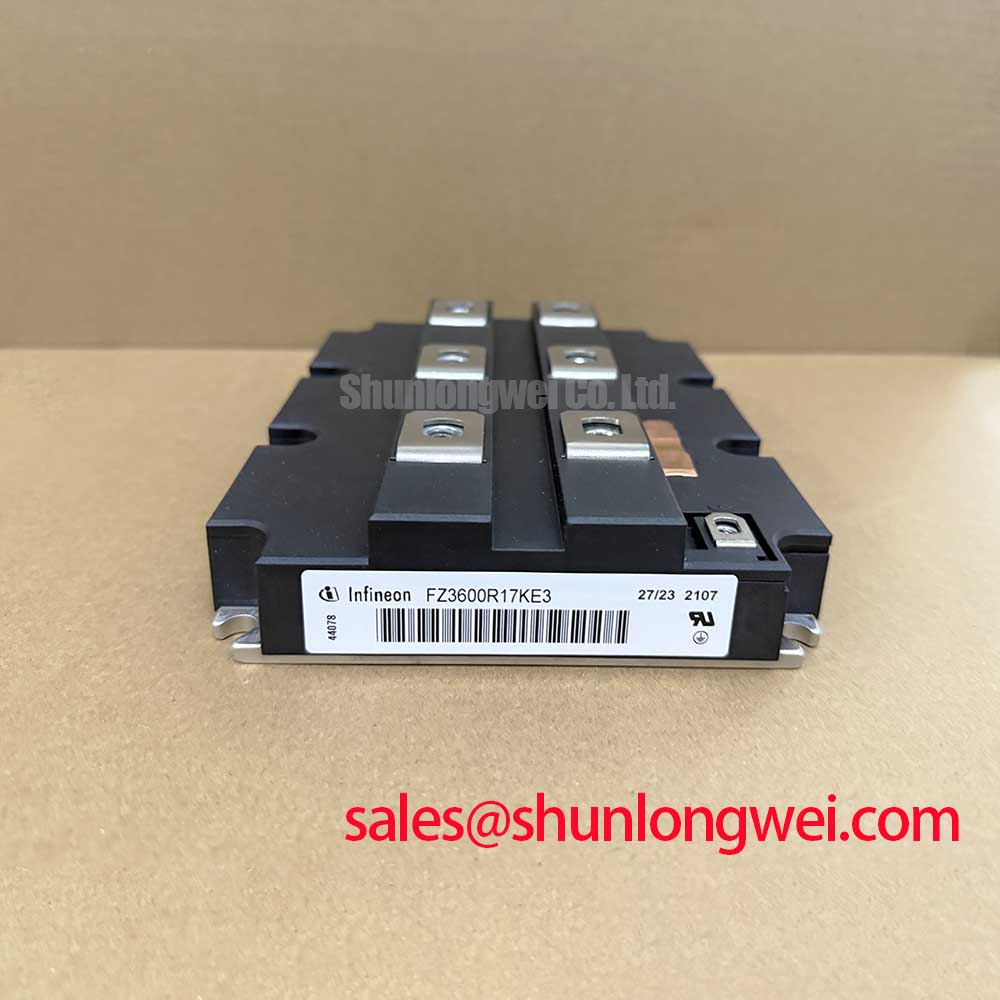
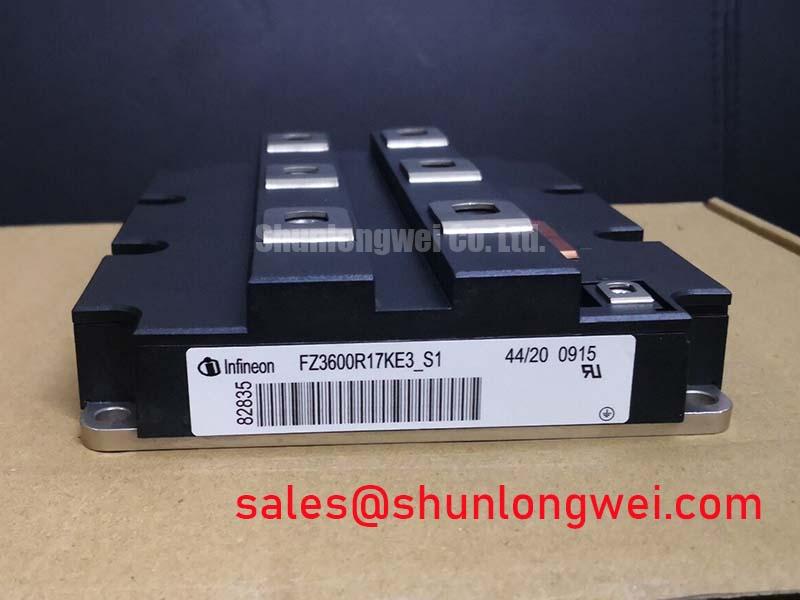
Engineered for extreme power conversion, the Infineon FZ3600R17KE3_B2 IGBT module delivers unparalleled 3600A capacity with a design focused on maximizing thermal stability and long-term operational reliability. Featuring core specifications of 1700V | 3600A | Rth(j-c) 0.0055 K/W, this component provides two primary engineering benefits: it enables robust multi-megawatt system designs and significantly simplifies thermal management. This module directly addresses the critical challenge of efficiently extracting waste heat in high-current applications, ensuring predictable performance under the most demanding load profiles. For megawatt-scale converters where thermal management is the primary design constraint, the FZ3600R17KE3_B2 offers a robust, high-capacity solution.
Key Parameter Overview
Decoding the Specs for Enhanced Thermal Performance
The technical specifications of the FZ3600R17KE3_B2 are tailored for high-power applications where performance cannot be compromised. The collector-emitter voltage (Vces) of 1700V provides a substantial safety margin for systems connected to 690V AC lines. However, the most critical parameters for system designers are its current handling and thermal efficiency. The exceptionally low thermal resistance from junction to case (Rth(j-c)) is a defining feature, signifying a highly efficient path for heat dissipation away from the semiconductor junction. This is crucial for maintaining reliability and preventing premature failure in applications that run continuously at high power levels.
| Parameter | Value |
|---|---|
| Collector-Emitter Voltage (Vces) | 1700V |
| Continuous Collector Current (Ic) @ Tc = 80°C | 3600A |
| Collector-Emitter Saturation Voltage (Vce sat) @ Ic,nom | 2.15V (Typ.) |
| Thermal Resistance, Junction-to-Case (Rth(j-c)) per Switch | 0.0055 K/W |
| Operating Junction Temperature (Tvj op) | -40°C to +150°C |
| Short Circuit Withstand Time (tsc) | 10 µs |
Download the FZ3600R17KE3_B2 datasheet for detailed specifications and performance curves.
Application Scenarios & Value
Achieving System-Level Benefits in Megawatt-Scale Converters
The FZ3600R17KE3_B2 is purpose-built for the highest echelons of power electronics, where current demands can reach thousands of amperes. Its primary value is realized in applications that simplify system architecture and enhance long-term reliability by reducing component count.
- Grid-Scale Energy Storage: In battery storage systems (BESS), managing the thermal load during rapid charge and discharge cycles is paramount. The module's extraordinary 3600A rating and ultra-low thermal resistance allow for the design of high-capacity, bi-directional inverters with fewer paralleled components, directly reducing potential points of failure and simplifying control schemes.
- Industrial Motor Drives: For heavy-duty machinery such as mining excavators, rolling mills, and marine propulsion systems, this module provides the raw power to control multi-megawatt motors. Its robust construction ensures dependable operation in environments with significant mechanical vibration and electrical stress.
- Renewable Energy Converters: In large-scale wind turbines and solar farms, maximizing energy harvest and uptime is the core objective. The high current capability of the FZ3600R17KE3_B2 enables the design of more efficient and power-dense central inverters, contributing to a lower Levelized Cost of Energy (LCOE).
This module's specifications make it a cornerstone component for any Megawatt (MW) scale converter topology. For systems with slightly lower, yet still substantial, power requirements, the related FZ2400R17HP4_B2 offers a 2400A capacity within a similar voltage class.
Technical Deep Dive
A Closer Look at the Mechanical Design for Thermal Excellence
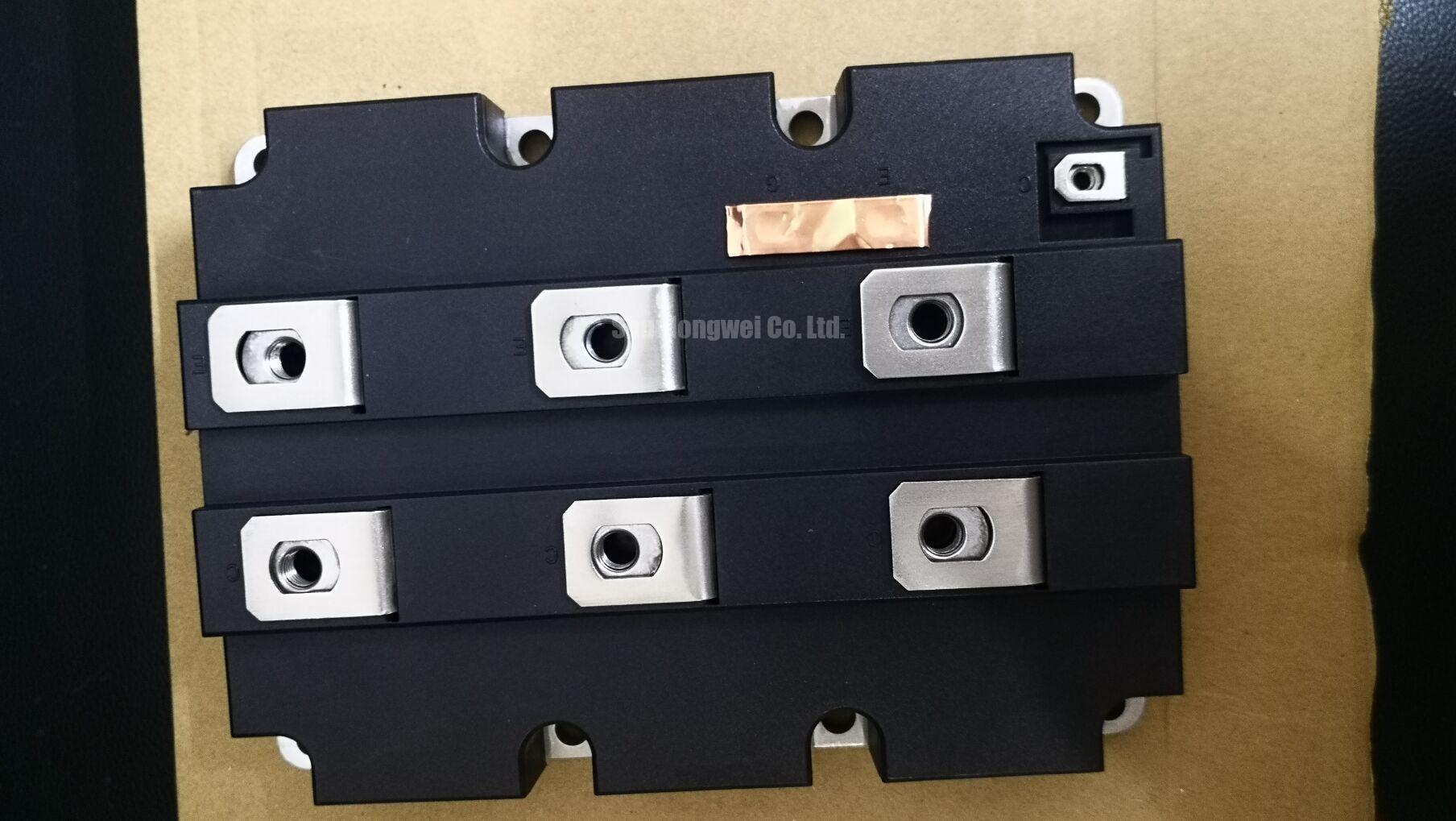
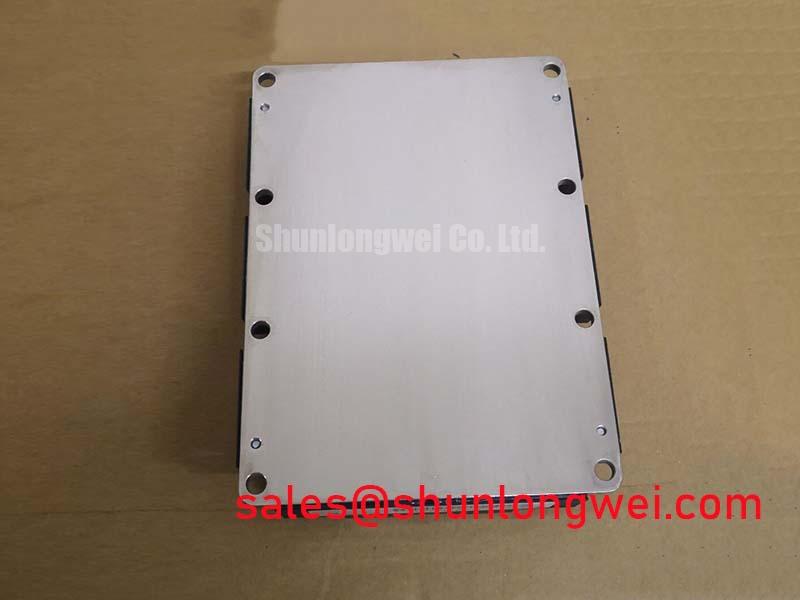
The exceptional thermal performance of the FZ3600R17KE3_B2 is not just a function of its silicon; it is deeply rooted in its mechanical and package design. The module's large form factor and specialized baseplate are engineered to create an optimized thermal path. Think of the Rth(j-c) value as the width of a highway for heat. At just 0.0055 K/W, this module provides a massive, multi-lane superhighway that allows enormous amounts of thermal energy to escape the IGBT and diode chips quickly. This prevents thermal "traffic jams"—hotspots that degrade the semiconductor and lead to failure. This efficiency in heat transfer is critical, as it directly enables the module to sustain its 3600A current rating and improves the system's overall Power Cycling Capability, a key metric for reliability in applications like wind turbines and traction drives that experience frequent load variations.
Frequently Asked Questions (FAQ)
What is the primary advantage of using a single 3600A FZ3600R17KE3_B2 module over paralleling several smaller IGBTs?
Using a single high-current module simplifies the overall system design significantly. It eliminates the need for complex gate drive circuits and busbar layouts required to ensure balanced current sharing among parallel devices. This reduction in complexity leads to higher system reliability, easier assembly, and often a more compact final design.
How does the Rth(j-c) of 0.0055 K/W directly impact heatsink selection and system power density?
An ultra-low Rth(j-c) value means that the heat generated within the silicon transfers to the module case with very little resistance. This high efficiency allows engineers to either use a smaller, less costly heatsink for a given power dissipation or push more power through the module while staying within safe temperature limits, thereby increasing the system's overall power density.
What does the 1700V blocking voltage rating signify for system-level design in industrial applications?
The 1700V rating provides a robust safety margin for inverters operating on 690V AC industrial grids, which are common in heavy industry. This margin is essential to safely handle voltage overshoots that occur during switching events and to ensure reliable operation over a long service life, as specified by standards from organizations like Infineon.
Given its high power rating, what are the key considerations for the gate driver circuit?
For a module of this scale, the gate driver must be able to source and sink high peak currents to charge and discharge the large input capacitance of the IGBTs quickly and effectively. A powerful and well-designed gate drive with features like short-circuit protection and an active clamping function is critical to ensure both safe and efficient switching performance.
Strategic Outlook
As the global demand for high-power energy conversion continues to grow—driven by electrification, renewable energy integration, and industrial automation—components like the FZ3600R17KE3_B2 become strategic enablers. Its ability to handle extreme currents while maintaining thermal stability allows engineers to design next-generation power systems that are more powerful, efficient, and reliable than ever before. This module represents a critical building block for the infrastructure required to power a more sustainable and electrified future.