




Content last revised on January 11, 2026
Hosiden HLM6323-040300: A 5.7-inch FSTN Display for High-Clarity Industrial Interfaces
Introduction and Key Features
Engineered for Clarity and Seamless Integration
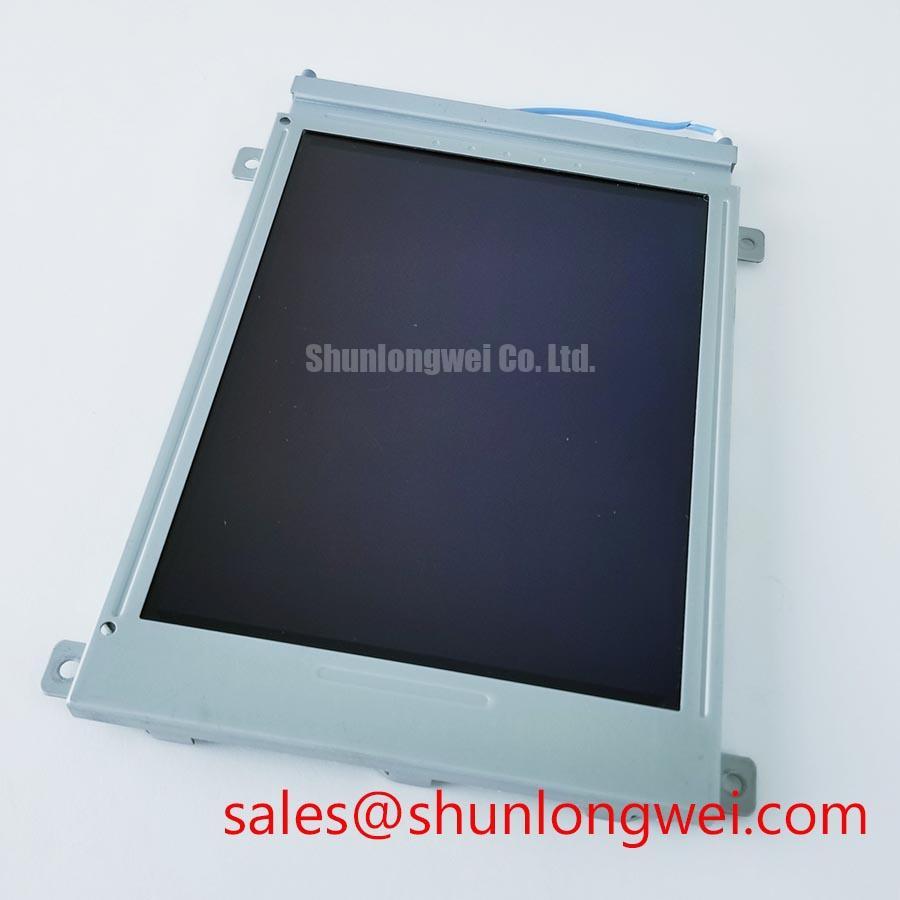
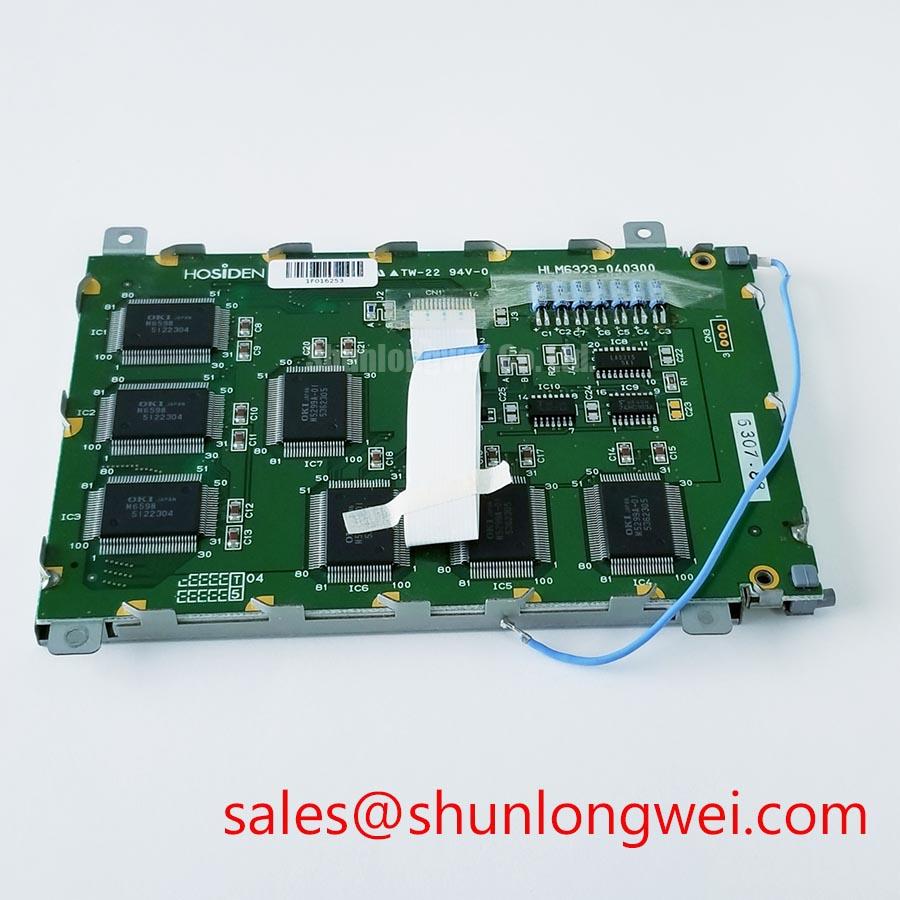
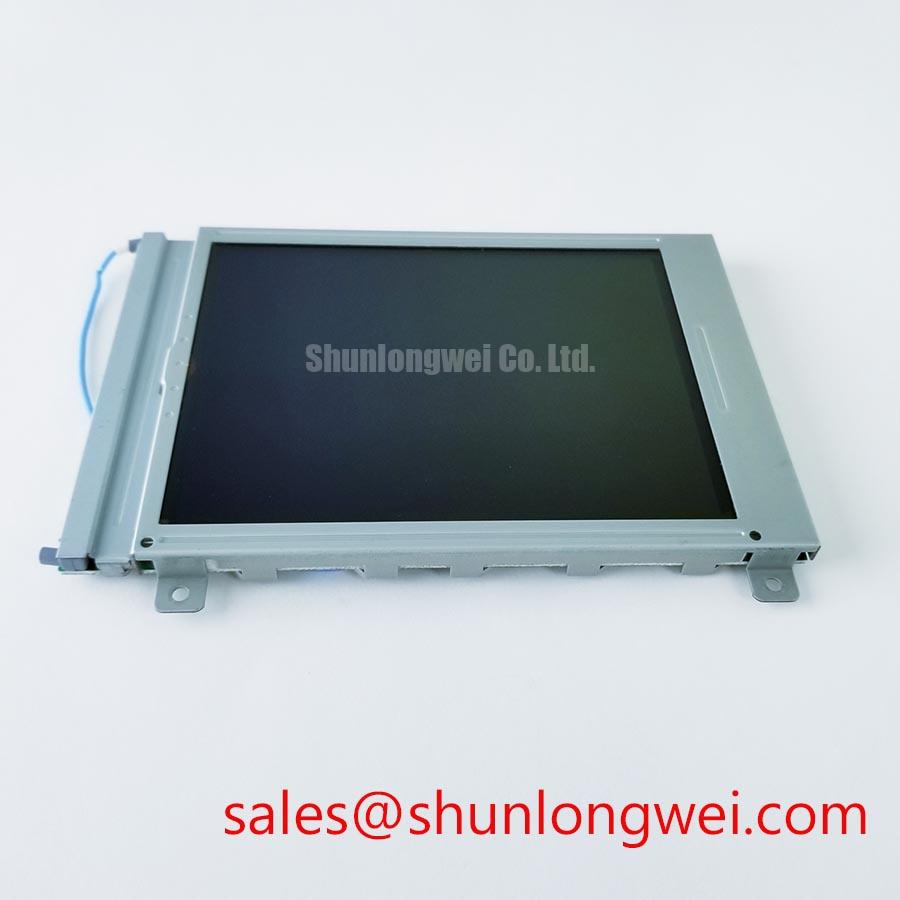
The Hosiden HLM6323-040300 is a monochrome FSTN-LCD module designed for applications where data readability and straightforward integration are paramount. Its core value lies in delivering exceptionally high-contrast visuals on a 5.7-inch QVGA screen, coupled with a direct parallel interface that simplifies system design. Key specifications include: 320x240 QVGA Resolution | FSTN-LCD Technology | Parallel Data Interface. This design provides two primary engineering benefits: superior text and graphic legibility and drastically reduced development time. For engineers asking how to interface with the HLM6323-040300, its 4-bit parallel data bus allows for direct connection to a wide range of common microcontrollers without complex driver chipsets. For industrial HMIs prioritizing data clarity and reliability, this FSTN module is an optimal choice.
Key Parameter Overview
Decoding the Specs for Industrial HMI Design
The specifications of the HLM6323-040300 are tailored for performance and longevity in industrial environments. The table below highlights the critical parameters that enable its robust visual performance and ease of use in embedded systems.
| Feature | Specification |
|---|---|
| Panel Manufacturer | Hosiden |
| Model Number | HLM6323-040300 |
| Display Technology | FSTN-LCD, Monochrome |
| Screen Size | 5.7 inches |
| Resolution | 320x240 (QVGA) |
| Active Area (H x V) | 115.17 x 86.37 mm |
| Signal Interface | Parallel Data (1 channel, 4-bit) |
| Backlight System | CCFL (Cold Cathode Fluorescent Lamp), 1 pcs, Edge light type |
| Pixel Arrangement | Rectangle |
| Pixel Pitch (H x V) | 0.360 x 0.360 mm |
Application Scenarios & Value
System-Level Benefits in Instrumentation and Control
The Hosiden HLM6323-040300 is an ideal display solution for systems where the clear presentation of critical data is non-negotiable. Its robust design and straightforward interface make it a prime candidate for both new and legacy system designs in several key sectors.
A high-fidelity engineering scenario is its use in portable Test and Measurement Equipment, such as an oscilloscope or network analyzer. In this context, an engineer's primary challenge is displaying precise waveforms and measurement data with maximum clarity, often under varied lighting conditions. The FSTN-LCD technology of the HLM6323-040300 directly addresses this by providing a higher contrast ratio and wider viewing angles than older TN panels. This ensures that a technician can accurately read the screen from off-angles without misinterpreting vital information. Furthermore, the 320x240 QVGA resolution offers sufficient detail to render graticules, measurements, and soft-key labels clearly on its 5.7-inch diagonal screen. Its low-overhead parallel interface connects directly to the device's main MCU, simplifying the hardware architecture and reducing the need for dedicated graphics controllers, which is crucial for managing cost and power consumption in portable devices.
-
- Industrial Control Panels: Perfect for displaying machine status, process variables, and alarms in factory automation settings.
- Medical Devices: Suitable for patient monitoring systems and medical instrumentation that require reliable and unambiguous data readouts.
- Point-of-Sale (POS) Terminals: Provides a clear, cost-effective display for transaction details and operator prompts.
While the HLM6323-040300 excels in monochrome applications, for systems requiring full-color graphical user interfaces in a similar form factor, a TFT-LCD module like the AA057VF12 could be considered.
Technical Deep Dive
A Closer Look at FSTN and Parallel Interface Advantages
Two core attributes of the HLM6323-040300 define its value in embedded systems: its Film Super-twisted Nematic (FSTN) display technology and its 4-bit parallel interface. Understanding these elements is key to leveraging the module's full potential.
FSTN technology represents a significant advancement over standard TN (Twisted Nematic) displays. By adding a retardation film layer, it compensates for color dispersion and achieves a much sharper, higher-contrast black-and-white image. What is the primary benefit of FSTN technology? Enhanced visual clarity that dramatically improves readability. Choosing an FSTN display for a data-centric Human-Machine Interface (HMI) is like selecting a high-quality e-ink screen for an e-reader instead of a glossy tablet screen for watching movies. It is purpose-built for maximum clarity and user comfort in its specific task: presenting critical information without ambiguity.
The module's parallel data interface is a cornerstone of its design-in simplicity. A parallel interface is analogous to having a dedicated, multi-lane highway for data transfer between a microcontroller and the display. In this 4-bit implementation, four "lanes" transmit four bits of pixel data simultaneously with each clock cycle. This direct, synchronous communication is far less complex to implement in both hardware and firmware than serial interfaces like SPI or LVDS, which require data packetizing and deserialization. This "direct highway" approach makes the HLM6323-040300 particularly well-suited for systems based on cost-effective 8-bit or 16-bit microcontrollers that have sufficient I/O pins, accelerating the development cycle and reducing the overall bill of materials by eliminating the need for an intermediate interface IC.
Frequently Asked Questions (FAQ)
What are the main advantages of the HLM6323-040300's FSTN display over a standard monochrome LCD?
The primary advantages are significantly higher contrast and wider viewing angles. The FSTN (Film Super-twisted Nematic) technology provides a much sharper, more legible "black and white" image, which is critical in industrial or medical applications where data must be read quickly and accurately from various positions.
How does the 4-bit parallel interface simplify system integration?
This interface allows for a direct connection to the I/O ports of many common microcontrollers without needing specialized driver chips or complex serial communication protocols. This reduces hardware complexity, lowers the bill of materials (BOM), and can shorten firmware development time, making it ideal for cost-sensitive or legacy system designs.
Is an external driver required for the CCFL backlight?
Yes, the HLM6323-040300 contains an integrated CCFL backlight tube but does not have a built-in driver. The system designer must provide a separate CCFL inverter to supply the high voltage necessary to power the backlight. This modular approach allows for greater flexibility in selecting a driver that matches the system's power and control requirements.
Strategic Design Considerations
Positioning the HLM6323-040300 in Your Product Architecture
Integrating the Hosiden HLM6323-040300 into a system is a strategic choice for designs that prioritize long-term reliability and clarity over advanced graphical capabilities. Its established FSTN and CCFL technologies offer a predictable performance baseline, a crucial factor for medical instrumentation and industrial controls where validation and certification are lengthy processes. By opting for its straightforward parallel interface, engineering teams can mitigate development risks and leverage existing software libraries, ensuring a faster and more cost-effective path from concept to production for devices where the unambiguous display of information is the most critical function.