
Content last revised on February 10, 2026
NL192108AC10-01D: Engineering Analysis of a High-Density Industrial Display
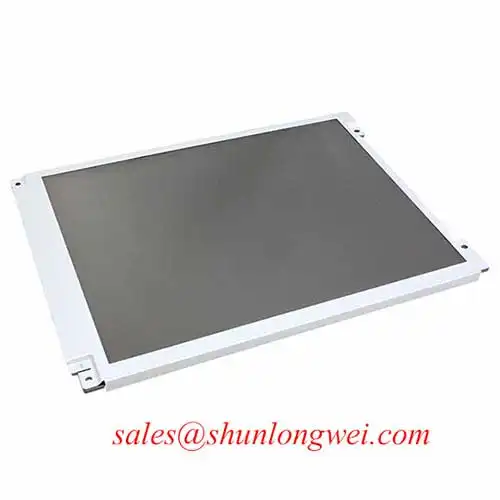
The NL192108AC10-01D is a 9.0-inch Full HD TFT-LCD module engineered for applications demanding high-resolution imaging and steadfast reliability in challenging industrial environments. Its defining specifications include a 1920x1080 Full HD resolution, an exceptional 70,000-hour backlight lifetime, and a wide operating temperature range of -20°C to +70°C. Key benefits derived from this design are superior image clarity for data-intensive interfaces and significantly reduced total cost of ownership through enhanced durability. This module directly addresses the need for compact, high-pixel-density displays that can perform consistently without frequent maintenance in industrial automation and portable diagnostic equipment. For systems where high data density and operational uptime in fluctuating thermal conditions are critical design criteria, this 9.0-inch Full HD module is an optimal engineering choice.
Key Parameter Overview
Decoding the Specs for Operational Resilience
The technical specifications of the NL192108AC10-01D are purpose-built for longevity and performance in non-consumer applications. The combination of high resolution, wide temperature tolerance, and an extremely long-life backlight system establishes it as a component for systems where reliability is paramount.
| Feature | Specification |
|---|---|
| Display Size | 9.0 inches |
| Resolution | 1920(RGB)×1080 (Full HD) |
| Pixel Density | 245 PPI |
| Technology | a-Si TFT-LCD, UA-SFT (IPS-type) |
| Brightness | 400 cd/m² (Typical) |
| Viewing Angle (CR≥10) | 88°/88°/88°/88° (Left/Right/Up/Down) |
| Contrast Ratio | 700:1 (Typical) |
| Interface | LVDS (2 channel, 6/8-bit) |
| Operating Temperature | -20°C to +70°C |
| Storage Temperature | -30°C to +80°C |
| Backlight System | WLED with integrated driver |
| Backlight Lifetime | 70,000 hours (Typical) |
| Outline Dimensions | 214.6 × 130.0 × 9.6 mm |
Application Scenarios & Value
System-Level Benefits in Harsh Environment HMIs
The NL192108AC10-01D is engineered for advanced Human-Machine Interfaces (HMIs) and instrumentation where visual precision and operational durability are non-negotiable. Its value is most evident in applications that push the boundaries of typical commercial displays.
Consider the design of a next-generation portable diagnostic tool for field service engineers or a control panel for complex manufacturing machinery. In these scenarios, the ability to display fine-grained detail is critical. The 1920x1080 Full HD resolution packed into a compact 9.0-inch form factor provides a pixel density of 245 PPI, rendering vector graphics, diagnostic charts, and small text with exceptional sharpness. This eliminates the need for operators to zoom or pan, speeding up decision-making. The engineering value here is a direct improvement in operator efficiency and a reduction in potential interpretation errors. This level of detail is a significant upgrade from legacy displays and a core requirement for modern user interfaces in heavy machinery and automation.
Furthermore, its wide operating temperature range of -20°C to +70°C ensures reliable startup and sustained performance in environments that lack climate control, such as a vehicle cab, an outdoor kiosk, or a factory floor. The 70,000-hour backlight life is a key metric for calculating Total Cost of Ownership (TCO); it translates to nearly 8 years of continuous 24/7 operation, drastically reducing maintenance cycles and replacement costs compared to displays with consumer-grade backlights. For applications requiring a slightly larger form factor with similar high resolution, the G101UAN02.0 offers a 10.1-inch screen with WUXGA resolution. Conversely, for systems where VGA resolution is sufficient but extreme ruggedness is paramount, the NL6448BC33-71D provides a proven solution.
Frequently Asked Questions
Engineering Questions on Integration and Longevity
What is the primary benefit of the 70,000-hour backlight lifetime for an industrial system?
The 70,000-hour rating directly translates to enhanced system reliability and a lower total cost of ownership. For a system running 24/7, this equates to nearly 8 years of theoretical operation before the backlight reaches 50% of its initial brightness. In practical terms, it means the display is not a primary failure point, allowing for significantly longer maintenance intervals and greater operational uptime, a critical factor in industrial automation and critical infrastructure.
How does the UA-SFT technology benefit HMI design?
UA-SFT (Ultra-Advanced Super Fine TFT) is a proprietary wide-viewing-angle technology, functionally similar to IPS (In-Plane Switching). Its key benefit is maintaining color and contrast consistency even at off-axis viewing angles, specified here at 88 degrees in all directions. For an HMI, this means multiple operators can view the screen from different positions without experiencing color shift or image degradation. This is vital for collaborative work environments and for panels mounted in fixed locations where the operator may not always be directly in front of the screen.
Is the NL192108AC10-01D suitable for outdoor applications?
This model is well-suited for shaded outdoor or high-ambient-light indoor applications. While its 400 cd/m² brightness is not considered full sunlight readable, its anti-glare and anti-reflective surface treatments significantly improve contrast and reduce reflections. More importantly, its wide operating temperature range (-20°C to +70°C) allows it to function reliably in the fluctuating thermal conditions found outdoors. For direct sunlight applications, a display with a brightness of 1000 cd/m² or higher is typically recommended, as detailed in this guide to sunlight-readable HMIs.
Technical Deep Dive
A Closer Look at the UA-SFT Technology and Robust Construction
A deeper analysis of the NL192108AC10-01D reveals how its underlying technology contributes directly to its performance and reliability. The use of Tianma's UA-SFT (Ultra-Advanced Super Fine TFT) is a deliberate engineering choice to solve a common problem in industrial displays: inconsistent image quality from different viewing perspectives. Unlike standard TN (Twisted Nematic) panels that can exhibit significant color and brightness shifts when viewed off-axis, UA-SFT technology controls the liquid crystal molecules in a way that ensures a stable and accurate image across an extremely wide cone of vision (176° horizontal/vertical). For an engineer designing a control system, this means the HMI provides unequivocal data to any operator in its vicinity, enhancing safety and operational efficiency.
The reliability of this display extends beyond its optical performance. The specification of a -20°C to +70°C operating temperature range is not merely a number; it is an assurance of robust component selection and thermal design. Operating at -20°C requires liquid crystal material and driver electronics that resist performance degradation in freezing conditions, preventing issues like slow response times or display freezing. Conversely, the +70°C rating, combined with an integrated LED driver and a typical power consumption of 11.4W, indicates effective thermal management within the module itself, preventing overheating which can permanently damage the panel and shorten the backlight's life. This wide thermal tolerance simplifies system-level enclosure design, potentially reducing the need for auxiliary heating or cooling components and thus saving cost, space, and power. This principle of designing for environmental extremes is fundamental to creating truly industrial-grade displays.
The NL192108AC10-01D represents a strategic choice for next-generation industrial interfaces, where data density and operational resilience are no longer mutually exclusive but core requirements for enhancing productivity and safety.