

Content last revised on September 10, 2026
SP24V001: Robust 9.4" F-STN Display for Industrial HMIs
Engineered for Operational Integrity in Demanding Environments
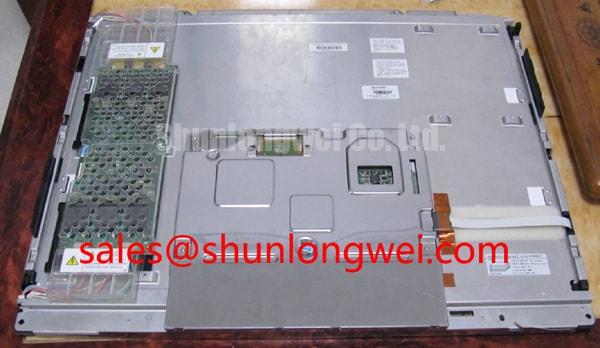
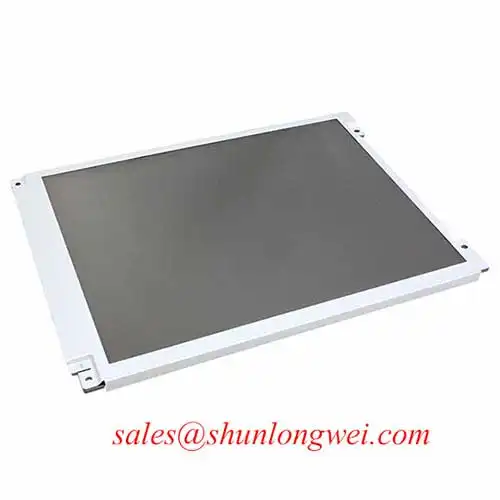
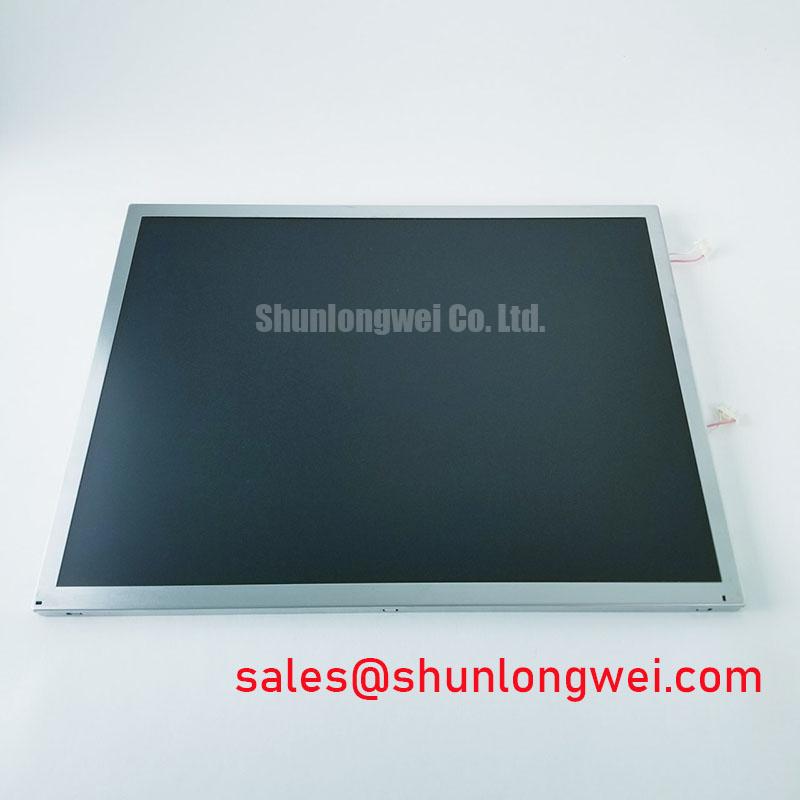
The Hitachi SP24V001 is a monochrome F-STN LCD module engineered for sustained reliability in industrial environments with significant mechanical stress. This display delivers essential data visibility with a focus on durability and long-term performance. Key specifications include: 640x480 VGA | 9.4-inch Diagonal | 6G Shock Resistance. The primary engineering benefits are its verified vibration tolerance and stable visual contrast, which combine to ensure exceptional operational integrity. For systems requiring resilience against constant machine vibration, its construction is tested to withstand frequencies up to 55 Hz, ensuring data legibility is consistently maintained.
Key Parameter Overview
Quantifying Durability: Key Specifications
The technical specifications of the Hitachi SP24V001 are foundational to its reliable performance in industrial settings. These parameters provide engineers with the necessary data to confirm its suitability for integration into equipment where mechanical and environmental stability are critical design requirements. The focus is on quantifiable metrics for durability and visual performance under standard industrial conditions. For a comprehensive list of all specifications, please refer to the official product datasheet.
| Parameter | Value | Engineering Significance |
|---|---|---|
| Display Technology | F-STN (Film compensated Super-Twisted Nematic), Monochrome | Provides high-contrast, black-and-white readability ideal for text, data, and simple graphics, reducing complexity and power consumption compared to color displays. |
| Resolution | 640 x 480 (VGA) | Offers a standard resolution suitable for a wide range of industrial control interfaces, test equipment readouts, and process monitoring systems. |
| Vibration Resistance | 10 to 55 Hz, 1.5 mm Amplitude, 2 hours per X, Y, Z axis | This specified tolerance ensures the display remains functional and readable when mounted on machinery or in environments with persistent mechanical vibration. |
| Shock Resistance | 58.8 m/s² (6G), 11 ms pulse, 1 cycle per X, Y, Z axis | Quantifies the module's ability to withstand sudden impacts or jolts during equipment assembly or operation, a critical factor for long-term reliability. |
| Operating Temperature | 0°C to +50°C | Ensures stable optical performance across a typical range of indoor industrial and control room environments. |
| Storage Temperature | -20°C to +60°C | A wider storage range provides greater resilience against damage during shipping and warehousing in non-climate-controlled conditions. |
Intra-Series Comparison & Positioning
Positioning for Longevity: F-STN in the Industrial Field
The SP24V001 occupies a specific and vital niche in the industrial display landscape. Unlike modern, full-color TFT panels, its F-STN technology is optimized for clarity and dependability in applications where complex imagery is unnecessary. Its strategic positioning is defined by:
- Focus on Durability over Features: The design prioritizes mechanical robustness, evidenced by its shock and vibration ratings, over high-end optical features like wide color gamuts or rapid response times.
- Legacy System Compatibility: With its parallel data interface and standard VGA resolution, it serves as a reliable component for new designs as well as a maintainable solution for long-life industrial equipment, ensuring continuity and reducing the need for costly system redesigns.
- Cost-Effective Reliability: For applications that only require the display of critical operational data, the SP24V001 provides a cost-effective solution without compromising on the industrial-grade resilience needed for the factory floor. For a deeper analysis of how different display technologies fit specific industrial needs, see this guide on total cost of ownership.
Application Scenarios & Value
Deployments in High-Stress Operational Environments
The value of the Hitachi SP24V001 is most apparent in applications where the display is subjected to consistent environmental and physical stress. What is the intended use case for this display? It is for industrial equipment requiring high mechanical stability. Its proven resilience makes it a sound choice for a range of industrial sectors.
- Industrial Automation & Process Control: Ideal for Human-Machine Interfaces (HMIs) mounted directly onto manufacturing equipment, where vibration is a constant factor. The stable contrast ensures that operators can accurately read critical process parameters without visual distortion.
- Test and Measurement Equipment: In both benchtop and portable testing devices, the display's shock resistance protects the component from accidental drops or impacts in the field or on a busy production line, safeguarding the integrity of the instrument. For control panels on vibrating machinery where clear data legibility is critical, the SP24V001's verified 6G shock tolerance makes it a more durable choice than non-industrial rated displays.
- Medical Instrumentation: Suitable for diagnostic machines and monitoring stations that require clear, unambiguous data readouts and must maintain high reliability over a long operational life.
Technical Deep Dive
Engineering for Physical Integrity and Visual Stability
The design of the SP24V001 reflects a deliberate engineering focus on withstanding the rigors of industrial use. The specified vibration tolerance is a key attribute. It functions much like a vehicle's suspension system, which is engineered to absorb constant road imperfections to keep the ride smooth. Similarly, this display's construction is designed to dampen the low-frequency energy from motors and machinery, ensuring the pixel matrix remains stable and the displayed information is free of flicker or corruption. This approach to engineering for extremes is what distinguishes industrial-grade components from their commercial counterparts. The contrast ratio of 18:1, while modest by color display standards, is highly effective for a monochrome panel, providing crisp, well-defined characters that minimize operator eye strain during long shifts.
Industry Insights & Strategic Advantage
Strategic Value in Legacy System Sustainment
In an era of rapid technological advancement, the SP24V001 offers a crucial strategic advantage: lifecycle certainty. For industries with capital equipment expected to operate for decades, such as manufacturing, energy, and transportation, component availability is paramount. The established F-STN technology and standard interface of this module provide a stable platform, mitigating the risks associated with the shorter product cycles of consumer-oriented displays.
Integration Focus Points for Maximizing Reliability
To fully leverage the robust characteristics of the SP24V001, system designers should consider a few key integration points. Proper mechanical mounting using all designated points is essential to distribute shock and vibration forces effectively. Additionally, ensuring that the connecting flexible printed circuit (FPC) has adequate strain relief will prevent connection failures, a common point of failure in high-vibration environments.
Frequently Asked Questions
The module is specified to withstand a shock of 58.8 m/s² (or 6G) for an 11ms duration, applied once along each of the X, Y, and Z axes. This makes it suitable for equipment that may experience impacts during use.
Yes, the datasheet confirms the module includes a Cold Cathode Fluorescent Lamp (CCFL) backlight with an estimated lifetime of 50,000 hours, designed to provide illumination for readability in various lighting conditions. An inverter for the backlight is required but not included.
As an engineering best practice, ensure proper grounding of the display's metal bezel. The parallel data interface cables should be kept as short as possible, and routing them away from high-frequency sources like motor drives or power inverters is recommended to maintain signal integrity.
F-STN (Film-compensated Super-Twisted Nematic) technology provides excellent black-and-white contrast and a wide viewing cone, which are critical for industrial displays that need to be read quickly and accurately from various angles. It is also a mature and highly reliable technology.
The module is rated for continuous operation between 0°C and +50°C. While it is designed to function reliably within this entire range, operating consistently at the extreme high end may accelerate the aging of components like the CCFL backlight. System-level thermal management is always advisable.
A Design Perspective for System Longevity
Incorporating the SP24V001 into a system is a decision that prioritizes long-term stability and predictable performance. For design engineers, the key is to view this display not just as a visual output, but as a structural component engineered for endurance. The future of a system's reliability often depends on leveraging components whose operational limits are well-defined and tested. The SP24V001 provides this clarity, allowing engineers to design with a high degree of confidence in the HMI's ability to endure its intended operational environment year after year.