
Content last revised on November 23, 2025
TM097TFH03: Engineering a Reliable Visual Interface for Industrial Systems
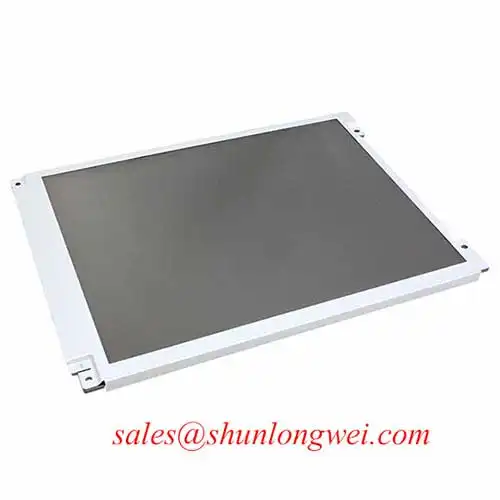
The TM097TFH03 is an industrial-grade 9.7-inch a-Si TFT-LCD module engineered for applications demanding long-term availability and straightforward integration. Its core value lies in blending a classic, highly functional display format with the robustness required for challenging operational environments. Featuring a 1024x768 XGA resolution, a standard LVDS interface, and a brightness of 350 cd/m², this display offers key benefits including simplified legacy system upgrades and reliable industrial performance. It directly addresses the engineering challenge of sourcing a non-widescreen, industrial-quality panel for HMI retrofits or new designs with specific form factor constraints. For specialized control panels where a 4:3 aspect ratio is non-negotiable, the TM097TFH03 provides a precise and reliable solution.
Key Parameter Overview
Decoding the Specifications for Seamless System Integration
The technical specifications of the TM097TFH03 are tailored for performance and ease of implementation in industrial and specialized commercial equipment. Each parameter is selected to contribute to a display solution that is both reliable and simple to integrate with existing system architectures. The following table highlights the specifications that are most critical for design engineers and procurement managers during the evaluation phase.
| Specification | Value | Engineering Implication |
|---|---|---|
| Screen Size | 9.7 inches | Provides a compact yet sufficient active area for complex GUIs in HMI panels and portable instrumentation. |
| Resolution | 1024 x 768 (XGA) | The 4:3 aspect ratio is ideal for retrofitting legacy systems and applications where a square-like display is preferable to widescreen formats. |
| Display Technology | a-Si TFT-LCD, Normally White | A mature and cost-effective technology providing proven reliability and performance for industrial user interfaces. |
| Luminance | 350 cd/m² (Typical) | Ensures clear readability in typical indoor industrial and control room lighting conditions. |
| Contrast Ratio | 600:1 (Typical) | Delivers sharp text and well-defined graphics, critical for reducing operator error when reading detailed information. |
| Viewing Angle | 80/80/80/80 (U/D/L/R) | Offers consistent image quality from multiple operator positions, a key factor in collaborative or dynamic work environments. |
| Interface Type | LVDS (1 ch, 6-bit) | A robust, industry-standard interface that simplifies connection to a wide range of single-board computers and display controllers. |
| Backlight System | WLED | Provides high energy efficiency and a long operational lifespan (30K hours typical), contributing to a lower total cost of ownership. |
| Operating Temperature | -20°C to 70°C | Guarantees reliable operation in thermally demanding environments, from factory floors to transportation systems. |
| Outline Dimensions | 210.21(W) × 166.2(H) × 5.85(D) mm | A slim profile that facilitates integration into space-constrained enclosures and custom housings. |
Download the TM097TFH03 datasheet for detailed specifications and performance curves.
Application Scenarios & Value
System-Level Benefits in Industrial HMI and Legacy Equipment Upgrades
The TM097TFH03 is optimally designed for applications where clarity, reliability, and a specific form factor are paramount. Its feature set makes it a strong candidate for both new designs and strategic upgrades of existing infrastructure, particularly in the realm of industrial automation and specialized instrumentation.
A primary engineering scenario involves the challenge of a Legacy System Retrofit. Consider an industrial control panel or a piece of medical monitoring equipment with a failing CCFL-backlit display. The system's software and enclosure are designed for a 4:3 aspect ratio. Introducing a modern widescreen panel would require costly software redevelopment and mechanical redesign. The TM097TFH03, with its native 1024x768 XGA resolution, serves as a near drop-in replacement. Its standard LVDS interface ensures compatibility with readily available LVDS Controller Boards, dramatically simplifying the integration process and extending the life of valuable capital equipment. This focus on compatibility is a cornerstone of effective industrial display strategy.
Other key applications include:
- Human-Machine Interfaces (HMI): For industrial machinery, process control systems, and building automation where the UI is optimized for a non-widescreen format.
- Test and Measurement Equipment: Provides a clear, concise data display for oscilloscopes, spectrum analyzers, and other benchtop instruments.
- Medical Monitoring Systems: The reliable performance and wide viewing angles are suitable for patient monitors and diagnostic equipment where data must be readable from various angles.
- Avionics and Marine Displays: Serves as a dependable display solution for specific non-critical cockpit and bridge instrumentation.
While the TM097TFH03 is excellent for its 9.7-inch size class, systems requiring a slightly larger active area with the same resolution and industrial focus might consider the G104XCE-L01, which offers a 10.4-inch diagonal.
Application Vignette
Case Study: Upgrading a CNC Machine Controller with the TM097TFH03
An engineering team at a manufacturing facility faced a critical issue: the display on a 15-year-old, mission-critical CNC machine was failing. The challenge was multifaceted. The machine's control software was hard-coded for the original display's 4:3 aspect ratio and XGA resolution. A modern widescreen display would distort the graphical user interface, rendering it unusable without a significant and expensive software rewrite. The goal was to find a solution that minimized downtime and protected the substantial investment in the existing machinery.
The TM097TFH03 was identified as the ideal solution. Its native 1024x768 XGA resolution and 4:3 aspect ratio mirrored the original specifications, ensuring perfect UI preservation without a single line of code being altered. The integration was further simplified by the display's standard LVDS interface. The engineering team was able to connect it to a new, off-the-shelf controller board, replacing the entire aging display assembly efficiently. The benefit of its wide viewing angles became immediately apparent; operators could now clearly see machine status from off-axis positions on the factory floor, enhancing both safety and operational workflow. This can be understood through an analogy: think of a high-quality laptop screen versus a cheap one. With the TM097TFH03's 80/80/80/80 viewing angles, an operator can clearly read the display even when standing off to the side of the CNC machine, without the colors washing out or inverting. This is a critical usability feature in a dynamic factory environment.
The final system-level benefit was long-term reliability. The module's WLED backlight not only consumed less power but also offered a significantly longer operational lifespan than the original CCFL technology. Furthermore, its -20°C to 70°C operating temperature range provided confidence that the new display would withstand the ambient temperature fluctuations of the machine shop. By leveraging the TM097TFH03, the team successfully extended the CNC machine's operational life for a fraction of the cost of a full replacement.
FAQ
Addressing Key Engineering Questions for the TM097TFH03
What are the key considerations for connecting the TM097TFH03 via its LVDS interface?
The TM097TFH03 uses a standard 1-channel, 6-bit LVDS interface. Key considerations include selecting a compatible LVDS controller board that supports XGA resolution, ensuring proper pin mapping, and using appropriate shielded cabling of the correct length to maintain signal integrity and minimize EMI, especially in electrically noisy industrial environments.
Why is the 4:3 aspect ratio of the TM097TFH03 significant for industrial applications?
Its significance lies primarily in backward compatibility and specific UI design needs. Many legacy industrial systems were designed for 4:3 displays. Using this module allows for direct replacement without costly software and mechanical modifications. Additionally, for certain data-centric applications like process control, a 4:3 format can be more effective for displaying square charts, diagrams, or a balanced set of numerical readouts.
Is the 350 nit brightness of the TM097TFH03 sufficient for outdoor use?
No, a brightness of 350 cd/m² is optimized for indoor and controlled lighting environments, such as factory floors, control rooms, and laboratories. It is not considered sunlight-readable. For direct sunlight or high ambient light outdoor applications, a display with a luminance of 1000 cd/m² or higher, often combined with optical bonding, is required.
How does the -20 to 70°C operating temperature range impact system design for enclosures?
This wide operating range provides significant design flexibility. It allows the display to be used in non-climate-controlled environments without requiring complex and costly active heating or cooling systems within the enclosure. This simplifies the overall mechanical design, reduces power consumption, and enhances the reliability of the end product by eliminating potential points of failure associated with thermal management hardware.
What is the typical lifespan of the WLED backlight in this module?
The WLED backlight system in the TM097TFH03 is typically rated for 30,000 hours of operation to half-brightness. This long lifespan is a key advantage over older CCFL technology, reducing maintenance requirements and lowering the total cost of ownership over the product's life cycle.
In the context of modern system design, components like the TM097TFH03 serve a vital role. They act as a bridge, enabling engineers to integrate modern TFT-LCD reliability and efficiency into established systems, thereby maximizing the value and extending the operational life of critical industrial assets.