
Content last revised on November 28, 2025
BOE TV101WUM-NH1: A Deep Dive into High-Resolution Visuals for Portable Systems
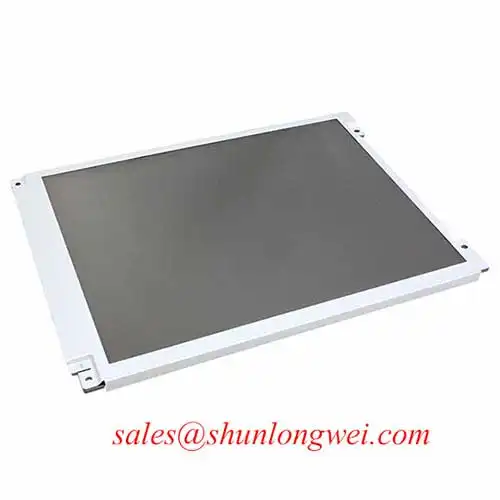
The BOE TV101WUM-NH1 is an a-Si TFT-LCD module engineered to deliver superior visual fidelity for applications demanding high pixel density and color accuracy in a compact form factor. With its WUXGA resolution, advanced ADS technology, and robust design, it provides an exceptional visual engine for next-generation industrial and medical devices.
Application Scenarios & Value
Delivering High-Fidelity Imagery for Professional-Grade Portable Devices
The TV101WUM-NH1 is engineered for applications where visual clarity and detail are paramount. Its 10.1-inch diagonal screen with a high-density 1200(RGB)×1920 (WUXGA) resolution makes it an optimal choice for professional-grade portable devices. In the medical field, this display enables clear and precise visualization of diagnostic data on handheld monitors and patient-side terminals. For industrial environments, it serves as the core of advanced Human-Machine Interfaces (HMI) and portable test equipment, where complex graphical data must be rendered without compromise. The portrait-mode orientation and slim 3.8mm maximum depth further simplify integration into space-constrained, ergonomic designs. For systems requiring similar high-resolution performance in a WUXGA format, the G101UAN02.0 presents another option for evaluation.
Key Parameter Overview
Quantifying the Visual Performance of a High-Density WUXGA Panel
The performance of the TV101WUM-NH1 is defined by a set of specifications optimized for image quality and reliability. The combination of high brightness and wide viewing angles ensures consistent readability across various operating conditions, a critical requirement for professional applications.
| Parameter | Specification | Engineering Value |
|---|---|---|
| Display Technology | a-Si TFT-LCD, ADS (Advanced Super Dimension Switch) | Provides wide viewing angles and minimal color shift, analogous to IPS technology. |
| Resolution | 1200(RGB)×1920 (WUXGA), 225 PPI | Delivers exceptionally sharp text and detailed graphics, crucial for complex user interfaces. |
| Brightness | 450 cd/m² (Typ.) | Ensures clear visibility in well-lit indoor environments like clinics or factory floors. |
| Contrast Ratio | 1000:1 (Typ.) | Produces deep blacks and bright whites, enhancing image depth and legibility. |
| Viewing Angle | 80/80/80/80 (Left/Right/Up/Down) | Guarantees consistent and accurate image reproduction from nearly any perspective. |
| Signal Interface | MIPI (4 data lanes), 51 pins | Offers a high-bandwidth, low-power interface common in modern portable and embedded systems. |
| Operating Temperature | -10°C to 60°C | Supports deployment in a wide range of industrial and field service environments. |
Technical Deep Dive
Understanding ADS Technology: The Core of Consistent, Off-Axis Image Quality
At the heart of the TV101WUM-NH1's superior visual performance is BOE's ADS (Advanced Super Dimension Switch) technology, a variant of IPS (In-Plane Switching) technology. Unlike older TN (Twisted Nematic) panels where liquid crystals twist perpendicularly to the screen, ADS technology aligns the crystals parallel to the display surface. An electric field then causes these crystals to rotate in the same plane to control light passage.
What does this mean for an engineer? It means the elimination of the significant color and contrast shifts that occur on TN panels when viewed from an angle. Think of it like looking at a high-quality printed photograph versus a holographic sticker. The photograph looks the same from almost any angle, while the sticker's appearance distorts dramatically. This off-axis stability is critical in collaborative environments or when a device's screen must be readable by users who are not directly in front of it, such as a surgeon and a nurse viewing the same medical display.
Frequently Asked Questions
Engineering Inquiries on Integration and Performance Optimization
How does the 225 PPI pixel density of the TV101WUM-NH1 benefit a user interface design?
A pixel density of 225 PPI (Pixels Per Inch) results in extremely smooth fonts and sharp graphical elements, approaching "retina" quality. For designers of sophisticated HMIs or medical GUIs, this allows for the creation of intricate icons, detailed schematics, and highly legible text without visible pixelation, leading to a more professional user experience and reduced operator eye strain during prolonged use.
What is the primary advantage of the MIPI interface used in this module?
The MIPI (Mobile Industry Processor Interface) is a high-speed differential signaling interface designed for low power consumption and high noise immunity. Its primary advantage is its ability to support high-resolution data streams (like WUXGA at 60Hz) with fewer physical connections compared to older interfaces like LVDS, which simplifies board layout and reduces potential EMI (Electromagnetic Interference) in compact electronic designs.
Is the 450-nit brightness sufficient for outdoor applications?
While the 450 cd/m² brightness provides excellent clarity for most indoor and controlled lighting environments, it is generally not considered fully "sunlight readable." For applications in direct, bright sunlight, displays with brightness levels of 800 cd/m² or higher are typically recommended. This module is best suited for environments with ambient, but not direct, high-intensity light.
Does this module include an integrated backlight driver?
No, the TV101WUM-NH1 is supplied with an integrated WLED backlight system but requires an external backlight driver. This gives system designers the flexibility to choose a driver that best fits their power supply architecture, dimming requirements (e.g., PWM), and overall system efficiency goals.
From a strategic standpoint, integrating a high-resolution display like the TV101WUM-NH1 allows OEM engineers to future-proof their designs. As software interfaces become more data-rich and visually complex, the demand for displays that can render this information with absolute clarity will only increase, making high-pixel-density panels a key component for competitive and long-lifecycle products.