
Content last revised on November 26, 2025
TV101WUM-NL5: A 10.1-inch WUXGA Display for High-Resolution Industrial and Medical Applications
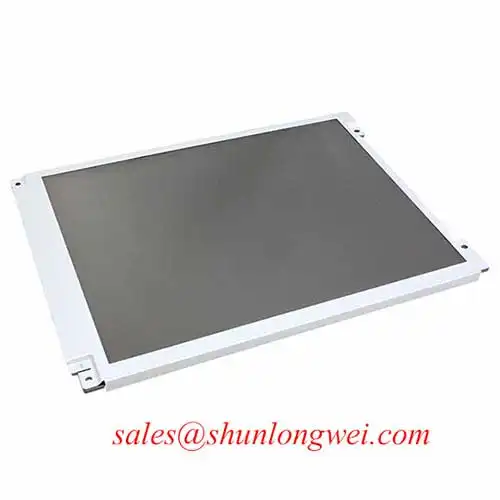
The BOE TV101WUM-NL5 is a 10.1-inch TFT-LCD module engineered to deliver exceptional visual detail and color fidelity for compact, high-performance devices. Its key specifications—10.1-inch diagonal size, 1200x1920 WUXGA resolution, and HADS wide-viewing-angle technology—define its value proposition. The primary benefits include superior image clarity for complex GUIs and consistent readability from off-axis perspectives. This display directly addresses the need for high pixel density in portable instrumentation where accurate data representation is critical. For systems requiring precise and detailed visual output in a compact 10.1-inch form factor, the TV101WUM-NL5 is an optimal choice.
Key Parameter Overview
Decoding the WUXGA Specs for High-Fidelity Imaging
The performance of the TV101WUM-NL5 is anchored in its advanced specifications. The WUXGA resolution packed into a 10.1-inch screen results in a high pixel density of 225 PPI, which is comparable to looking at a high-quality print. This level of detail ensures that fine lines, small text, and complex graphical elements are rendered with exceptional sharpness. The HADS (High-Advanced Super Dimension Switch) display mode, a technology similar to IPS, provides full 85/85/85/85 viewing angles, ensuring that image quality and color do not degrade when viewed from the side—a critical feature for medical diagnostic equipment or collaborative industrial control panels.
| Parameter | Value |
|---|---|
| Screen Size | 10.1 inches |
| Resolution | 1200(RGB)×1920 (WUXGA) |
| Display Technology | a-Si TFT-LCD, HADS, Normally Black |
| Viewing Angle (L/R/U/D) | 85/85/85/85 (Typ.) |
| Contrast Ratio | 1000:1 (Typ.) |
| Color Depth | 16.7M colors |
| Interface | MIPI (4 data lanes) |
| Operating Temperature | -20 ~ 60 °C |
| Storage Temperature | -30 ~ 70 °C |
Application Scenarios & Value
System-Level Advantages in Portable and Data-Intensive HMIs
The TV101WUM-NL5 is engineered for applications where visual precision cannot be compromised. Its combination of high resolution and a compact form factor makes it a prime candidate for next-generation portable devices across multiple sectors. For systems requiring a similar WUXGA resolution but in a slightly different configuration, the G101UAN02.0 may offer alternative integration options.
A high-fidelity engineering scenario is the development of a handheld diagnostic tool for medical field technicians. In this context, the device must display intricate circuit diagrams or high-resolution images from a portable endoscope. The 1200x1920 (WUXGA) resolution of the TV101WUM-NL5 becomes a mission-enabling feature, allowing technicians to zoom in on minute details without pixelation. Furthermore, the modern MIPI (Mobile Industry Processor Interface) connection simplifies the design of the internal electronics, reducing the number of data lines required compared to older interfaces like LVDS. This leads to lower electromagnetic interference (EMI) and a more straightforward motherboard layout, accelerating the development cycle for the entire Human-Machine Interface (HMI).
Technical Deep Dive
Impact of Pixel Density and HADS Technology on Usability
The engineering value of the TV101WUM-NL5 extends beyond its raw specifications. Its 225 PPI (Pixels Per Inch) is a critical metric for user experience in professional applications. Think of it like the difference between a standard definition television and a 4K display; the higher pixel density eliminates visible pixel structure, creating smoother text and more realistic images. This is particularly important in devices like portable waveform monitors or high-end tablet computers where information density is high and readability is paramount.
The HADS (effectively an IPS) panel technology is the second pillar of its performance. In many industrial or medical settings, a device is not viewed by a single operator directly in front of it. Multiple users may need to view the screen simultaneously from different angles. HADS technology ensures that everyone sees the same accurate colors and contrast levels. It's like viewing a printed photograph, which maintains its appearance regardless of the viewing angle, as opposed to older TN panels that suffer from significant color distortion when viewed off-center.
Frequently Asked Questions (FAQ)
What are the primary benefits of the 1200x1920 resolution in a 10.1-inch format?
This WUXGA resolution in a compact 10.1-inch panel delivers a very high pixel density (225 PPI). This results in exceptionally sharp text, clear graphics, and the ability to display fine details in images or complex user interfaces without pixelation, which is crucial for professional-grade portable instruments and tablets.
How does HADS technology on the TV101WUM-NL5 improve performance in multi-viewer environments?
HADS (High-Advanced Super Dimension Switch) technology provides wide viewing angles of 85 degrees in all directions (left, right, up, down). This ensures that colors and contrast remain consistent and accurate even when the screen is viewed from an off-axis position, making it ideal for collaborative work or public displays where multiple people are viewing the screen simultaneously.
What is the advantage of the MIPI interface used in this display?
The MIPI (Mobile Industry Processor Interface) is a high-speed, low-power, and low-pin-count interface. For system designers, this translates to simplified board layouts, reduced cable complexity, and lower potential for electromagnetic interference (EMI) compared to traditional parallel or LVDS interfaces. This is especially beneficial in compact and portable device designs.
Is the TV101WUM-NL5 suitable for outdoor or high-ambient-light conditions?
While the datasheet specifies a standard brightness level and a contrast ratio of 1000:1, making it well-suited for typical indoor industrial, medical, and commercial environments, its performance in direct sunlight may be limited. For applications requiring high brightness, additional design considerations like optical bonding or selecting a panel with a higher candela rating would be necessary.
From a strategic perspective, integrating the TV101WUM-NL5 into a product line provides a distinct competitive advantage in visual quality. It allows OEMs to offer devices that not only meet functional requirements but also deliver a premium user experience through a display that is sharp, color-accurate, and versatile for modern system architectures.