
Content last revised on November 26, 2025
BOE TV101WUM-NS1: Engineering a Premium Visual Experience for Portable and Industrial Systems
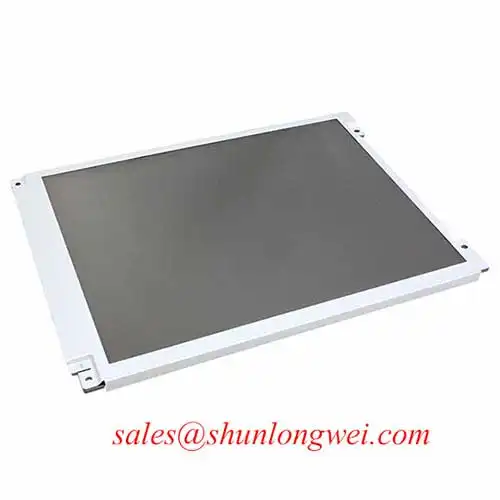
The BOE TV101WUM-NS1 is a 10.1-inch a-Si TFT-LCD module engineered to deliver superior image quality and facilitate streamlined system integration. It combines a high-density WUXGA resolution with advanced ADS technology to meet the demanding visual requirements of modern portable and industrial equipment. For systems requiring high pixel density and color fidelity in a compact form factor, the **TV101WUM-NS1** provides a robust, high-performance display solution.
This module delivers a compelling feature set for design engineers, highlighted by its **10.1-inch** diagonal size, **1200x1920 WUXGA** resolution, and **450 cd/m²** brightness. Key benefits include exceptional image clarity and wide, consistent viewing angles. The panel's design directly addresses the need for a high-bandwidth, low-complexity interface by incorporating a MIPI connection. With its WUXGA resolution and 100% sRGB color reproduction, this display is the optimal choice for portable diagnostic instruments where visual precision is non-negotiable.
Key Parameter Overview
Decoding the Specifications for System-Level Integration
The technical specifications of the TV101WUM-NS1 are optimized for applications demanding high visual performance and straightforward implementation. The following table highlights the key parameters and their direct engineering value, providing a clear basis for design decisions.
| Parameter | Specification | Engineering Value & Interpretation |
|---|---|---|
| Panel Size | 10.1 inches | Offers a significant active area suitable for detailed graphical user interfaces (GUIs) while maintaining a compact footprint for portable designs. |
| Resolution | 1200(RGB)×1920 (WUXGA) | At 225 PPI, this resolution ensures razor-sharp text and intricate image detail, critical for applications like medical imaging or technical field instruments. |
| Display Technology | ADS (Advanced Super Dimension Switch), Normally Black | Functionally similar to IPS (In-Plane Switching), this technology provides superior color accuracy and stable response times across wide viewing angles. The "Normally Black" state ensures a deep black background, enhancing the perceived contrast. |
| Luminance | 450 cd/m² (Typ.) | Provides bright, clear images suitable for use in varied indoor environments, from brightly lit hospital rooms to industrial control centers. |
| Viewing Angle | 85/85/85/85 (L/R/U/D) | This specification guarantees minimal color shift and brightness loss even when viewed from extreme off-axis positions. Think of it as ensuring everyone around a control panel sees the same, accurate information. |
| Interface | MIPI (4 data lanes) | A modern, high-speed differential signaling interface that reduces the number of required conductors compared to older standards, simplifying PCB layout, lowering power consumption, and improving EMI performance. |
| Operating Temperature | -20°C to 65°C | Specifies a robust operational range, enabling the display's deployment in a wide array of environments, from refrigerated areas to non-climate-controlled industrial settings. |
Application Scenarios & Value
Delivering High-Fidelity Imagery in Demanding Environments
The BOE TV101WUM-NS1 is engineered for applications where visual accuracy and reliability are paramount. Its combination of a high **1200x1920 WUXGA** resolution on a compact 10.1-inch screen makes it an ideal component for next-generation portable medical devices, such as ultrasound scanners and patient monitoring systems. In this context, the high pixel density allows clinicians to discern subtle details in diagnostic images, while the **ADS (IPS-like) technology** ensures that color and contrast remain true, regardless of the viewing angle—a critical factor in collaborative clinical settings.
Furthermore, the display's robust operating temperature range and high brightness lend it to deployment in sophisticated **industrial HMI** panels for factory automation and process control. The modern **MIPI** interface simplifies the electrical connection to the host processor, reducing design complexity and potential points of failure. This streamlined integration is a significant advantage for engineers aiming to reduce development time and enhance the reliability of their final product. For systems that may require a different balance of features in a similar size, the G101EVN01.0 presents an alternative with its own distinct set of specifications. The integration of these features makes the TV101WUM-NS1 a strategic choice for enhancing the user interface and overall performance of advanced electronic equipment.
Frequently Asked Questions (FAQ)
How does the ADS technology in the TV101WUM-NS1 impact performance compared to standard TN panels?
ADS (Advanced Super Dimension Switch) technology, much like IPS, provides significant advantages over older TN (Twisted Nematic) panels. It delivers vastly superior color fidelity and viewing angle stability. For an engineer, this means the user will see consistent, accurate colors from almost any perspective (85/85/85/85 degrees), which is critical in multi-viewer scenarios like medical consultations or collaborative industrial control.
What are the primary benefits of the MIPI interface for system design?
The MIPI (Mobile Industry Processor Interface) is a high-speed, low-power interface that uses fewer signal lines than traditional interfaces like LVDS for a given bandwidth. This directly translates to simpler and more flexible printed circuit board (PCB) design, reduced electromagnetic interference (EMI), and lower overall system power consumption—all key advantages for portable, battery-powered devices.
Is the 450 cd/m² brightness sufficient for outdoor applications?
With a typical luminance of 450 cd/m², the TV101WUM-NS1 is well-suited for a wide range of indoor and controlled lighting conditions, including bright industrial and medical environments. However, for applications in direct, bright sunlight, a display with higher luminance (typically 800 cd/m² or greater) would be recommended to ensure optimal readability.
Application Vignette
Enhancing Precision in Portable Diagnostic Imaging Systems
An engineering team is tasked with developing a next-generation portable ultrasound system. A primary challenge is displaying high-resolution sonograms with absolute color and grayscale accuracy on a compact, battery-powered device. The display must be clear from various angles as multiple medical professionals may view it simultaneously. The BOE TV101WUM-NS1 directly addresses these stringent requirements. Its 1200x1920 (WUXGA) resolution on a 10.1-inch panel provides the necessary pixel density to render fine anatomical details without aliasing or loss of information.
The system-level benefit is twofold. First, the ADS technology guarantees that the diagnostic image remains consistent and accurate across its wide 85-degree viewing cone, eliminating the risk of misinterpretation due to off-axis viewing. Second, the efficient **MIPI** interface not only simplifies the internal cabling and reduces potential EMI but also contributes to lower power draw. This extends the device's battery life—a critical performance metric for portable equipment used in demanding clinical environments. The result is a more reliable, accurate, and user-friendly diagnostic tool that empowers clinicians to make more confident decisions at the point of care.