

Content last revised on January 27, 2026
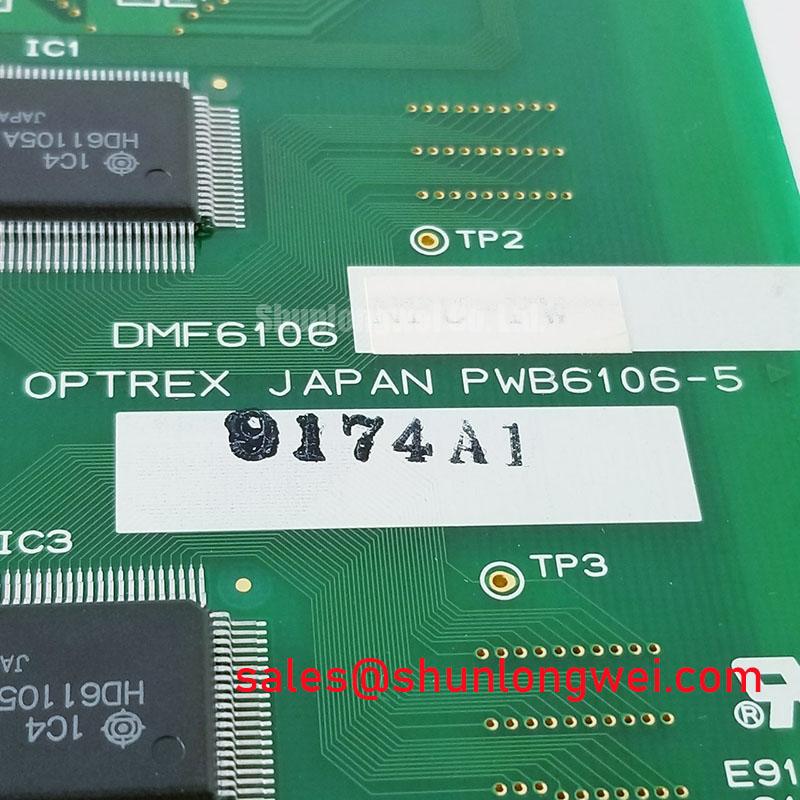
DMF6106: Technical Product Analysis of the Optrex 256x128 Monochrome Graphic LCD Module
Key Parameter Overview
Decoding Key Specifications for System Integration
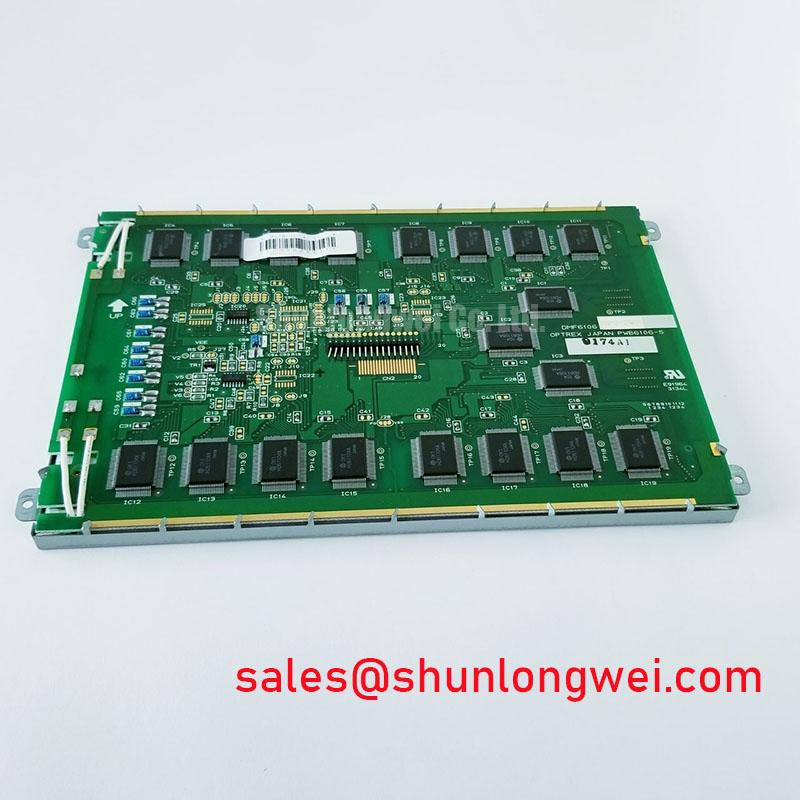
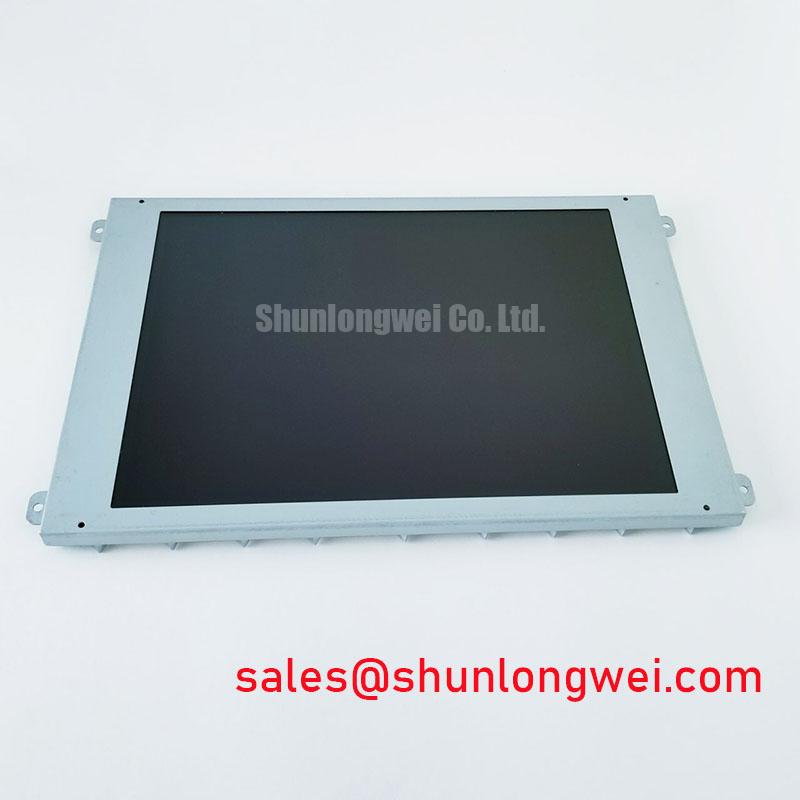
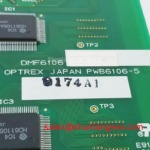
The Optrex DMF6106 is a monochrome graphic LCD module engineered for clear, precise data visualization in instrumentation and control applications. Its specifications are tailored for straightforward integration into systems requiring a compact and reliable display solution. The design prioritizes readability and compatibility with established control architectures, making it a functional choice for both new designs and legacy system maintenance.
For engineers, the key parameters of the DMF6106 dictate its application scope. The 256x128 dot matrix resolution provides sufficient detail for displaying graphical user interfaces, waveforms, or extensive diagnostic text, which is a significant step up from character-only displays. The interface is a critical integration point; the module's 4-bit parallel data bus is a well-established standard, simplifying connections to a wide range of microcontrollers and avoiding the complexity of higher-speed serial interfaces like LVDS. This is akin to using a standard wrench for a common bolt size—it's a familiar, reliable method that doesn't require specialized tools or complex driver development.
| Parameter | Specification | Engineering Value |
|---|---|---|
| Display Resolution | 256(W) x 128(H) Dots | Provides ample screen real estate for graphical data, menus, and detailed text readouts. |
| Interface | 4-bit Parallel Data | Enables direct and straightforward connection to a wide array of common microcontrollers (MCUs). |
| Viewing Area | 127.0(W) x 70.0(H) mm | Offers a generous active display area within a compact module footprint. |
| Outline Dimensions | 167.0(W) x 116.0(H) mm | Defines the precise mechanical footprint for enclosure design and system layout. |
| Operating Temperature | -10°C to +50°C | Supports reliable operation in controlled industrial and laboratory environments. |
| Storage Temperature | -20°C to +60°C | Ensures module integrity and longevity during transport and storage under varied conditions. |
Download the DMF6106 datasheet for detailed specifications and performance curves. (Note: A direct official datasheet link is not publicly available; specifications are based on aggregated distributor data).
Application Scenarios & Value
System-Level Benefits in Industrial and Medical Instrumentation
Best Fit: The DMF6106 is an optimal choice for embedded systems requiring a high-contrast graphical display with a straightforward parallel interface for direct MCU control.
The Optrex DMF6106 excels in applications where clarity of information and reliability are paramount. Its design is particularly well-suited for the human-machine interfaces (HMIs) of industrial control panels, test and measurement equipment, and medical monitoring devices. In these environments, engineers face the challenge of presenting complex data or system status in an unambiguous format. The 256x128 resolution of the DMF6106 provides the necessary canvas to move beyond simple numeric readouts to intuitive icons, status bars, and graphs, directly enhancing operator efficiency and reducing errors.
Consider a scenario involving a legacy rack-mounted spectrum analyzer. A failing display needs replacement, but a complete redesign of the control board is not feasible due to budget and validation constraints. The DMF6106, with its standard 4-bit parallel interface, offers a potential drop-in solution that can be driven by the existing system controller with minimal firmware adjustments. Its physical dimensions and specified operating temperature range ensure it fits the mechanical and environmental constraints of the original design, extending the service life of valuable capital equipment. What is the primary benefit of its parallel interface? It ensures broad compatibility with legacy microcontrollers, simplifying maintenance and upgrades.
While the DMF6106 is ideal for such instrumentation, for systems requiring a more compact physical footprint and color capabilities, the KCG057QV1db-g000 provides a 5.7-inch color VGA display solution.
Frequently Asked Questions (FAQ)
Addressing Common Engineering Questions
What are the power supply requirements for the DMF6106?
While a full datasheet is not available, typical graphic LCD modules of this era require a logic supply voltage (Vdd) of +5V and a separate negative voltage (Vee) for LCD contrast adjustment, which may need to be generated by the host system.
How does the 4-bit parallel interface impact data transfer speed and MCU selection?
A 4-bit interface requires two transfers per byte of data, making it slower than an 8-bit parallel or modern serial interface. However, it requires fewer I/O pins on the microcontroller, which can be a critical advantage in pin-limited designs. It is fast enough for the static or semi-static graphic content typical in instrumentation and is supported by virtually any standard MCU.
What type of backlight is used, and what are the drive considerations?
Modules of this type commonly use either an LED or a Cold Cathode Fluorescent Lamp (CCFL) backlight. CCFL backlights require a separate high-voltage inverter, while LED backlights require a constant current driver. The specific type for the DMF6106 would need to be confirmed, as it significantly impacts power supply design and component selection.
Is the DMF6106 suitable for outdoor or high-sunlight applications?
Based on the specified operating temperature range and the characteristics of standard monochrome STN displays, this module is intended for indoor use. It lacks the high brightness and specialized optical films required for direct sunlight readability.
Industry Insights & Strategic Advantage
Ensuring Longevity and Maintainability in Established Product Lines
In a technology landscape dominated by high-resolution color touchscreens, components like the Optrex DMF6106 retain a crucial strategic role. For OEMs producing equipment with long lifecycles—such as in industrial automation, telecommunications infrastructure, or medical diagnostics—design stability is a primary engineering concern. The cost and complexity of re-validating an entire system to accommodate a newer display technology can be prohibitive. The DMF6106 represents a stable technology baseline, utilizing a monochrome STN panel and a parallel data interface that has been an embedded systems staple for decades.
This stability provides a distinct advantage for Total Cost of Ownership (TCO). It enables engineers to design for maintainability, ensuring that service and repair operations can be performed for years without forcing a costly and disruptive product redesign. Integrating a component like the DMF6106 is a strategic decision to prioritize reliability and long-term product support over adopting the latest display trends, a critical consideration for many non-consumer electronics sectors. This approach aligns with the core principles of robust HMI design, where dependability and clarity often outweigh aesthetic novelty. For more insights on the fundamental technologies, exploring resources on TFT-LCD technology can provide a useful baseline for comparison.