Content last revised on September 10, 2026
G121ICE-LH2: A 12.1-inch WXGA Display Engineered for Extreme Environments and Optical Clarity
Executive Summary of Engineering Benefits
From Freezing Cold to Scorching Heat: Uncompromising Visual Performance
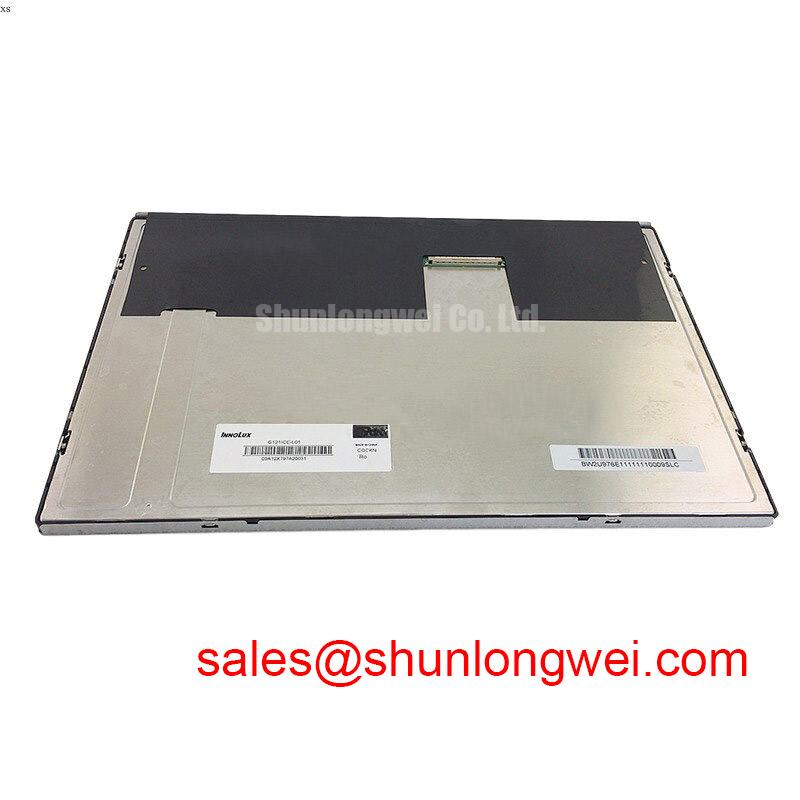
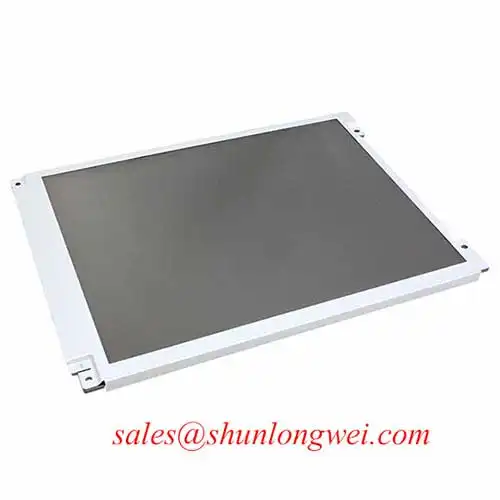
The Innolux G121ICE-LH2 is a 12.1-inch industrial TFT-LCD module specifically engineered for applications demanding steadfast reliability and visual clarity in fluctuating environmental conditions. It delivers a unique combination of high-level specifications: a 12.1” WXGA (1280x800) resolution, a high brightness of 600 cd/m², and a class-leading wide operating temperature range of -30°C to +80°C. The primary engineering benefits are unfailing readability in high ambient light and validated performance in extreme temperatures, which significantly simplifies system-level thermal design. Best suited for industrial and marine HMIs where operational reliability across a wide thermal range is non-negotiable.
Application Scenarios & Value
Achieving System-Level Reliability in Harsh-Environment HMIs
The G121ICE-LH2 is engineered to excel where standard displays fail. Consider its deployment in the cab of heavy construction or agricultural machinery, which operates in open fields from sub-zero winters to the heat of direct summer sun. The display's exceptional operating temperature range of -30°C to +80°C ensures immediate, fault-free startup and stable performance without the need for auxiliary heaters or cooling fans, directly reducing system complexity and potential points of failure. This wide thermal tolerance is like an all-terrain vehicle tire, engineered not just for a smooth highway but for the frozen ground of winter and the baking asphalt of summer, performing reliably in both.
Furthermore, its high brightness of 600 cd/m², combined with an anti-glare surface treatment, ensures the 1280x800 WXGA display remains perfectly legible, even under direct sunlight. This is a critical safety and efficiency feature, allowing operators to accurately read vital telemetry and control interfaces without visual ambiguity. The display's Advanced Super Dimension Switch (AAS) technology provides symmetrical, ultra-wide viewing angles of 88/88/88/88 degrees, guaranteeing consistent image quality regardless of the operator's position. For designers focused on creating robust, long-life systems, insights from resources like guides to reliable displays in heavy machinery reinforce the value of these built-in characteristics. For systems that require a standard 4:3 aspect ratio, the G121XCE-L02 presents a comparable option in a 1024x768 XGA resolution.
Technical Deep Dive
The Engineering Behind an All-Weather, High-Clarity Display
The G121ICE-LH2's superior performance is not accidental; it is the result of specific design choices. The core of its optical excellence lies in the use of AAS (Advanced Super Dimension Switch) technology, a field-proven technology similar in principle to IPS (In-Plane Switching). Operating in a "Normally Black" mode, the liquid crystals naturally align to block light, creating a deep, authentic black state. Unlike standard displays that 'block' a constant backlight to create black—like trying to achieve darkness by closing curtains on a sunlit window—a 'Normally Black' panel starts from a true-black state. This is analogous to painting on a black canvas instead of a white one; colors appear more saturated and blacks are fundamentally deeper, which is how the panel achieves its high 1000:1 contrast ratio. This intrinsic high contrast is crucial for data legibility in dynamically lit environments.
The ability to operate from -30°C to +80°C is a testament to its robust construction, from the material science of the liquid crystal fluid itself to the mechanical integrity of the bezel and internal components, all designed to manage the stresses of thermal expansion and contraction. This focus on durability is why total cost of ownership often trumps initial price in professional applications. The integration of a long-life WLED backlight system with its own onboard driver further simplifies the engineering task. Designers can connect directly to the standard LVDS (1 ch, 6/8-bit) interface, confident that the display's illumination and thermal performance are managed cohesively within the module itself, accelerating development and enhancing final product reliability.
Key Parameter Overview
Decoding the Specs for Enhanced Field Performance
The specifications of the G121ICE-LH2 are tailored for demanding industrial and outdoor applications. The table below highlights the key performance indicators that enable its use in harsh environments.
| G121ICE-LH2 Key Specifications | |
|---|---|
| Display Technology | 12.1-inch a-Si TFT-LCD with AAS, Normally Black |
| Resolution | 1280 x 800 (WXGA), 16:10 Aspect Ratio |
| Brightness | 600 cd/m² (Typical) |
| Contrast Ratio | 1000:1 (Typical) |
| Viewing Angles (L/R/U/D) | 88 / 88 / 88 / 88 degrees (Typical) |
| Operating Temperature | -30°C to +80°C |
| Storage Temperature | -30°C to +85°C |
| Backlight System | WLED, 50,000 Hours (Min.), Integrated Driver |
| Signal Interface | LVDS (Low Voltage Differential Signaling), 1 channel, 6/8-bit |
| Surface Treatment | Antiglare, Hard Coating (3H) |
| Vibration Resistance | 1.5G (14.7 m/s²) |
Frequently Asked Questions
Engineering Queries Regarding the G121ICE-LH2
How does the -30°C to +80°C operating temperature range reduce system design costs?
This wide range allows the display to be deployed in unconditioned environments—from outdoor payment terminals to vehicle cabins—without requiring dedicated heating or cooling subsystems. This directly reduces the bill of materials (BOM), simplifies thermal management, lowers power consumption, and minimizes mechanical complexity, leading to a lower total cost and faster time-to-market.
What is the primary benefit of the integrated LED driver and a 50,000-hour backlight lifetime?
The combination of these two features significantly lowers the total cost of ownership (TCO). The 50,000-hour minimum lifetime (nearly 5.7 years of continuous operation) drastically reduces maintenance and replacement cycles. The integrated LED driver simplifies the system's power architecture, as engineers do not need to design and qualify a separate constant-current driver board, streamlining the integration process and ensuring optimal backlight performance. What is the primary benefit of its long-life backlight? It is the enhanced long-term reliability and reduced maintenance overhead.
What is AAS technology and why is it important for an industrial display?
AAS (Advanced Super Dimension Switch) is an advanced liquid crystal technology that provides ultra-wide viewing angles and high color fidelity, similar to IPS. For industrial applications, this is critical because operators are often not viewing the HMI from a direct, head-on position. AAS ensures that colors and contrast remain consistent and legible from wide off-axis angles, preventing data misinterpretation and improving operator safety and effectiveness in dynamic environments.
By specifying a component like the G121ICE-LH2, design teams are not merely selecting a display; they are investing in a pre-validated, environmentally robust solution. This strategic choice allows engineering resources to be focused on core application development rather than on system-level environmental hardening, ultimately creating a more reliable and cost-effective end product.