Content last revised on September 10, 2026
AUO G215HVN01.1: 21.5-inch Full HD Display Engineered for Visual Fidelity and Industrial Reliability
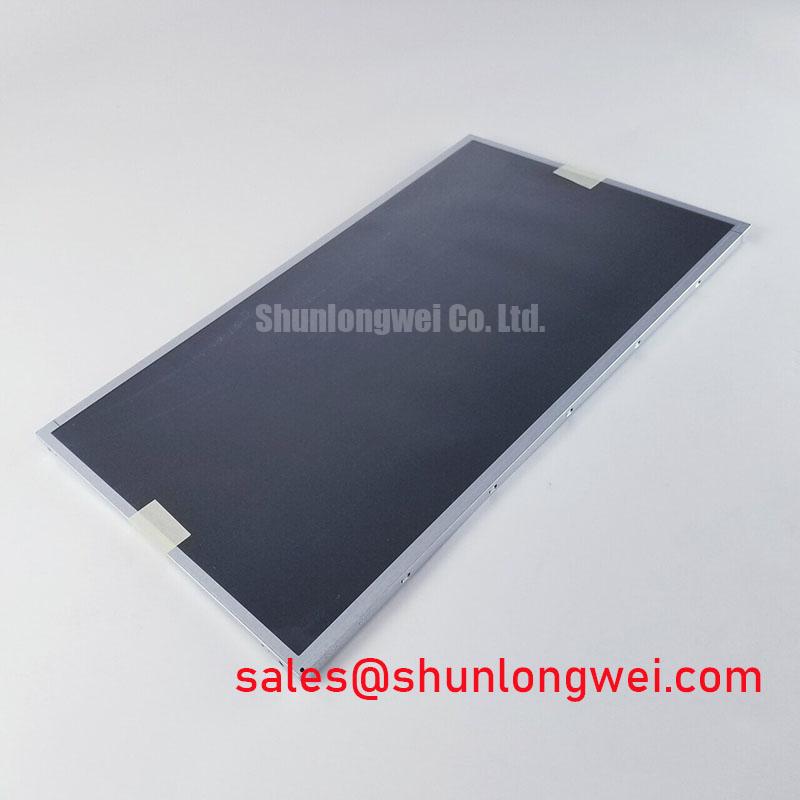
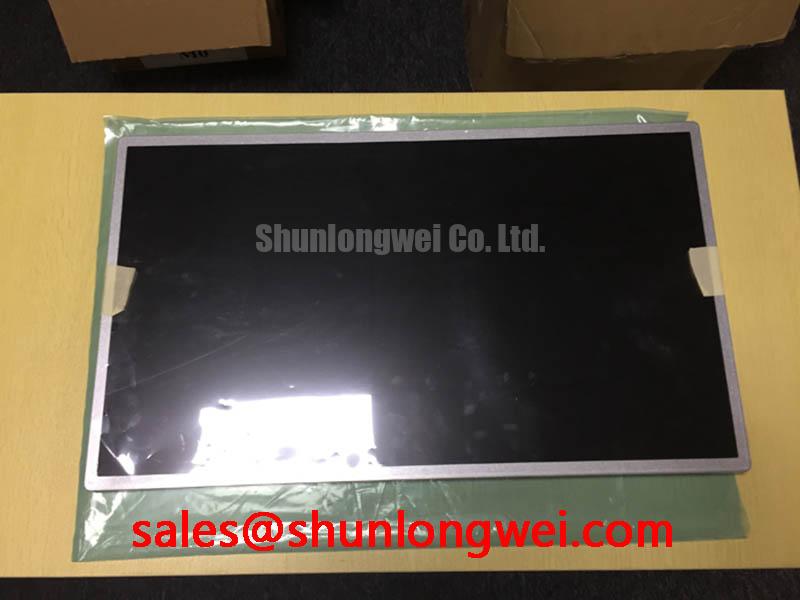
Engineered for superior visual fidelity and operational longevity, the AUO G215HVN01.1 is a 21.5-inch TFT-LCD that leverages high-contrast AHVA technology to deliver consistent, clear imagery in long-life industrial and commercial applications. This display combines key specifications—1920x1080 Full HD | 5000:1 Contrast Ratio | 30,000-Hour Backlight—with tangible engineering benefits, including exceptional image clarity from any angle and sustained performance over the product's lifecycle. It directly addresses the need for a visually consistent and durable display solution for systems like process control HMIs and medical review stations. With its high-contrast AHVA panel, the G215HVN01.1 is the optimal choice for multi-user interfaces where image accuracy and off-axis readability are critical design requirements.
Application Scenarios & Value
System-Level Reliability in Demanding Industrial and Medical Environments
The G215HVN01.1 is engineered to perform in applications where visual precision and long-term consistency are non-negotiable. Its robust feature set provides a reliable foundation for a range of professional systems.
A primary application is in advanced Human-Machine Interface (HMI) panels for industrial automation and process control. In these settings, an operator might need to monitor critical data from various positions on the factory floor. The core challenge is maintaining image legibility and color accuracy regardless of viewing angle. The G215HVN01.1's AHVA (Advanced Hyper-Viewing Angle) technology, delivering a 178°/178° viewing cone, directly solves this problem, ensuring that readouts and status indicators are unambiguous from any practical viewpoint. What is the key benefit of its wide viewing angle? Consistent and accurate image reproduction for multiple operators, reducing the risk of misinterpretation.
Furthermore, its exceptionally high typical contrast ratio of 5000:1 makes it a strong candidate for medical diagnostic displays and instrumentation. This high contrast allows for the clear differentiation of subtle gradients and shades, which is essential for detailed visual analysis. The WLED backlight system, rated for a 30,000-hour minimum lifetime, ensures that this level of performance is maintained over an extended operational period, aligning with the long service life requirements of capital equipment. This focus on durability reduces total cost of ownership by minimizing maintenance cycles and replacement costs. For systems requiring alternative panel technologies, the related G215HAN01.1 may offer different performance characteristics for evaluation.
Key Parameter Overview
Decoding the Specifications for Durability and Visual Performance
The technical specifications of the G215HVN01.1 are tailored to deliver reliable and high-quality visual output. The parameters are organized below by function to facilitate engineering evaluation. This data is based on the official manufacturer documentation.
| Display Characteristics | |
| Screen Diagonal | 21.5 inches |
| Resolution | 1920(RGB) x 1080 (Full HD) |
| Pixel Arrangement | RGB Vertical Stripe |
| Display Mode | AHVA, Normally Black |
| Optical Performance | |
| Luminance | 250 cd/m² (Typ.) |
| Contrast Ratio | 5000:1 (Typ.) |
| Viewing Angle | 89/89/89/89 (Min.) (L/R/U/D) |
| Display Colors | 16.7 Million (8-bit) |
| Surface Treatment | Anti-Glare, Hard Coating (3H) |
| Interface & Backlight | |
| Signal Interface | LVDS (2 ch, 8-bit), 30 pins |
| Backlight Type | WLED |
| Backlight Lifetime | 30,000 hours (Min.) |
| Environmental & Mechanical | |
| Operating Temperature | 0 ~ +60 °C |
| Storage Temperature | -20 ~ +60 °C |
| Outline Dimensions (W x H x D) | 495.6 x 292.2 x 11.7 mm |
Note: The parameters listed above are typical values. For comprehensive details, including timing characteristics and mechanical drawings, please refer to the official datasheet.
Download the G215HVN01.1 datasheet for detailed specifications and performance curves.
Technical Deep Dive
The Engineering Impact of a 5000:1 Contrast Ratio and AHVA Technology
The specification of a 5000:1 contrast ratio is not just a number; it is a critical enabler of image depth and clarity. This parameter defines the luminance difference between the brightest white and the darkest black a display can produce. For the G215HVN01.1, this high ratio, achieved through its AMVA panel technology, means that blacks appear truly deep and dark rather than a washed-out gray. This is crucial in applications like medical imaging, where subtle differences in grayscale can have diagnostic significance. Think of it like listening to an orchestra in a concert hall versus through a low-quality speaker; the high-contrast display preserves the full dynamic range of the visual information.
This is complemented by the "Normally Black" operational mode. In this state, the liquid crystals block light when no voltage is applied. A key system-level benefit is that in the event of a pixel failure, the pixel defaults to black rather than a bright, distracting white dot. This fail-safe characteristic is highly desirable in control rooms and medical environments where a failed pixel should not create false visual information or alarm. Combined with AHVA technology to ensure color fidelity from wide viewing angles, these features make the AUO G215HVN01.1 a robust choice for systems where visual accuracy is paramount. To learn more about the fundamentals of this technology, see The Ultimate Guide to TFT-LCD.
Frequently Asked Questions
Engineering Considerations for the G215HVN01.1 Display Module
What is the primary advantage of the 5000:1 contrast ratio in an industrial HMI application?
A high contrast ratio of 5000:1 dramatically improves readability, especially in environments with variable ambient lighting. It ensures that text, data, and graphical elements stand out with exceptional sharpness and clarity. This reduces operator eye strain and minimizes the potential for errors when reading critical information, contributing to a safer and more efficient workplace. The deep blacks and bright whites make for a much clearer distinction between UI elements.
How does the "Normally Black" feature of the AHVA panel benefit system reliability?
The "Normally Black" characteristic means that if a pixel driver fails, the pixel will appear black. This is a significant advantage over "Normally White" panels, where a failed pixel becomes a bright, distracting point of light. In a control room or medical display, a bright pixel could be misinterpreted as an active signal or alarm. By defaulting to black, the failure is unobtrusive and does not compromise the integrity of the surrounding visual data, making the overall system more reliable and safer to operate. For more on display manufacturer technologies, you can visit the website of industry leader AUO.
For your specific project needs, we encourage a thorough review of the G215HVN01.1 datasheet to confirm its suitability for your design and integration requirements. Our team can provide the necessary documentation to support your evaluation process.