Content last revised on September 10, 2026
LC171W03-A4: A Robust 17.1-inch WXGA+ Display for Specialized Systems
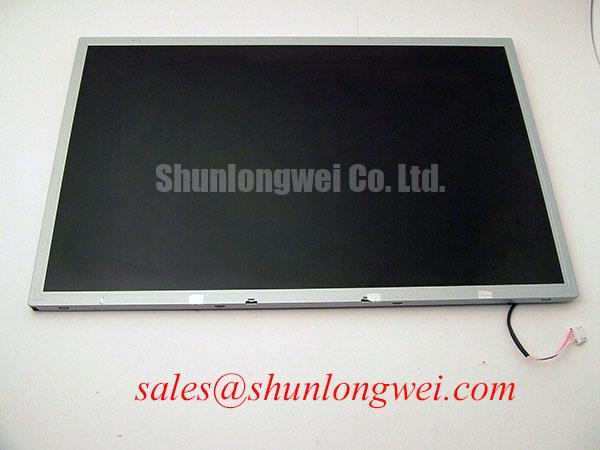
The LC171W03-A4 is a 17.1-inch a-Si TFT-LCD module from LG.Philips LCD, engineered to deliver exceptional visual performance for specific industrial and commercial applications. Offering a unique combination of size, resolution, and aspect ratio—17.1” | 1280x768 WXGA | 15:9 Aspect Ratio—this display provides a reliable and high-quality human-machine interface solution. Key benefits include superior image clarity from its S-IPS technology and simplified integration via a standard LVDS connection. What is the primary benefit of its S-IPS technology? It provides ultra-wide viewing angles and consistent color fidelity. For systems requiring a durable, wide-format panel that deviates from common 16:9 or 4:3 standards, the LC171W03-A4 offers a tailored and effective solution.
Key Parameter Overview
Decoding the Specs for System Integration
The technical specifications of the LC171W03-A4 are optimized for applications demanding precise visual output and reliable operation. Its feature set provides a solid foundation for system designers aiming for performance and longevity.
| Display Characteristics | |
|---|---|
| Manufacturer | LG.Philips LCD |
| Screen Size | 17.1 inches |
| Resolution | 1280(RGB)×768 (WXGA) |
| Aspect Ratio | 15:9 |
| Display Technology | a-Si TFT-LCD, S-IPS, Normally Black, Transmissive |
| Brightness | 450 cd/m² (Typ.) |
| Contrast Ratio | 400:1 (Typ.) |
| Viewing Angle | 88/88/88/88 (Typ.)(CR≥10) |
| Response Time | 25 ms (Typ.) |
| Surface Treatment | Antiglare, Hard coating (3H) |
| Electrical & Backlight | |
| Signal Interface | LVDS (1 ch, 8-bit), 20 pins Connector |
| Input Voltage | 12.0V (Typ.) |
| Backlight System | 6 pcs CCFL with 50k hours minimum lifetime |
| Mechanical & Environmental | |
| Outline Dimensions | 400(W) × 258(H) × 22.7(D) mm |
| Active Area | 372.48(W) × 223.488(H) mm |
| Weight | 2.22 / 2.35 Kgs (Typ./Max.) |
| Operating Temperature | 0°C to 50°C |
Application Scenarios & Value
System-Level Benefits in Specialized HMI and Diagnostic Systems
The LC171W03-A4 is particularly suited for applications where standard display aspect ratios do not fit the mechanical or user interface requirements. Its 15:9 aspect ratio and 1280x768 (WXGA) resolution make it a valuable component for upgrading or maintaining legacy industrial control panels, specialized medical diagnostic equipment, and point-of-sale (POS) systems designed around this specific form factor. The use of S-IPS technology ensures that critical information is displayed accurately with consistent colors, even when viewed from off-angles—a crucial feature for collaborative environments or where an operator's position may vary.
Consider an engineering challenge involving the refurbishment of a fleet of CNC machine control stations. The original HMIs used a 17-inch class display with a wide format that is no longer in mass production. Replacing them with modern 16:9 panels would require costly mechanical retrofitting and UI software redesign. The LC171W03-A4, with its 17.1-inch diagonal and WXGA resolution, provides a near drop-in replacement. Its standard LVDS interface further simplifies the integration, allowing engineers to connect directly to existing controller boards without the need for complex signal conversion. This dramatically reduces redesign effort, validation time, and total cost of ownership, as detailed in guides on industrial vs. consumer displays. While this model is ideal for such specialized systems, for new designs requiring a more standard aspect ratio, the G156XW01 V1 offers a 15.6-inch 16:9 solution.
Frequently Asked Questions
Engineering Inquiries for the LC171W03-A4
What is the advantage of the S-IPS panel technology in this display?
The Super-IPS (S-IPS) technology provides two primary engineering benefits: exceptionally wide viewing angles (88/88/88/88) and superior color fidelity. This means that colors and brightness levels remain consistent regardless of the viewing position, which is critical in medical imaging or control room applications where multiple users may view the screen simultaneously.
How does the 15:9 aspect ratio impact system design?
The 15:9 aspect ratio is wider than the traditional 4:3 but not as wide as the now-common 16:9. This makes it an ideal form factor for retrofitting specific models of industrial machinery or test equipment where the physical enclosure was designed for this unique shape. Using this panel can prevent costly re-tooling of the front bezel and chassis.
Is an external driver required for the CCFL backlight?
Yes, the datasheet specifies that the CCFL backlight system, which has a long operational life of 50,000 hours, requires an external backlight driver. This is a key design consideration, as engineers must allocate space and power for a compatible inverter to drive the six CCFL lamps.
Technical Deep Dive
A Closer Look at the Interface and Display Technology
A key element simplifying the integration of the LC171W03-A4 is its industry-standard LVDS (Low-Voltage Differential Signaling) interface. Configured as a single-channel, 8-bit connection, it provides a robust and well-documented method for transmitting video data. For an engineer, this is a significant advantage. The LVDS interface acts like a dedicated, high-speed expressway for pixel data. This design minimizes electromagnetic interference (EMI) and ensures signal integrity over the length of the cable connecting the display to the system's graphics controller or T-CON board. This inherent noise immunity is a critical factor in complex industrial environments where many sources of electrical noise are present. More details on the underlying technology can be found in resources covering TFT-LCD principles.
Furthermore, the panel's "Normally Black" operational mode, a characteristic of its S-IPS technology, is a crucial reliability feature. In this mode, a pixel will appear black in the absence of a voltage signal. This means that in the event of a pixel or driver failure, the defect will manifest as a dark spot rather than a bright, distracting one. For applications like medical diagnostics or process control monitoring, avoiding bright-pixel defects is paramount to prevent misinterpretation of data and ensure user focus is maintained on the active information. This subtle detail significantly contributes to the display's suitability for mission-focused applications.
To support your system design, our team can provide guidance on sourcing compatible components and navigating integration challenges. Please reach out with your project's specific requirements for a more detailed consultation.