
Content last revised on September 10, 2026
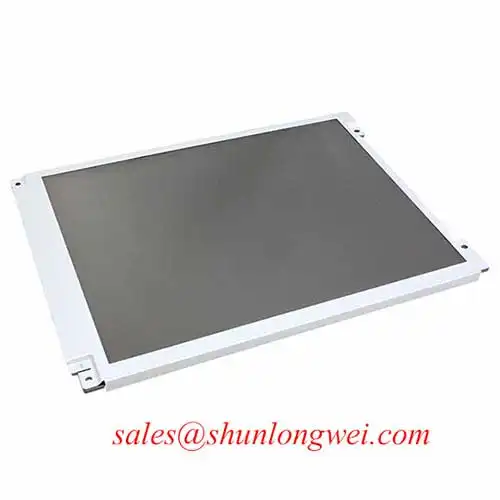
LC171W03-A4K6 LG Philips 17.1-inch 1280x768 WXGA Industrial LCD Panel
The LC171W03-A4K6 represents a specialized engineering solution for industrial and medical HMI applications requiring a distinct 15:9 aspect ratio and high optical clarity. As a high-performance a-Si TFT-LCD, this module balances a 1280x768 (WXGA) resolution with a sustained 450 cd/m² brightness, ensuring that critical data remains legible even in high-ambient light environments like clinical laboratories or factory floors. By utilizing a 1-channel LVDS interface, it maintains high signal integrity and low electromagnetic interference (EMI), which is essential for sensitive diagnostic equipment.
Top Specs: 17.1-inch | 450 cd/m² Brightness | 1280x768 WXGA | LVDS 8-bit Interface.
Key Benefits: High-color accuracy with 16.7M support; Robust 15:9 widescreen for dense data visualization.
Primary Question: What is the primary benefit of its CCFL configuration? It provides a stable 450 cd/m² luminance, ensuring consistent visibility in well-lit medical and industrial environments.
For medical diagnostic workstations requiring a stable 15:9 aspect ratio and 16.7M color depth, the LC171W03-A4K6 is the optimal choice.
Key Parameter Overview
Decoding the Optical Performance for Industrial Visibility
The LC171W03-A4K6 is designed with a focus on long-term display stability. Its 450 cd/m² brightness can be compared to a high-end office monitor; while consumer tablets might struggle under overhead fluorescent lighting, this panel maintains a clear, punchy image. This luminance is paired with a 400:1 contrast ratio, which ensures that text and graphical UI elements are sharply defined against backgrounds.
| Technical Specification | Value / Rating | Engineering Value |
|---|---|---|
| Screen Size | 17.1-inch Diagonal | Optimized for mid-sized industrial consoles. |
| Resolution | 1280 (RGB) × 768 [WXGA] | High pixel density for detailed waveform imaging. |
| Interface Type | LVDS (1 ch, 8-bit) | Ensures low EMI in sensitive medical environments. |
| Brightness (Luminance) | 450 cd/m² (Typical) | Visibility in high-ambient light environments. |
| Contrast Ratio | 400:1 (Typical) | Defined UI elements for faster operator response. |
| Response Time | 25 ms (Typical) | Reduced ghosting in real-time monitoring. |
Application Scenarios & Value
Maximizing Reliability in Medical and Industrial Control Systems
In a medical imaging scenario, such as a patient monitoring system, display failure is not an option. The LC171W03-A4K6 addresses this challenge through its robust LVDS 8-bit architecture. This interface supports 16.7 million colors, which is vital for distinguishing subtle color variations in diagnostic scans. Furthermore, the 15:9 aspect ratio provides more horizontal real estate compared to traditional 4:3 displays, allowing engineers to place sidebar controls without obscuring the primary data feed.
For industrial automation, the 450-nit brightness solves the "washout" effect often seen in warehouse terminals. By maintaining high contrast under bright LED lighting, it reduces operator eye fatigue and minimizes input errors. While this model is ideal for 17.1-inch wide-format needs, for systems requiring a more standard 15-inch industrial footprint, the related G150XNE-L01 or the M170ETN01.1 offer alternative resolution and aspect ratio profiles within similar mechanical envelopes.
Integration in these environments often involves adherence to IEC 61800-3 or industrial HMI standards for vibration and temperature stability. The LC171W03-A4K6 provides the mechanical rigidity required to withstand the micro-vibrations of CNC machinery, ensuring the internal CCFL backlight remains secured and functional throughout its lifecycle.
Application Vignette
Addressing Ambient Light Challenges in Medical HMI Environments
Consider an engineer designing a bedside monitoring station for an Intensive Care Unit (ICU). The environment fluctuates between low light during night shifts and intense, direct fluorescent lighting during emergencies. A standard consumer display would often fail here, either by being too dim to read during the day or having insufficient color depth to show vital sign gradients accurately.
The solution lies in the LC171W03-A4K6's high-luminance CCFL backlight. With 450 nits of brightness, the display acts like a powerful flashlight that "pushes back" against ambient glare. Because the unit uses an 8-bit LVDS signal, the transition between color states is fluid, preventing "banding" in complex medical waveforms. This results in a system-level benefit where clinicians can make faster, more accurate decisions because the visual data is rendered with uncompromising fidelity, regardless of the room's lighting conditions.
Technical Deep Dive
A Deeper Dive into the a-Si TFT Matrix and CCFL Efficiency
The core of the LC171W03-A4K6 is its Amorphous Silicon (a-Si) TFT active matrix. Unlike LTPS technology which is often used for high-end smartphones, a-Si provides superior cost-efficiency and thermal stability for larger industrial panels. The a-Si layer acts as the "switch" for each pixel, and in this specific model, it has been optimized to maintain a consistent 25ms response time.
To understand the 25ms response time, think of it like the shutter speed of a camera. While not intended for high-speed gaming, 25ms is the "sweet spot" for industrial HMIs. It is fast enough to ensure that moving graphical bars or digital dials appear smooth to the human eye, yet slow enough to minimize the power consumption and heat generation often associated with ultra-fast refresh rates. This thermal management is a strategic advantage, as it prevents the LCD Display from overheating in enclosed, fanless metal chassis common in hazardous environments. For more on the evolution of these display structures, see The Ultimate Guide to TFT-LCD.
FAQ
How does the 450 cd/m² brightness of the LC171W03-A4K6 impact the Total Cost of Ownership (TCO)?
Higher brightness reduces the need for additional external shielding or anti-glare coatings in well-lit factories. This simplifies the mechanical design and reduces long-term maintenance costs associated with screen readability issues. More details on TCO can be found in our guide on Industrial vs Consumer Displays.
Is the 1-channel LVDS interface compatible with modern single-board computers?
Yes, the 8-bit 1-channel LVDS interface is a widely adopted industry standard. It is compatible with most industrial motherboards and ARM-based controllers, providing a plug-and-play experience for most embedded engineers.
Why is the 15:9 aspect ratio significant for medical applications?
Standard 16:9 displays can be too "short" for certain vertical data stacks, while 4:3 can be too narrow. The 15:9 ratio of the LC171W03-A4K6 offers a specialized middle ground, allowing for side-by-side data comparison without losing vertical resolution, which is critical for complex diagnostic UIs.
What is the typical operating temperature range for this module?
While specific environmental limits are detailed in the datasheet, the LC171W03-A4K6 is engineered for standard industrial environments, typically ranging from 0°C to 50°C. For applications in more extreme heat, engineers should consider additional thermal sinks or airflow within the HMI enclosure.
Selecting the right industrial display is a strategic decision that bridges the gap between raw data and human action. The LC171W03-A4K6 offers a proven, robust platform for those who refuse to compromise on visibility and data integrity. As industrial systems move toward more complex visualizations, the reliability of the underlying TFT-LCD remains the cornerstone of system uptime and operator safety.
