




Content last revised on February 2, 2026
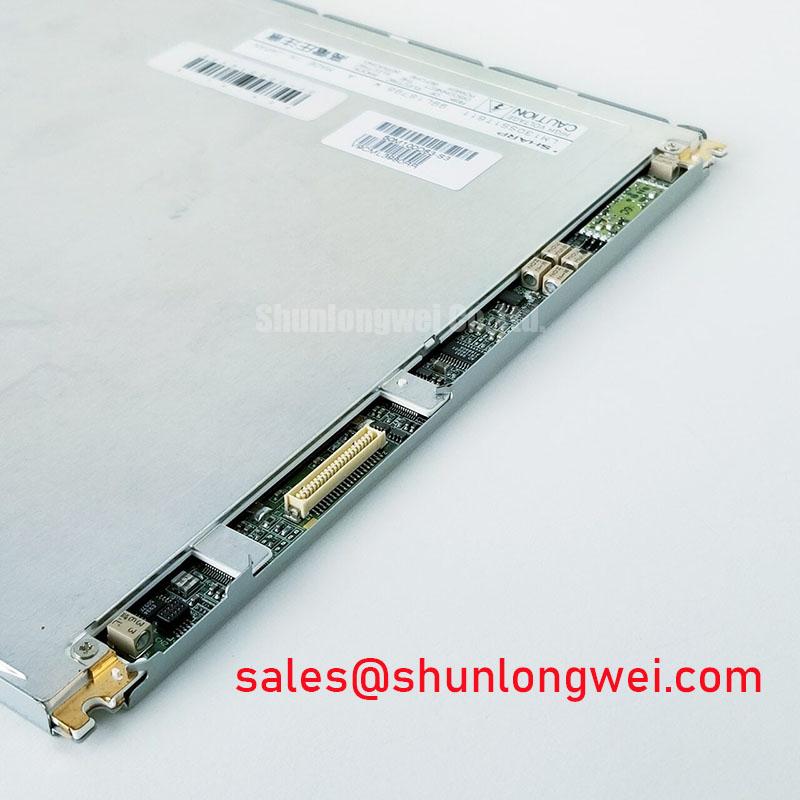
LM130SS1T611: 13.0-inch SVGA Color STN Display for Industrial HMI and Control Systems
Engineering a Legacy: Reliability and Clarity in Demanding Visual Applications
A Strategic Perspective on Mechanical Robustness & Environmental Resilience
The Sharp LM130SS1T611 is a 13.0-inch Color STN-LCD module engineered for longevity and consistent performance in industrial environments. Delivering a dependable SVGA resolution, this display is built to integrate seamlessly into systems where clarity and operational uptime are critical. Its key specifications include an 800x600 pixel format, a slim 7.5mm maximum thickness, and specialized technologies for enhanced image quality. The primary benefits are its durable, thin structure and improved optical performance, which address the need for robust visualization in space-constrained industrial equipment. This model is a direct solution for engineers seeking a proven display technology for legacy system support or new designs requiring straightforward, reliable visual output without the complexity of modern high-resolution interfaces.
Key Parameter Overview
Decoding the Specs for System Integration and Visual Performance
The technical specifications of the LM130SS1T611 are foundational to its role in industrial applications. The parameters below highlight its capabilities, focusing on the core attributes that engineering and procurement professionals need for system design and evaluation. The balance between size, resolution, and power consumption makes it a pragmatic choice for specific HMI and monitoring tasks.
| Parameter | Specification | Engineering Significance |
|---|---|---|
| Display Size | 13.0 inches (33 cm) diagonal | Provides a large, clear viewing area suitable for complex data visualization in industrial control panels. |
| Resolution | 800 x 600 Pixels (SVGA) | Offers sufficient detail for standard industrial GUIs, schematics, and monitoring systems. |
| Outline Dimensions | 295.0 x 218.0 x 7.5 (Max) mm | The slim 7.5 mm profile facilitates integration into enclosures with tight space constraints, a common challenge in equipment retrofits. |
| Contrast Ratio | 50:1 (Typ.) | Ensures clear differentiation between elements on the screen, crucial for reducing operator error in fast-paced environments. |
| Display Technology | Color STN-LCD with HP-A Technology | Utilizes High-Performance Addressing (HP-A) to achieve faster response times and higher contrast than standard STN displays. |
| Backlight System | CCFL | A mature and reliable backlighting solution providing consistent brightness for indoor industrial settings. |
Download the LM130SS1T611 datasheet for detailed specifications and performance curves.
Application Scenarios & Value
System-Level Benefits in Industrial Automation and Test Equipment
The LM130SS1T611 is best suited for applications where a balance of size, readability, and long-term reliability is more critical than cutting-edge resolution or color depth. Its robust design and proven technology make it an excellent choice for maintaining or upgrading legacy industrial systems. For systems that require different resolutions or features, related models like the G150XNE-L01 may offer alternative solutions.
- Industrial HMI Panels: In manufacturing environments, control panels for machinery often require large, simple-to-read displays that can withstand vibration and operate reliably over long shifts. The LM130SS1T611's SVGA resolution is ideal for displaying critical process parameters, alarms, and control interfaces without overwhelming the operator.
- Test and Measurement Equipment: For laboratory or production line test equipment, this display provides a clear and stable canvas for viewing waveforms, measurement data, and test sequences. Its 50:1 contrast ratio helps distinguish fine details in graphical readouts.
- Point-of-Sale (POS) and Kiosk Systems: The 13.0-inch screen size offers ample space for user interaction in specialized retail or information kiosk applications that do not require high-definition video capabilities. Its durable construction is well-suited for public-use environments.
Frequently Asked Questions (FAQ)
What is the primary advantage of the HP-A (High-Performance Addressing) technology used in the LM130SS1T611?
HP-A technology significantly improves the display's response time and contrast ratio compared to traditional STN panels. For an engineer, this translates to reduced motion blur or "ghosting" on screen and clearer, more legible text and graphics, which is vital for reducing operator misinterpretation in control applications.
How does the 7.5mm maximum thickness benefit system design?
The thin profile allows for greater flexibility in mechanical design, enabling engineers to create more compact and space-efficient enclosures. This is particularly valuable when retrofitting older equipment that has limited internal space or when designing new, streamlined HMI units.
Is the CCFL backlight on the LM130SS1T611 user-replaceable?
While CCFL backlights are a mature technology, their replacement typically requires specific technical expertise and careful handling. It is recommended to consult technical documentation regarding the serviceability of the backlight unit, as it is often integrated into the display module assembly.
What type of controller and interface are typically required for the LM130SS1T611?
This module generally requires a standard LCD controller that supports an 8-bit or 6-bit digital RGB interface for STN-type displays. Engineers should verify the specific pinout and signal requirements from the official datasheet to ensure compatibility with their chosen driver board or single-board computer.
Industry Insights & Strategic Advantage
Ensuring Operational Continuity with Proven Display Technology
In an industry focused on rapid technological advancement, the strategic value of components like the LM130SS1T611 lies in their stability and predictability. For sectors such as industrial manufacturing, automation, and long-life medical devices, system validation and certification processes are extensive and costly. Integrating a display with a long history of reliable field performance minimizes the risk of redesign and recertification. The LM130SS1T611, manufactured by a reputable company like Sharp, represents a commitment to maintaining operational continuity. Choosing such a component allows engineering teams to focus resources on core application development rather than debugging and validating unproven display technologies, ensuring a lower total cost of ownership and faster time-to-market for equipment with long service life requirements.
Strategic Considerations
The LM130SS1T611 serves as a critical component for ensuring the operational lifespan of existing industrial infrastructure and for developing new systems where proven reliability outweighs the need for the latest display specifications. Its design focuses on delivering core performance—clarity, durability, and ease of integration—which provides a stable platform for a wide range of human-machine interface applications. For procurement and engineering managers, this display offers a low-risk, dependable solution that supports long-term product availability and serviceability, safeguarding against costly redesigns and ensuring system uptime.