
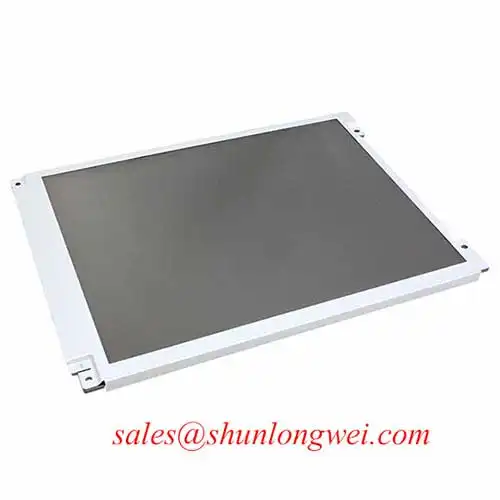
Content last revised on February 9, 2026
LM238WF5-SSE1 Engineering Analysis: A 23.8" FHD IPS Panel Optimized for Seamless Multi-Monitor Integration
Delivers exceptional visual performance and mechanical integration for modern display systems. The LM238WF5-SSE1 is an advanced 23.8-inch a-Si TFT-LCD module defined by its 3-side borderless architecture and vibrant IPS technology. Top Specs: 1920x1080 FHD | 1000:1 Contrast | 89/89/89/89 Viewing Angles. Key Benefits: Enables near-seamless multi-monitor arrays; ensures off-axis image clarity. It directly addresses the need for immersive, bezel-free visual workspaces, making it a superior choice for integrated system designs.
Application Scenarios & Value
System-Level Benefits of the 3-Side Borderless Design
For control room systems requiring FHD clarity and minimal bezel interference, the LM238WF5-SSE1 is an optimal choice. Its primary engineering value lies in the 3-side borderless design, which fundamentally changes how multi-monitor systems are designed and experienced. In applications like an Industrial HMI, financial trading desks, or process control centers, multiple displays are often tiled to form a single, expansive information dashboard. Traditional bezels create distracting visual breaks, forcing operators to mentally stitch together fragmented data. The minimal bezel of this module mitigates that issue, enabling the creation of a near-seamless digital canvas that enhances situational awareness and reduces cognitive load.
The difference between a standard bezel and the LM238WF5-SSE1's borderless design is like watching a scene through a window with thick frames versus a floor-to-ceiling glass wall. The frames are a constant distraction, breaking the immersion, while the borderless view provides a continuous, uninterrupted picture. This is further amplified by its IPS (In-Plane Switching) technology, which guarantees that color and contrast remain accurate even when viewed from extreme angles. This ensures all operators in a room see the same exact information, a critical requirement for collaborative decision-making. These features make it highly suitable for advanced digital signage video walls where visual continuity is paramount. For systems with similar size requirements, designers may also evaluate the specifications of the G238HAN01.0 module.
Key Parameter Overview
Decoding the Specifications for System Integration
The technical specifications of the LM238WF5-SSE1 are centered on delivering high-fidelity visuals with straightforward system integration. The combination of resolution, panel technology, and a standard interface makes it a versatile foundation for a wide range of products.
| Parameter | Specification |
| Display Technology | a-Si TFT-LCD, IPS |
| Screen Size | 23.8 inches |
| Resolution | 1920(RGB)×1080, FHD, 92 PPI |
| Brightness | 250 cd/m² (Typ.) |
| Viewing Angle | 89/89/89/89 (Typ.) (L/R/U/D) |
| Contrast Ratio | 1000:1 (Typ.) |
| Interface | LVDS (2 ch, 8-bit), 30 pins Connector |
| Surface Treatment | Antiglare (Haze 25%), Hard coating (3H) |
| Key Feature | 3-Side Borderless Design |
Application Vignette
Case Study: Enhancing Situational Awareness in an Industrial Control Room
An energy distribution facility faced a significant operational challenge: their control room relied on an array of older monitors with thick, intrusive bezels. Operators monitoring the grid had their view fragmented across multiple screens, forcing them to constantly shift focus and mentally reconstruct the complete operational picture. This fragmentation introduced delays in identifying and responding to critical network anomalies. The goal was to create a unified, panoramic monitoring canvas without a complete overhaul of the existing video controller hardware.
The engineering team selected the LM238WF5-SSE1 to construct a new 2x2 multi-monitor array. The choice was driven by two key characteristics. First, the 3-side borderless design allowed the four panels to be tiled with minimal physical separation, creating a single, expansive digital workspace that drastically improved data continuity. Second, the module's industry-standard LVDS interface ensured plug-and-play compatibility with their existing video wall controller, eliminating the need for costly hardware upgrades and complex driver development. This significantly de-risked the project and accelerated the deployment timeline.
Relying on a panel with poor viewing angles in a multi-user environment is like trying to read a street sign from a sharp angle—the information becomes distorted or unreadable. The LM238WF5-SSE1's 89-degree all-axis viewing angle is the equivalent of having the sign turn to face you directly, no matter where you stand. This ensured that critical alarm data, often color-coded and located in the corners of the display array, was perfectly legible to every operator in the room, facilitating faster, more reliable collaborative responses.
Frequently Asked Questions
Engineering Questions Answered
How does the 3-side borderless design of the LM238WF5-SSE1 impact mechanical design and total cost of ownership?
The borderless design greatly simplifies the mechanical enclosure required for multi-monitor arrays. It reduces the material and complexity needed for housing, leading to a lighter, sleeker final product and lower manufacturing costs. This allows for a lower total cost of ownership, especially in large-scale deployments.
What specific advantages does the IPS panel offer over a standard TN panel in an Industrial HMI application?
What is the primary benefit of its IPS technology? Uncompromising color accuracy and clarity from any viewing angle. In an industrial setting, operators may not always be directly in front of the screen. IPS technology ensures that safety warnings, status indicators, and data charts are legible and their colors are consistent from wide off-axis angles, preventing critical misinterpretations that can occur with TN panels.
Is the standard 250 cd/m² brightness suitable for typical indoor control room environments?
Yes, a brightness of 250 cd/m² is well-suited for most indoor professional environments, including control rooms, offices, and broadcast studios. It provides clear, comfortable viewing without causing eye strain during extended use and operates efficiently in typical ambient lighting conditions.
What does the LVDS (2 ch, 8-bit) interface imply for system compatibility?
The use of a standard LVDS (2 channel, 8-bit) interface is a significant advantage for design engineers. It is a mature, widely adopted standard with a vast ecosystem of compatible controller boards, cables, and drivers. This simplifies the integration process, reduces development risk, and shortens the time-to-market for new product designs or system upgrades.
The evolution of display modules is moving beyond simple specifications toward features that enhance system-level value. Integrated designs that prioritize ergonomics and data clarity are becoming critical in professional applications. The LM238WF5-SSE1, with its focus on a seamless visual experience, is positioned not merely as a component, but as a strategic enabler for the next generation of data-intensive human-machine interfaces.