
Content last revised on December 3, 2025
LG Philips LP150X05-C2: A Robust 15.0-Inch XGA Display for Legacy System Continuity
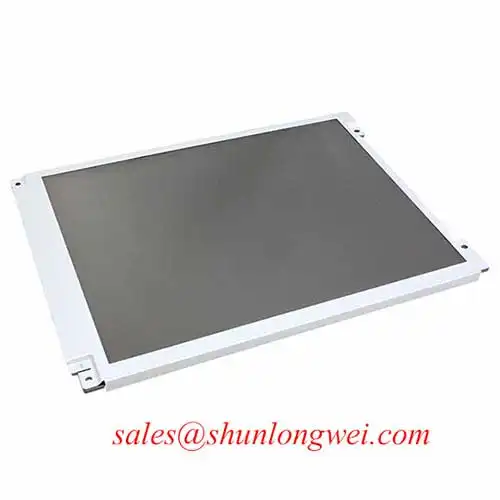
The LG Philips LP150X05-C2 is an a-Si TFT-LCD module engineered to deliver reliable visual performance and straightforward integration into existing systems. Offering a crisp **1024x768 XGA resolution** on a **15.0-inch** screen and a standard **LVDS interface**, this display provides a dependable solution for maintaining and extending the life of industrial and commercial equipment. Key benefits include its proven compatibility with legacy system architectures and a design focused on operational stability. This makes it a strategic choice for engineers looking to replace or service displays in devices like industrial HMIs or medical monitors without undertaking a complete system redesign. For applications requiring a drop-in replacement that balances performance with proven technology, the LP150X05-C2 provides an optimal and cost-effective pathway.
Application Scenarios & Value
Ensuring Operational Continuity in Legacy Industrial and Medical Systems
The LP150X05-C2 is engineered as a durable display solution for environments where reliability and long-term serviceability are paramount. Its classic 15.0-inch form factor and 1024x768 XGA resolution make it an ideal candidate for drop-in replacements in a wide range of legacy equipment, minimizing downtime and costly system overhauls. For an engineer tasked with maintaining a fleet of CNC machines, point-of-sale (POS) terminals, or patient monitoring systems, sourcing a compatible display is a critical challenge. The LP150X05-C2 directly addresses this by providing a form, fit, and function match for many aging assets, preserving the original system's integrity and user interface.
A key enabler of this seamless integration is the display's LVDS (1 ch, 6-bit) interface. This industry-standard connection simplifies the electronic hookup to existing single-board computers (SBCs) or custom controllers, bypassing the need for complex interface converters. The display's reliance on a conventional CCFL backlight system also ensures compatibility with the power inverters commonly found in equipment from its era. This focus on backward compatibility makes the LP150X05-C2 more than just a component; it's a strategic tool for asset lifecycle management in industrial automation and healthcare sectors. For systems where a transition to newer LED backlight technology is feasible, the related G150XNE-L01 offers a more modern alternative in a similar size class.
Key Parameter Overview
Technical Specifications for Seamless System Integration
The technical specifications of the LP150X05-C2 are tailored to ensure dependable performance in established applications. The following table highlights the key parameters that are critical for system integration and design verification.
| Feature | Specification |
|---|---|
| Display Type | a-Si TFT-LCD, Normally White, Transmissive |
| Screen Size | 15.0 inches (diagonal) |
| Resolution | 1024(RGB)×768, XGA, 85 PPI |
| Aspect Ratio | 4:3 (H:V) |
| Brightness | 200 cd/m² (Typ.) |
| Contrast Ratio | 250:1 (Typ.) |
| Viewing Angle | 45/45/15/35 (L/R/U/D) (Typ.)(CR≥10) |
| Signal Interface | LVDS (Low-Voltage Differential Signaling), 1 channel, 6-bit |
| Backlight System | 1 pcs CCFL with 10K hours (Min.) lifetime |
| Outline Dimensions | 317.3(W) × 241.5(H) × 6.0(D) mm |
| Operating Temperature | 0 ~ 50 °C |
| Input Voltage (Logic) | 3.3V (Typ.) |
Note: The parameters listed above are based on compiled reference data. Engineers should consult the official datasheet for comprehensive specifications and performance curves.
Frequently Asked Questions
Addressing Key Engineering Questions for the LP150X05-C2
What are the primary advantages of the LVDS interface on the LP150X05-C2 for legacy systems?
The LVDS interface is a key advantage for system integration because it was a widely adopted standard for transmitting video data. Its differential signaling reduces electromagnetic interference (EMI) and allows for reliable data transfer over short distances with a simple, low-pin-count connector, making it a straightforward connection to the graphics controllers of its era.
How does the CCFL backlight affect system design compared to modern LED backlights?
The Cold Cathode Fluorescent Lamp (CCFL) backlight requires a high-voltage inverter to operate, which must be accounted for in the system's power budget and physical layout. While modern LEDs operate on low-voltage DC, the CCFL system in the LP150X05-C2 ensures direct compatibility with the existing inverters in legacy hardware, simplifying repair and replacement without needing to re-engineer the power delivery system.
Is the 1024x768 XGA resolution sufficient for modern industrial HMI applications?
For maintaining or repairing existing systems originally designed for XGA, this resolution is perfectly sufficient and often required for software compatibility. Many legacy Human-Machine Interface (HMI) applications are hard-coded for this specific resolution. Using the LP150X05-C2 avoids the need for software redevelopment or scaling adjustments that would be necessary with a different resolution panel.
What mechanical aspects are most important when using this panel as a drop-in replacement?
Engineers must verify three critical mechanical aspects: the overall outline dimensions (317.3 x 241.5 x 6.0 mm), the location and type of the side mounting holes (8-M2), and the position of the 30-pin LVDS connector. Ensuring these match the existing chassis and cabling is essential for a successful and rapid replacement.
From a strategic standpoint, the continued availability of panels like the LP150X05-C2 is crucial for extending the operational life of significant capital investments in industrial machinery and medical devices, directly supporting a more sustainable and cost-effective approach to technology management.