

Content last revised on October 17, 2026
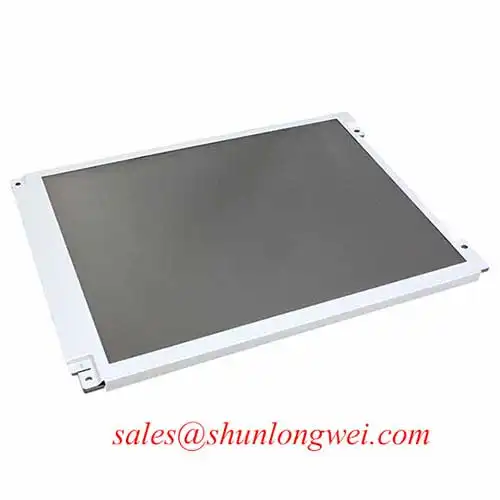
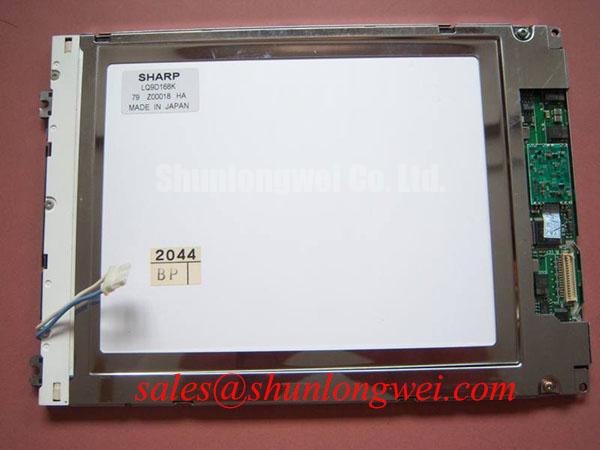
LQ9D168K Sharp TFT-LCD Active Matrix Industrial Display Module
For a dark or uneven AGV or forklift display, first isolate the panel from its host system and inspect the module label, connector seating, cable condition, and visible screen damage. The supplied product baseline identifies LQ9D168K as a Sharp TFT-LCD active-matrix color display module in an industrial-grade LCD/HMI panel category. It does not specify luminance, resolution, interface, backlight type, supply voltage, operating temperature, or touch functionality, so those values should not be assumed during a repair.
Before ordering a replacement, compare the installed unit’s full part marking and connector arrangement with the equipment documentation. A matching model code alone does not establish electrical or mechanical interchangeability. The product reference is available on the LQ9D168K product page.
Backlight Diagnosis and Optical Compatibility
When the image is faint, use a controlled diagnostic sequence to distinguish a display-path problem from a backlight or host-power problem. Check whether the image remains visible under external illumination, then inspect the panel cable and the host’s documented backlight supply and control signals. A dark screen alone does not identify a failed backlight: the host supply, driver, cable, or display signal path may also be involved.
The available product baseline does not identify the LQ9D168K backlight technology or specify luminance, dimming method, lifetime, or optical surface treatment. Do not apply CCFL ignition-voltage assumptions, LED current settings, PWM frequency targets, or service-life figures to this model without the applicable panel documentation. If the original backlight driver is being evaluated, trace its output and enable signals using the system schematic and the driver’s own specifications. A related display reference, TX17D02VM2CAA-2, may be reviewed as a separate component; its presence does not establish compatibility with this panel.
For a potential AGV or forklift telematics installation, assess the complete display assembly in its actual enclosure. Glare, viewing angle, ambient illumination, vibration, and cable strain are system-level concerns. When integrating, designers should verify the panel’s optical and mechanical requirements against the original equipment documentation rather than infer them from the industrial-grade category.
Electrical Interface and Replacement Comparison
Before reconnecting a replacement panel, record the host connector orientation, cable routing, and documented supply and signal assignments. Compare those details with the panel-specific documentation; do not infer pinout, logic voltage, data mapping, or power-on sequencing from the TFT-LCD description. If the host boots but the image is split, unstable, or absent, inspect connector seating and signal continuity, then compare the observed interface with the known-good equipment schematic.
| Reference | Information in the supplied product baseline | Replacement check |
|---|---|---|
| LQ9D168K | Sharp; TFT-LCD active-matrix color display module; decoded baseline / standard form factor | Confirm dimensions, connector, pinout, interface, and electrical requirements from the relevant documentation. |
| LQ9D152 | Reference model; comparative electrical and mechanical specifications are not provided here. | Do not treat the model as a drop-in substitute without a specification and fit comparison. |
This comparison is intended to keep the selection decision tied to verified information. “Standard form factor” in the baseline is not a dimensional drawing and does not confirm mounting-hole positions, bezel fit, or connector compatibility. For an AGV or forklift display repair, check the actual enclosure opening and cable reach as well as the panel’s electrical interface before committing to a replacement.
Field Alert: Disconnect system power before inserting or removing the display cable, and follow the equipment maker’s handling procedure.
Temperature and Environmental Integration
Cold-start complaints should be evaluated at the equipment level: note ambient conditions, the time from power-on to a stable image, and whether the behavior changes after the enclosure warms. These observations can help distinguish a panel response issue from a host supply or signal problem, but they do not establish an operating-temperature rating for the LQ9D168K. The supplied baseline contains no temperature limits, response-time data, or environmental qualification values.
Likewise, do not assign this panel a specified cold-start range or assume that it includes a heater, sealing feature, or vibration protection. For mobile equipment such as warehouse AGVs and forklift telematics terminals, assess enclosure protection, mounting support, cable retention, condensation exposure, and thermal conditions as part of the complete system. Designers should verify the intended environmental limits against the panel documentation and the equipment requirements before installation.
For broader display integration considerations, consult Industrial Display & HMI Solutions. This engineering reference provides system-level context; it does not add unverified ratings to the LQ9D168K.
Noise, Cable Routing, and Image Stability
Intermittent pixel noise or horizontal bands call for a methodical check of the signal path and its surroundings. Inspect cable seating, routing, shielding continuity where the equipment design specifies it, and separation from noisy power wiring. Compare the display behavior with the machine’s switching loads inactive and active, while observing the host output and supply using equipment appropriate to the circuit. These checks can identify a coupling or connection issue without assigning a model-specific immunity rating.
No interface standard, cable construction, common-mode immunity, EMC approval, or permissible routing distance is identified in the product baseline. Do not apply a differential impedance target or ferrite selection as a LQ9D168K specification. Any cable shield termination or filtering change should follow the system design and be validated on the assembled equipment; a display module does not, by itself, establish compliance of the complete machine.
For manufacturer-level industrial display information, see Sharp Devices Europe Industrial Display Solutions and the Sharp Display Solutions official portal. Use the relevant model documentation to confirm the interface and ratings needed for the repair.