
Content last revised on February 9, 2026
Samsung LTM270DL08: Engineering a 27-inch QHD Visual Powerhouse
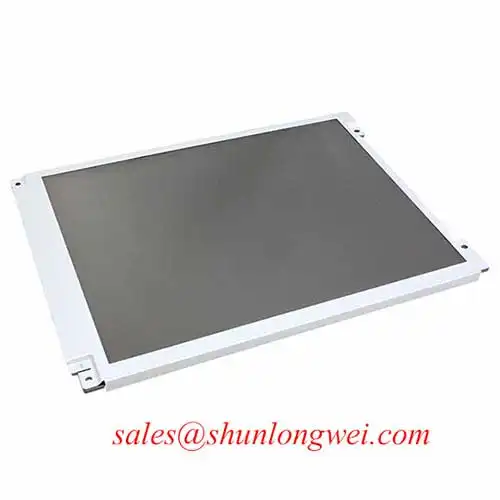
The Samsung LTM270DL08 is a 27.0-inch a-Si TFT-LCD module, engineered as a PLS (Plane-to-Line Switching), normally black transmissive display panel. It delivers a dense 2560x1440 QHD resolution and full 100% sRGB color coverage, establishing a new benchmark for visual fidelity in professional applications. Key benefits include simplified multi-monitor integration and uncompromising color accuracy. This panel directly addresses the engineering need for displays with minimal bezels for tiling in video walls or control rooms. For professional workstations requiring both high pixel density and seamless multi-display capability, this 27-inch QHD panel is the definitive choice.
Application Scenarios & Value
System-Level Benefits in Multi-Display Environments
The LTM270DL08 is engineered to excel in applications where visual information density and uninterrupted sightlines are critical. Its primary value is unlocked in systems that require multiple screens to form a single, cohesive digital canvas. Consider a high-fidelity engineering scenario such as a medical imaging workstation for radiologists or a process control room in an industrial facility. In these environments, operators must analyze complex data across several displays. The 3-side borderless design of the LTM270DL08 is a decisive feature, minimizing the physical gap between adjacent panels. This dramatically reduces visual disruption, allowing for a more immersive and less fatiguing user experience when tracking critical information across screens, directly contributing to improved accuracy and productivity in settings like Medical PACS systems or CAD/CAM workstations.
The panel's native 2560x1440 QHD resolution provides the pixel density (108 PPI) necessary to render fine details with exceptional clarity, a non-negotiable requirement for diagnostic imaging or intricate schematic reviews. This combination of a minimal bezel and high resolution simplifies the mechanical design of enclosures and mounting systems, ultimately reducing both project complexity and total cost of ownership. While this model delivers premier resolution, systems designed for standard HD content could evaluate the related G270HAN01.0 for different project requirements.
Key Parameter Overview
Decoding the Specs for Visual Performance and Integration
The technical specifications of the LTM270DL08 are optimized for professional-grade visual performance and straightforward system integration. The following parameters are central to its capabilities in demanding applications.
| Display Characteristics | |
|---|---|
| Manufacturer | Samsung |
| Model Name | LTM270DL08 |
| Screen Size | 27.0 inches |
| Resolution | 2560(RGB)×1440 (Quad-HD) |
| Panel Technology | a-Si TFT-LCD, PLS, Normally Black |
| Optical Performance | |
| Brightness | 350 cd/m² (Typ.) |
| Contrast Ratio | 1000:1 (Typ.) |
| Viewing Angle | 89/89/89/89 (L/R/U/D) (Typ.) (CR≥10) |
| Display Colors | 16.7M (8-bit) |
| Color Gamut | 100% sRGB |
| Interface & Electrical | |
| Signal Interface | LVDS (4 ch, 8-bit), 57 pins Connector |
| Supply Voltage | 5.0V (Typ.) |
| Backlight System | WLED, Edge Light Type (40K hours, external driver required) |
| Mechanical & Environmental | |
| Outline Dimensions | 608.8(W) × 355.13(H) × 13.7(D) mm |
| Active Area | 596.736(W) × 335.664(H) mm |
| Surface Treatment | Antiglare, Hard coating (3H) |
| Operating Temperature | 0 ~ 50 °C |
Technical Deep Dive
The Engineering Synergy of PLS Technology and Borderless Design
The superior performance of the LTM270DL08 is not the result of a single specification, but the interplay of its core technologies. The panel's PLS technology, a close relative of IPS (In-Plane Switching), is foundational to its wide viewing angles and color stability. From an engineering perspective, PLS technology works like a set of precisely controlled Venetian blinds at each pixel. Unlike older technologies that just tilt the 'blinds' up and down, PLS rotates them horizontally, ensuring that light is distributed evenly across a wide plane. This physical principle is why the view remains consistent and the colors do not shift, even when viewed from significant off-axis positions—a critical factor for collaborative workstations and public information displays.
This optical excellence is paired with a mechanically advantageous 3-side borderless form factor. For a system designer, this feature transcends aesthetics; it directly impacts structural design and thermal management. Tiling multiple displays requires a robust mounting frame. The reduced bezel minimizes the inactive area between screens, allowing for a more compact and structurally efficient support system. Furthermore, it simplifies the design of airflow pathways for cooling, as there is less physical obstruction at the panel edges. This synergy between advanced optical performance and intelligent mechanical design makes the LTM270DL08 a highly effective component for creating sophisticated, large-scale visualization systems. For a deeper understanding of display technologies, explore this ultimate guide to TFT-LCD.
Frequently Asked Questions
How does the 100% sRGB color gamut impact system development for professional applications?
The 100% sRGB coverage ensures that the LTM270DL08 can accurately reproduce the standard color space used by most digital content and imaging systems. For engineers developing medical displays or graphic design monitors, this eliminates guesswork in color calibration. It guarantees that the on-screen colors are a true representation of the source data, which is crucial for diagnostic accuracy and brand consistency in visual media.
What is the primary engineering benefit of the 3-side borderless design when creating a video wall?
Its key benefit is the reduction of the "image-to-image" gap. In a video wall, large bezels create a grid-like effect that breaks the visual continuity of the displayed content. The minimal bezel on three sides of the LTM270DL08 allows panels to be tiled with a nearly seamless transition, creating a more immersive and effective large-format display. This simplifies both the user experience and the physical mounting design.
What are the key considerations for driving a 2560x1440 resolution panel via its LVDS interface?
Driving a QHD resolution requires a high-bandwidth video signal. The LTM270DL08 utilizes a LVDS (4 ch, 8-bit) interface to accommodate this data rate. System designers must ensure their graphics controller or single-board computer has a compatible 4-channel LVDS output. Signal integrity is paramount; this involves careful PCB layout with controlled impedance traces to prevent data errors over the LVDS interface, ensuring a stable and flicker-free image.
To evaluate the LTM270DL08 for your specific design requirements or to inquire about procurement for your projects, please contact our technical sales team for further information and support.