Content last revised on September 10, 2026
MDS100-12: A Robust 1200V, 100A Three-Phase Bridge Rectifier for Industrial Power Systems
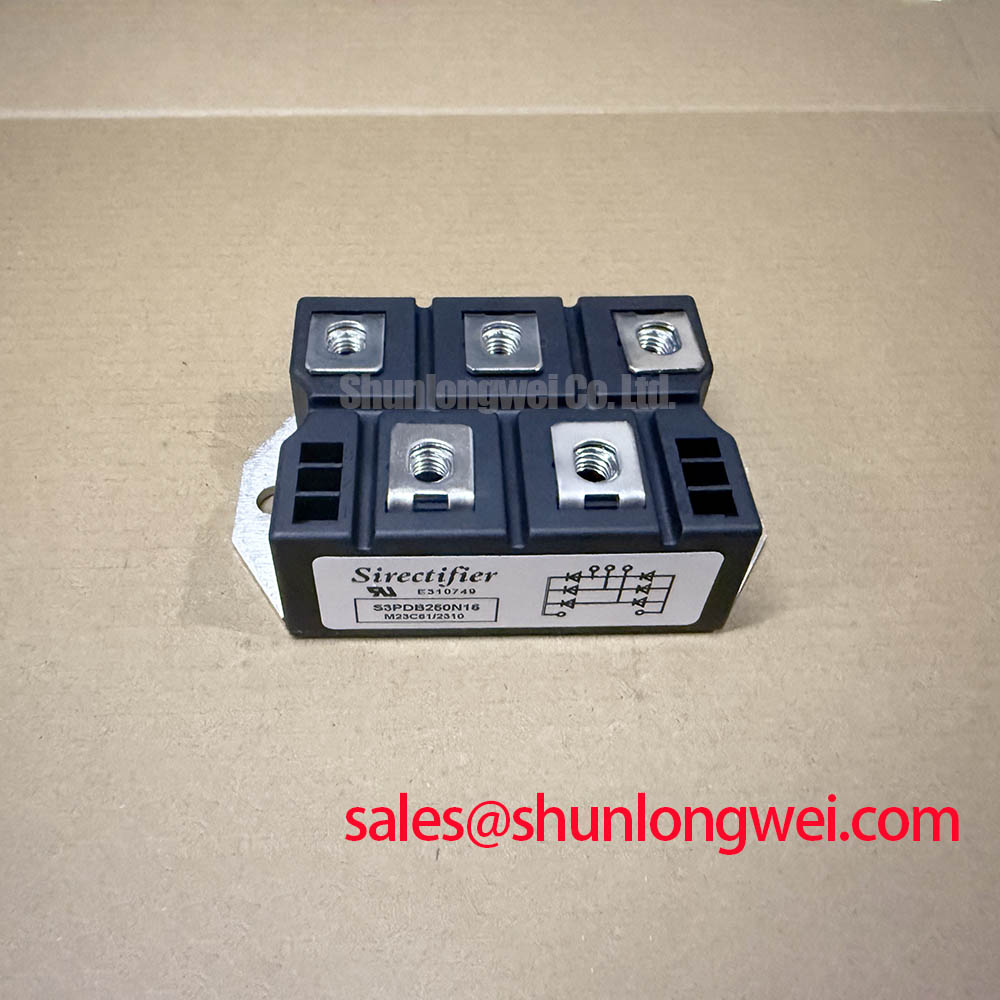
The MDS100-12 is a three-phase full-bridge rectifier module engineered for reliability in demanding industrial power conversion applications. It delivers a formidable combination of 1200V repetitive peak reverse voltage and 100A average forward current, establishing a robust foundation for the front-end of various power systems. Key engineering benefits include simplified thermal design due to its integrated isolation and enhanced operational security. This module directly addresses the need for a durable rectifier in systems operating from 380V/400V AC lines by providing a substantial voltage safety margin. For applications requiring high reliability and straightforward thermal assembly, the MDS100-12's design offers a distinct advantage.
Key Parameter Overview
Decoding the Specs for Enhanced Thermal Reliability
The performance of the MDS100-12 is defined by its electrical and thermal characteristics, which are critical for system designers evaluating its suitability for their applications. The specifications below are derived from the official manufacturer datasheet, ensuring data accuracy for engineering and procurement decisions.
| Parameter | Value |
| Repetitive Peak Reverse Voltage (VRRM) | 1200V |
| Average Forward Current (ID) at TC=100°C | 100A |
| Peak Forward Surge Current (IFSM) | 920A |
| Isolation Voltage (Viso) | 2500V |
| Thermal Resistance, Junction-to-Case (Rth(j-c)) | 0.32 °C/W |
| Maximum Junction Temperature (Tvj max) | 150°C |
Download the MDS100-12 datasheet for detailed specifications and performance curves.
Application Scenarios & Value
Achieving System-Level Benefits in Industrial Power Conversion
For designers of industrial equipment, the MDS100-12 provides a robust and efficient solution for AC-to-DC power rectification. Its optimal use case is as the input rectifier stage in systems where reliability and simplified assembly are key project drivers. The module’s 1200V blocking voltage offers a secure operational margin for equipment connected to 380V or 400V three-phase mains, protecting against common line voltage transients and surges.
A high-fidelity engineering scenario is the front-end of a Variable Frequency Drive (VFD) for industrial motors. In this application, the MDS100-12 converts the incoming AC power to a stable DC bus voltage. Its 100A current rating is well-suited for medium-power motors used in conveyor systems, pumps, and fans. The module's electrically isolated base simplifies the thermal management strategy by allowing direct mounting to a grounded heatsink without the need for additional, thermally resistive insulation pads. This not only streamlines the manufacturing process but also enhances the long-term reliability of the thermal interface. For systems demanding higher power handling capabilities, the related MDS200A1600V provides increased current and voltage ratings.
Frequently Asked Questions (FAQ)
What is the primary engineering benefit of the 2500V isolation voltage?
The 2500V isolation integrated into the module's baseplate allows it to be mounted directly onto a grounded chassis or heatsink. This eliminates the need for separate insulating materials like thermal pads, which simplifies assembly, reduces component count, and improves the consistency and reliability of the thermal path from the module to the heatsink.
How does the 1200V VRRM rating benefit designs for 400V AC systems?
A 400V AC line can have a peak voltage of approximately 565V (400 * √2). The 1200V repetitive peak reverse voltage (VRRM) provides a substantial safety margin of over 2x this nominal peak. This robust margin is crucial for ensuring the rectifier's survival and reliable operation during line swells, voltage spikes, and other grid disturbances common in industrial environments.
How does the module's thermal resistance impact system design?
The thermal resistance (Rth(j-c)) of 0.32 °C/W quantifies how effectively heat moves from the internal semiconductor junctions to the module case. A lower value is better. This parameter is a critical input for calculating heatsink requirements to keep the junction temperature below the maximum of 150°C during operation. Efficient thermal resistance allows for potentially smaller heatsink designs or greater operational headroom at higher ambient temperatures, directly influencing system size, cost, and long-term reliability.
Technical Deep Dive
A Closer Look at the Isolated Baseplate and its Impact on Reliability
A defining feature of the MDS100-12 is its electrically isolated mounting base, specified with a 2500V isolation rating. This design integrates a ceramic substrate, typically aluminum oxide (Al2O3), between the active semiconductor elements and the metal baseplate. This seemingly simple feature has profound implications for both manufacturing efficiency and field reliability. For an assembly engineer, it's the difference between a single-step and a multi-step mounting process. Without this feature, a separate, fragile insulating pad must be precisely placed, often with thermal grease on both sides, creating more opportunities for assembly errors or material degradation over time.
Think of the integrated isolation as a pre-certified, factory-applied protective layer. It ensures a consistent, void-free thermal interface that is not dependent on operator skill during final assembly. This directly counters a common failure mode in power electronics where external insulating pads tear, are contaminated, or are improperly torqued, leading to compromised isolation or "hot spots" that dramatically shorten the component's life. By using a module like the MDS100-12, designers are effectively de-risking their thermal system from day one.
Industry Insights & Strategic Advantage
Streamlining Production and Enhancing Uptime in Industrial Automation
In the competitive landscape of industrial automation, total cost of ownership (TCO) and system uptime are paramount metrics. The MDS100-12 aligns with these strategic goals by offering a design that prioritizes reliability and manufacturability. The integration of features like the isolated base directly contributes to a lower TCO by reducing assembly time, minimizing the bill of materials (BOM), and lowering the risk of field failures associated with improper mounting. This approach is highly valued in the scalable production of standardized power systems, such as those found in UPS (Uninterruptible Power Supply) units or battery chargers. As industries move towards more automated manufacturing, components that simplify assembly and enhance robustness, like this three-phase bridge rectifier, become strategic assets in building dependable and cost-effective equipment. This focus on practical, built-in reliability is a key tenet in designing the power backbones for modern inverter and converter systems.
From a strategic design perspective, the MDS100-12 offers a well-balanced solution that moves beyond basic rectification. By integrating key features that simplify thermal design and enhance electrical safety, it allows engineering teams to focus on system-level innovation rather than on the intricacies of component mounting and isolation. This makes it a valuable building block for developing next-generation, high-reliability industrial power electronics.