Content last revised on August 28, 2026
BOE MV270FHM-N20: 27.0-Inch FHD ADS Display Panel for Reliable HMI and Gaming Terminals
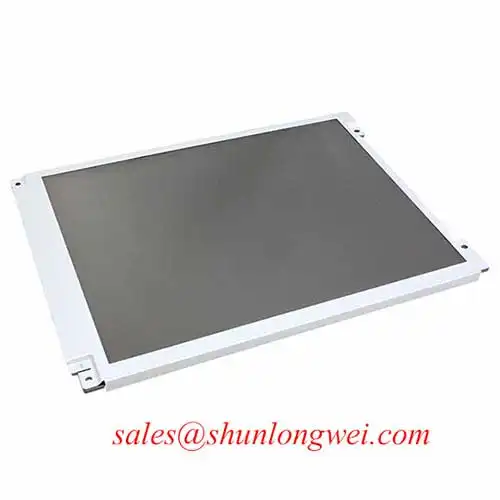
The BOE MV270FHM-N20 simplifies large-scale visual integration by combining a 27.0-inch active area with dependable ADS panel technology and streamlined connectivity. Featuring a 1920x1080 FHD resolution, a brightness of 300 cd/m², and a standard 5.0V supply voltage, this a-Si TFT-LCD module delivers stable optical performance across a 0 to 50°C operating range. Its dual-channel LVDS interface significantly reduces electromagnetic interference, ensuring pristine signal integrity for high-uptime environments. Why is the 3H hard coating critical? It provides essential scratch resistance for exposed public-facing screens. For system engineers designing gaming cabinets or control room displays that demand 24/7 color accuracy, this 16.7M color panel is the optimal choice.
Key Parameter Overview
Highlighting Core Metrics for Visual Performance and System Design
| Specification Category | Value / Rating |
|---|---|
| Display Resolution & Size | 1920x1080 FHD, 27.0-inch |
| Luminance & Contrast | 300 cd/m² (Typ.), 1000:1 Contrast Ratio |
| Viewing Angle | 89/89/89/89 (Left/Right/Up/Down) |
| Signal Interface | LVDS (2-channel, 8-bit), 30 pins |
| Power Supply Voltage | 5.0V (Typ.) |
| Operating & Storage Temp | 0 to 50°C (Operating), -20 to 60°C (Storage) |
| Backlight Lifetime | WLED edge-lit, 30,000 Hours |
Download the MV270FHM-N20 datasheet for detailed specifications and performance curves.
Application Scenarios & Value
Optimizing Visual Fidelity in High-Demand Gaming and HMI Environments
Engineers frequently face the challenge of maintaining color consistency across multi-screen setups in gaming cabinet displays and process control monitors. The MV270FHM-N20 resolves this through its advanced structural design, guaranteeing an 89/89/89/89 viewing angle. This means an operator or user experiences no color shift or contrast degradation, even when viewing the screen from extreme peripheral positions.
By providing native sRGB color gamut coverage and adhering to TCO 7.0 compliance, the display ensures that intricate graphical user interfaces in a medical HMI terminal remain crisp and visually accurate. The 14 ms response time further prevents blurring during dynamic video playback. While this model perfectly handles standard indoor environments, for systems requiring different structural form factors or higher ruggedization, the related G270HAN01.0 or the G270ZAN01.1 offers highly capable alternative specifications.
Technical & Design Deep Dive
Decoding the Efficiency of LVDS Integration and ADS Optical Structures
The system architecture of the MV270FHM-N20 heavily relies on its 30-pin, 2-channel, 8-bit LVDS controller interface. Think of LVDS signaling as a precisely coordinated multi-lane express highway; rather than sending large, noisy voltage swings, it transmits data using minuscule voltage differences. This differential approach cancels out common-mode noise, allowing high-speed video data to travel from the mainboard to the screen without radiating electromagnetic interference that could disrupt nearby sensitive analog sensors.
Additionally, the optical stack utilizes a 1000:1 contrast ratio driven by an edge-lit WLED backlight. The underlying ADS panel technology pixel structure functions much like a well-designed theater where every seat is the front row; the liquid crystals rotate horizontally rather than vertically, eliminating the viewing dead zones typical of older TN screens. For a broader understanding of how these pixel configurations dictate system-level efficiency, reviewing TFT-LCD fundamentals provides deeper context on modern active matrix layouts.
Frequently Asked Questions
Engineering Insights on the MV270FHM-N20 Deployment
- How does the 5.0V input voltage simplify the power delivery network?
By accepting a direct 5.0V input, the panel eliminates the need for an intermediate 12V-to-5V step-down converter on the display driving board, reducing overall bill of materials cost and thermal dissipation overhead. - What is the practical benefit of the 25% haze anti-glare surface?
The anti-glare treatment diffuses harsh ambient lighting, which is vital for maintaining readability in brightly lit industrial control rooms without artificially forcing an increase in the backlight's 300 cd/m² power consumption. - Why is the 1.5G vibration tolerance significant for kiosk machines?
Kiosks and public terminals are subject to constant user interaction and mechanical shocks; the specified 1.5G rating ensures that the internal LVDS connectors and WLED lightbars remain secure during peak operational stress. - Does the 6-bit + Hi-FRC color depth impact standard industrial applications?
It provides visual equivalence to true 8-bit panels by rapidly alternating pixel colors to simulate 16.7M colors, ensuring smooth gradients for standard HMI graphics while keeping video processing bandwidth demands low.
As the industrial and commercial hardware sectors continue to prioritize standardized, easy-to-integrate visual form factors, leveraging established platforms like this 27.0-inch FHD architecture ensures long-term supply chain stability and seamless backward compatibility for next-generation system upgrades.