Content last revised on September 10, 2026
Overcoming Phase Control Transient Failures: An Engineering Analysis of the PAH10016CF Module
In industrial soft-starters, inductive heating, and AC switches, designers face a relentless battle against electrical transients and thermal cycling. Standard switching devices often degrade prematurely under heavy starting torques or severe line fluctuations. How do engineers secure a dependable safety margin on 400V or 480V lines without expanding heatsink dimensions? The answer lies in robust transient headroom and optimized isolation.
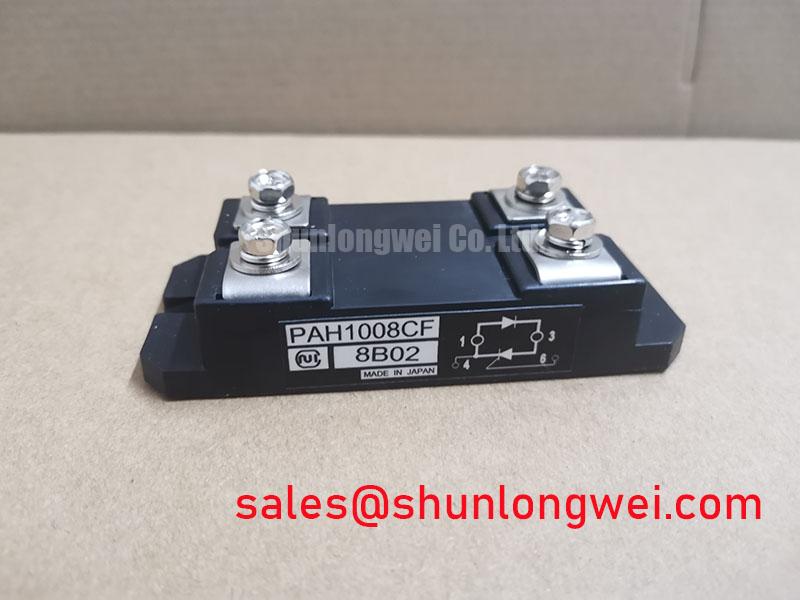
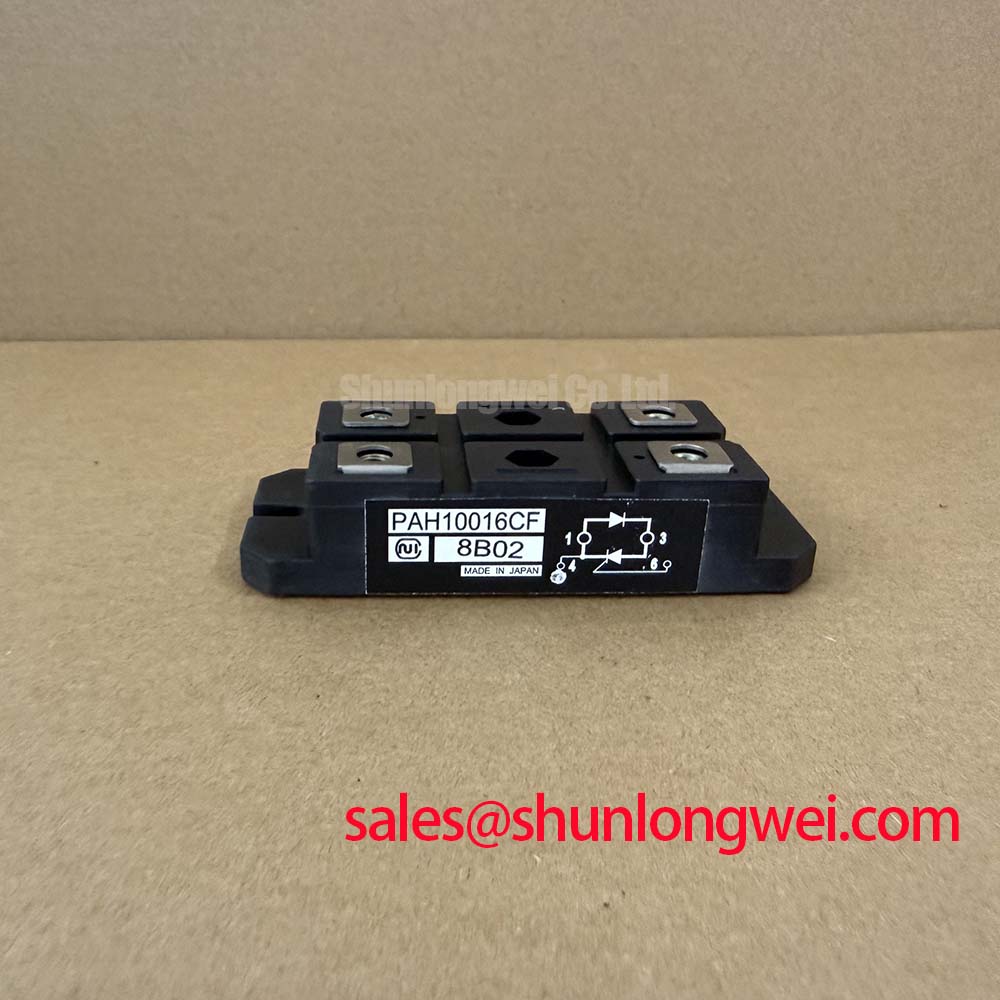
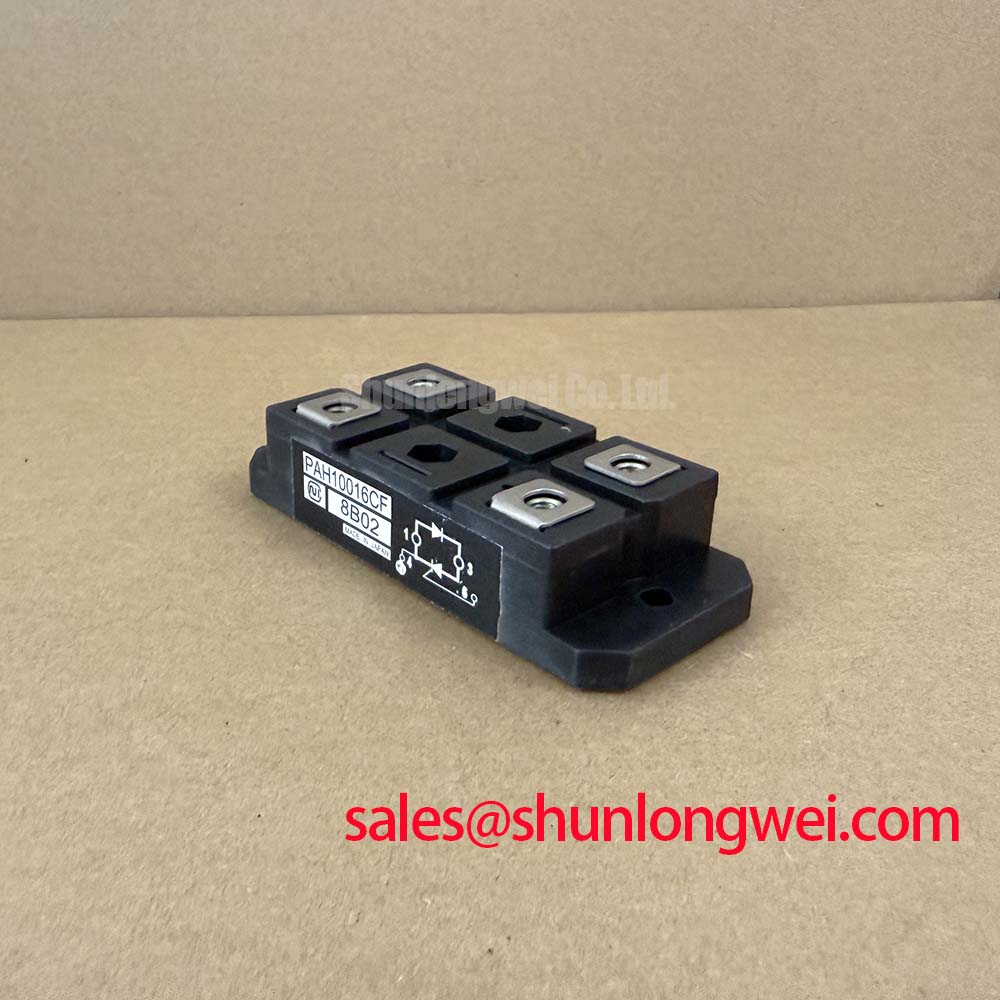
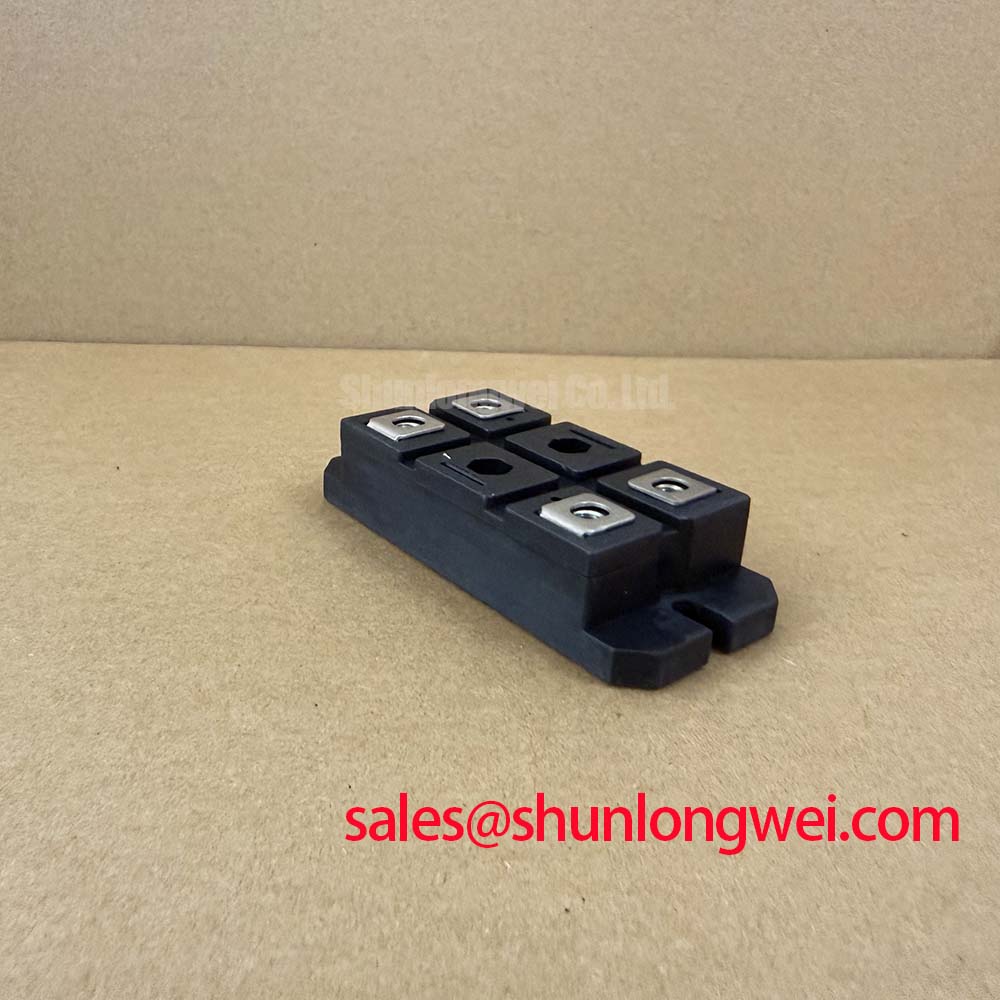
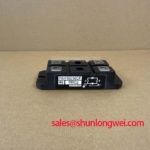
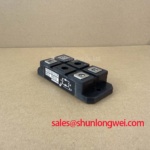
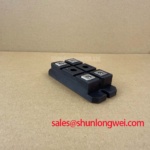
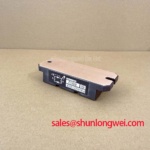
The PAH10016CF, manufactured by Nihon Inter Electronics Corporation (NIEC), is an industrial-grade thyristor/diode module configured in an anti-parallel circuit to eliminate discrete bottlenecks. Key specifications include:
- Repetitive Peak Off-State Voltage: 1600V
- RMS On-State Current: 222A
- Isolation Voltage: 2500V AC
Key Benefits: Exceptional transient headroom. Simplified space-saving mounting.
By providing a massive 1600V barrier, this module prevents destructive dielectric breakdown on 400V AC lines during sudden utility surges. For 400V industrial AC lines requiring a compact footprint and exceptional surge margin, the 1600V PAH10016CF is the optimal choice.
FAQ
Resolving Core Engineering Questions on Thermal and Electrical Limits
What is the exact circuit topology of the PAH10016CF, and how does it benefit system layout?
The PAH10016CF features a hybrid anti-parallel circuit containing one thyristor and one rectifier diode in a single compact housing. This layout eliminates external busbars and simplifies wiring for half-wave AC phase control or soft-starter bypass switching.
With an RMS on-state current of 222A, what is the continuous average current capability?
Under 50Hz/60Hz half-sine wave conditions at a case temperature (Tc) of 76°C, the module supports an average on-state current of 100A per arm. Designers must size cooling systems to keep the junction temperature below the 125°C limit.
Why is a 1600V peak off-state voltage (VDRM) necessary for a standard 400V AC industrial line?
Industrial mains suffer from high-voltage spikes during inductive load shedding. A 1600V rating provides a safety margin of nearly 4 times the nominal RMS voltage, protecting the device without requiring bulky snubber circuits.
How does the 2500V AC isolation rating impact multi-module heatsink designs?
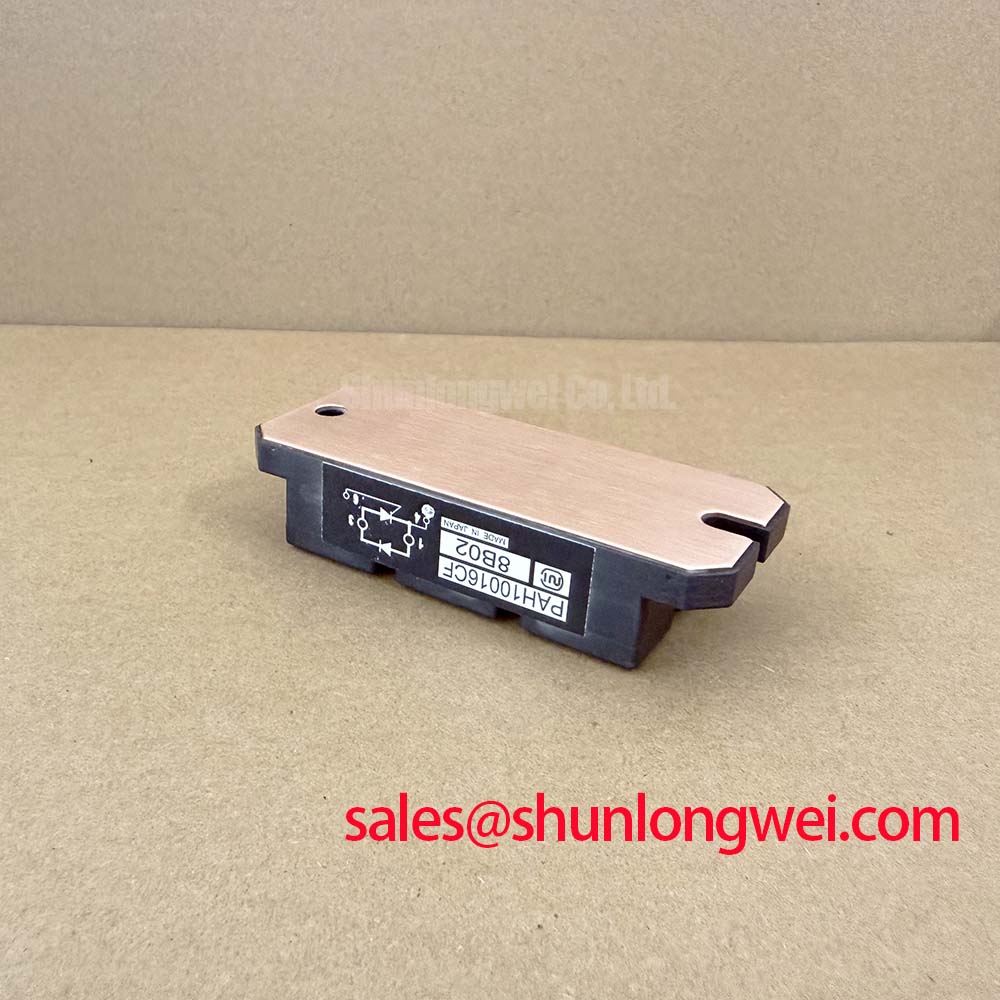
The internal copper baseplate is electrically isolated from the active silicon junctions, certified up to 2500V AC for 1 minute. This allows engineers to mount multiple modules onto a single shared heatsink without individual insulating pads.
Key Parameter Overview
Key Metrics and Engineering Value Highlighted
| Parameter / Metric | Symbol | Rated Value | Engineering Significance |
|---|---|---|---|
| Repetitive Peak Off-State Voltage | VDRM | 1600V | Secures robust safety margin against transient mains overvoltage. |
| RMS On-State Current | IT(RMS) | 222A | Defines full-phase conduction capacity at Tc=76°C. |
| Surge On-State Current | ITSM | 2000A | Withstands extreme inrush currents during motor startup. |
| Current Squared Time (Fusing) | I2t | 20000 A²s | Facilitates reliable coordination with protection fuses. |
| Isolation Voltage | Viso | 2500V AC | Ensures safe electrical isolation between terminals and baseplate. |
Download the PAH10016CF datasheet for detailed specifications and performance curves.
Technical Deep Dive
Decoding the Anti-Parallel Thyristor-Diode Architecture for Robust Phase Control
The physical layout of the PAH10016CF relies on a copper baseplate and direct copper bonding (DCB) ceramic isolation to manage extreme power densities. When designing gate drives or comparing topologies, referring to guidelines on decoding power semiconductor datasheets can provide valuable methodology.
Think of the thermal path as a high-capacity highway. The copper base plate serves as an expressway, routing heat from the silicon junction to the heatsink. If there is a bottleneck (high Thermal Resistance), heat backs up, raising junction temperature, similar to a traffic jam on a narrow bridge. The PAH10016CF utilizes a low thermal-resistance layout to keep this path clear.
Additionally, the voltage barrier acts like a robust floodgate. The 1600V peak off-state rating represents the height of this gate. Voltage spikes are like sudden storm surges; if the gate is too low, the surge overflows, causing breakdown. This 1600V rating acts as an extra-tall barrier, keeping the circuit within its Safe Operating Area (SOA) during intense surges.
For reference, here are two key performance takeaways:
What is the primary benefit of the PAH10016CF hybrid design? It simplifies AC phase control circuitry by combining a thyristor and diode.
What is the peak surge capacity of the PAH10016CF? It features a non-repetitive peak surge current rating of 2000A.
Application Scenarios & Value
Ensuring System-Level Benefits in Harsh Industrial Switching
The electrical properties of the PAH10016CF make it highly suitable for industrial heating and motor soft starters. When starting heavy conveyor belts or high-inertia fans, the startup inrush current can stress the entire grid. By applying phase-angle control using the PAH10016CF, engineers can ramp up the voltage smoothly. The module's robust surge rating of 2000A handles these start-up transients without thermal fatigue.
To ensure long-term reliability under continuous thermal cycling, engineers can consult our guide on the core trio of power module selection, which outlines critical thermal management principles.
For systems requiring even greater current handling or dual-thyristor topologies, alternative designs can be evaluated. For example, for higher-capacity loads, the related SKKT250/16E offers a 250A rating to ensure sufficient operating margins.