Content last revised on September 10, 2026
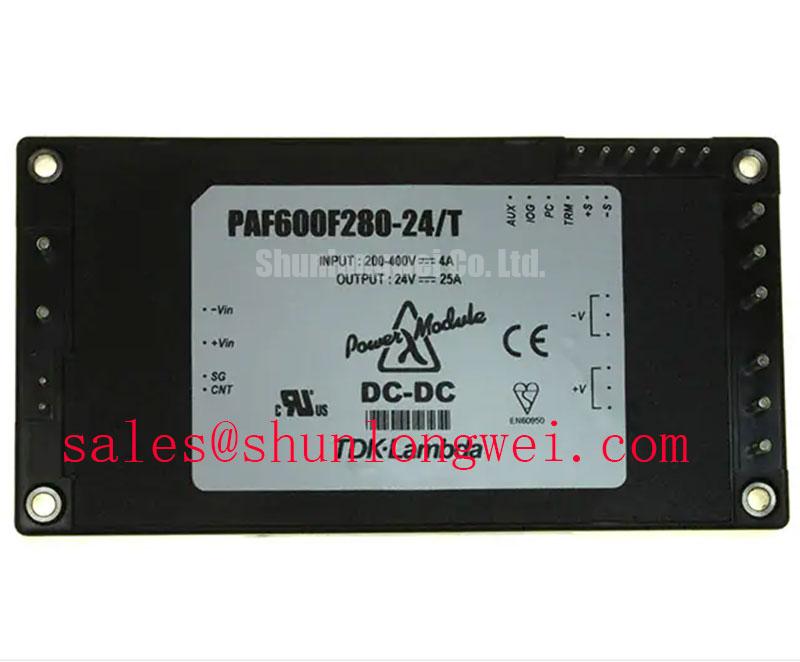
TDK-Lambda PAF600F280-12: High-Density 600W Full-Brick DC-DC Converter
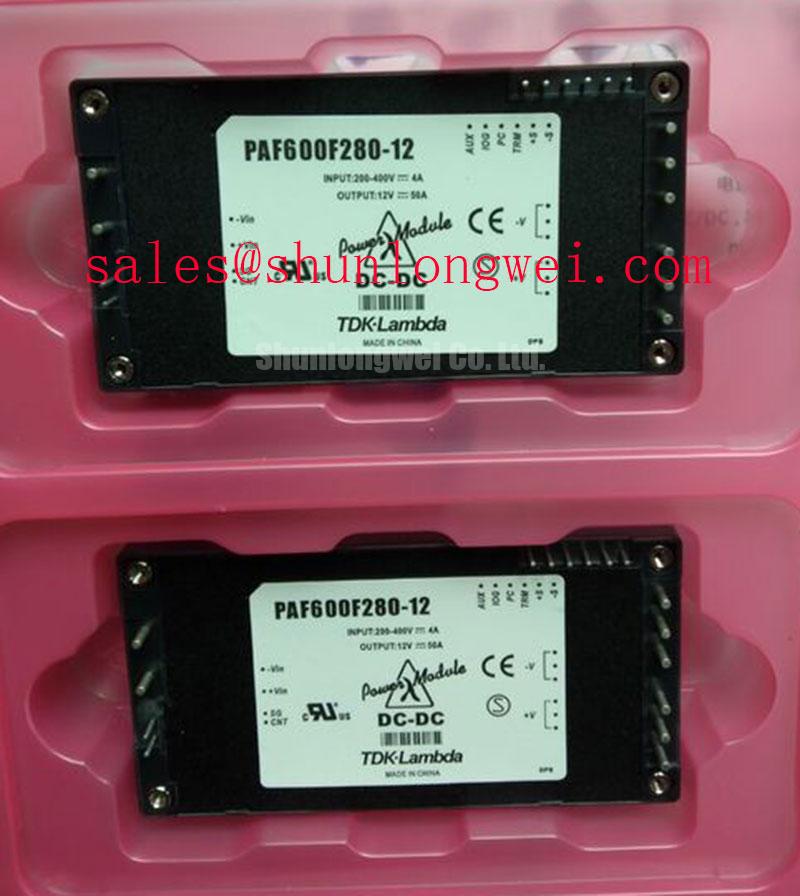
The TDK-Lambda PAF600F280-12 represents a pinnacle in high-density power conversion, offering a robust 600W solution specifically engineered for high-voltage DC (HVDC) architectures. By converting a wide 200–400VDC input into a stabilized 12VDC output, this full-brick module enables engineers to simplify distributed power systems while maintaining exceptional thermal efficiency and reliability in space-constrained industrial environments.
200–400VDC Input | 12VDC Output | 50A Rated Current
- Maximizes system uptime through integrated overvoltage, overcurrent, and overtemperature protection circuits.
- Scales power delivery effortlessly via built-in parallel operation and current-sharing capabilities.
How does the PAF600F280-12 handle high-load scalability? The module features a dedicated current-sharing pin that allows multiple units to be connected in parallel, ensuring balanced thermal loading and system redundancy. For industrial HVDC systems requiring a stable 12V rail from a 280V nominal source, the PAF600F280-12 is a primary choice for high-power density.
Key Parameter Overview
Decoding the Specifications for Enhanced Thermal and Electrical Reliability
The following technical data is derived from the official manufacturer documentation to support precise engineering evaluation. The PAF600F280-12 is characterized by its high efficiency and wide operating temperature range, making it suitable for demanding thermal environments.
| Parameter | Specifications | Engineering Value |
|---|---|---|
| Input Voltage Range | 200–400VDC | Supports 280V nominal HVDC distribution systems. |
| Output Voltage | 12VDC | Adjustable via trim pin for cable drop compensation. |
| Maximum Output Current | 50A | Enables 600W total power delivery from a single brick. |
| Efficiency (Typical) | 89% - 91% | Reduces waste heat, simplifying heatsink requirements. |
| Cooling Method | Conduction | Baseplate cooling optimized for cold-plate or finned heatsinks. |
| Isolation Voltage | 3.0kVAC | Input to Output isolation for enhanced system safety. |
Download the PAF600F280-12 datasheet for detailed specifications and performance curves.
Interpreting the 200–400VDC input range: This wide window is critical for systems utilizing decentralized energy storage or high-voltage DC bus architectures. Think of the PAF600F280-12 as a high-precision pressure regulator; it ensures that even if the upstream "pressure" (input voltage) fluctuates between 200V and 400V, the downstream "flow" remains a perfectly constant 12V at up to 50A. This stability is vital for sensitive downstream logic and control electronics.
Application Scenarios & Value
Achieving System-Level Benefits in High-Efficiency Power Racks
In the context of modern data centers and industrial automation, the shift toward 380V HVDC distribution is accelerating to reduce conduction losses. The PAF600F280-12 solves the challenge of stepping down this high-voltage bus to a usable 12V rail for cooling fans, control boards, and HMI systems. By providing 600W in a standard full-brick footprint (116.8 x 61.0 x 12.7 mm), it allows for significantly higher power density than traditional discrete power supplies.
A specific engineering challenge involves managing the thermal output of a 600W converter. The PAF600F280-12 utilizes an aluminum baseplate design that acts as the primary thermal interface. When mounted to a liquid-cooled plate or a high-performance air-cooled heatsink, the module maintains its 50A rating without the derating often required by less integrated solutions. This thermal predictability is essential for maintaining 10-year reliability in 24/7 industrial operations.
For systems requiring different power handling or switching characteristics in the inverter stage, components like the SKM600GB12M7 provide high-current IGBT switching, while the 2MBI600VJ-120-50 offers a Vces of 1200V for high-voltage motor drives. Within the PAF series, the PAF600F280-12 remains the specialized choice for 12V output requirements.
Technical & Design Deep Dive
Internal Architecture for Superior Thermal and Parallel Efficiency
The PAF600F280-12 incorporates a sophisticated control loop that supports true N+1 redundancy. The module includes a "PC" (Parallel Control) pin and an "IOG" (Inverter Operation Good) signal. These features allow multiple converters to synchronize their switching frequencies and share current within 5-10% of each other. This is comparable to a synchronized rowing team; each module contributes an equal amount of "effort" to move the total load, preventing any single module from reaching its thermal limit prematurely.
Furthermore, the PAF600F280-12 employs a high-frequency switching topology that minimizes the size of internal magnetic components. This reduction in mass not only improves power density but also enhances resistance to mechanical shock and vibration, a key requirement for mobile industrial machinery or public transit power systems. The integration of Remote Sensing ensures that the 12V output is regulated precisely at the point of load, compensating for voltage drops across long PCB traces or wiring harnesses.
Industry Insights & Strategic Advantage
Navigating the Shift Toward 380V HVDC Industrial Power Racks
As global regulations push for higher energy efficiency in data centers and factories, the adoption of HVDC distribution is becoming a strategic necessity. The PAF600F280-12 aligns with this trend by enabling direct conversion from a 280V or 380V bus to low-voltage rails, eliminating the need for multiple intermediate conversion stages. This reduction in the "power chain" directly translates to a lower Total Cost of Ownership (TCO) through reduced energy waste and cooling costs.
The reliability of these modules is often the deciding factor for OEM engineers. With a design that avoids electrolytic capacitors in high-stress areas and leverages advanced baseplate technology, the PAF600F280-12 meets the rigorous demands of long-term infrastructure projects. For more insights on high-power integration, engineers may find our guide on IGBT selection and thermal management useful for understanding broader system-level power design.
FAQ
How does the parallel control (PC pin) in the PAF600F280-12 prevent thermal imbalance?
The PC pin allows modules to communicate their current delivery levels, enabling the internal controllers to balance the 50A load across all connected units. This prevents any single module from bearing a disproportionate share of the load, which would otherwise lead to localized overheating and reduced lifespan.
What is the primary benefit of the conduction-cooled baseplate design?
It allows the 600W of heat generated to be efficiently transferred to an external heatsink or cold plate, enabling the module to operate at full power in environments where forced air cooling is not feasible or desired.
Can the output voltage of the PAF600F280-12 be adjusted for specific system requirements?
Yes, the output can be trimmed within a range of 7.2V to 14.4V (60% to 120% of nominal) using the Trim pin, allowing it to support a wide variety of industrial voltage standards or compensate for significant line drops.
Does this module include protection against input voltage transients?
The PAF600F280-12 is designed for a continuous 200–400VDC range; however, standard design practice recommends a snubber or surge protection circuit at the system level to handle high-energy transients common in industrial power grids.
To ensure long-term system stability in HVDC architectures, engineers should focus on the thermal interface between the PAF600F280-12 baseplate and the system chassis. Properly specified thermal interface materials (TIMs) and mounting torque are critical to achieving the rated 89% efficiency and 600W output. As the industry moves toward higher power densities, the PAF600F280-12 provides a proven, modular foundation for scalable power conversion.