
Content last revised on November 26, 2025
N116B6-L04: Engineering Review of an 11.6-inch HD Display for Portable Systems
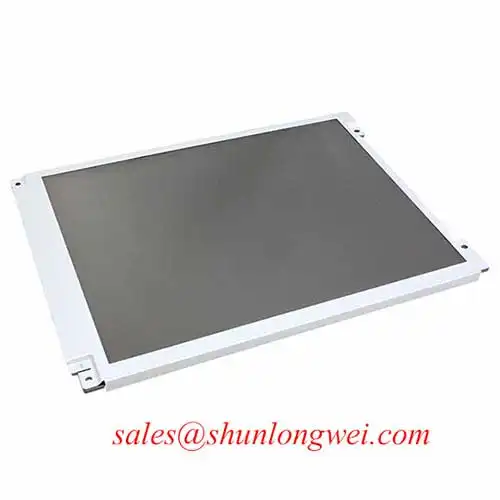
The Innolux N116B6-L04 is an 11.6-inch a-Si TFT-LCD panel engineered for compact, power-efficient applications. It delivers a resolution of 1366x768 (WXGA) through a standard LVDS (1 ch, 6-bit) interface, streamlining the design process for portable and embedded devices. Key benefits include its slim mechanical profile and a WLED backlight system that balances brightness with power efficiency. Its standard 40-pin LVDS connector simplifies integration with a wide range of single-board computers and legacy controller boards. For space-constrained applications requiring reliable HD visual output, the N116B6-L04 is a benchmark for efficient design.
Application Scenarios & Value
System Integration & Design Simplification for Portable Devices
The design of the N116B6-L04 directly addresses the core challenges faced by engineers developing portable instrumentation, netbooks, and compact Human-Machine Interfaces (HMIs). For a team creating a battery-powered field diagnostics tool, every millimeter of depth and every milliwatt of power is critical. This display's slim profile, with a typical thickness of just 3.4 mm, allows for a sleeker, more ergonomic final product. The native 1366x768 WXGA resolution on an 11.6-inch screen provides sufficient detail for displaying complex data and user interfaces without requiring excessive downscaling or compromising readability. Furthermore, its reliance on a conventional 40-pin LVDS interface makes it a drop-in solution for many existing platforms, significantly reducing development time and integration risk compared to displays requiring more modern but less ubiquitous interfaces like eDP. What is the primary benefit of its standard interface? It ensures broad compatibility and accelerates the prototyping phase. While the N116B6-L04 is ideal for portable HD needs, for even more compact designs, the related G101EVN01.0 offers a 10.1-inch solution.
Key Parameter Overview
Decoding the Specs for Rapid Integration
The technical specifications of the N116B6-L04 are optimized for a balance of performance, low power, and ease of integration. The panel operates on a 3.3V supply voltage, a common logic level in portable electronics that simplifies power rail design. Its WLED backlight system contributes to a typical brightness of 200 cd/m² and a 500:1 contrast ratio, providing clear image quality for indoor and controlled lighting environments. For engineers, the combination of these characteristics in a standardized form factor is key to predictable and efficient product development. What is the display's typical power consumption? While exact figures depend on the displayed content, its WLED backlight and a-Si TFT technology are engineered for energy-conscious applications.
| Feature | Specification |
|---|---|
| Manufacturer | Innolux (Chimei Innolux) |
| Screen Size | 11.6 inches |
| Resolution | 1366(RGB)×768 (WXGA), 135 PPI |
| Panel Type | a-Si TFT-LCD, Normally White, Transmissive |
| Brightness | 200 cd/m² (Typ.) |
| Contrast Ratio | 500:1 (Typ.) |
| Signal Interface | LVDS (Low-Voltage Differential Signaling), 1 channel, 6-bit, 40-pin connector |
| Backlight System | WLED |
| Outline Dimensions | 278(W) × 168(H) × 3.6(D) mm (Max) |
| Operating Temperature | 0°C to 50°C |
| Surface Treatment | Glare (Haze 0%), Hard coating (3H) |
Technical Deep Dive
A Closer Look at the LVDS Interface and Mechanical Design for Seamless Integration
The choice of a 1-channel, 6-bit LVDS interface is a defining feature of the N116B6-L04 from a system design perspective. This configuration supports 262,144 colors and is well-suited for the panel's native WXGA resolution, providing a stable, high-speed data link with excellent noise immunity. Think of the LVDS interface as a dedicated, multi-lane highway for video data. By using paired wires with opposite signals (differential signaling), it effectively cancels out electromagnetic interference from other components in a tightly packed system, ensuring the signal arrives cleanly. This inherent robustness is critical in portable devices where space is at a premium and a host of other components are competing for that space. The interface is physically presented through a standard 40-pin connector, a widely available and well-documented part that simplifies wiring harness design and sourcing. This contrasts with more complex or proprietary connectors that can introduce supply chain and assembly challenges. For a deeper understanding of display technologies, explore The Ultimate Guide to TFT-LCD.
Frequently Asked Questions (FAQ)
What type of controller board is required to drive the N116B6-L04?
The N116B6-L04 requires a controller board that can output a 1-channel, 6-bit LVDS signal and provide a 3.3V power supply. Universal LVDS controller boards with configurable firmware are widely available and can be programmed to match the panel's 1366x768 resolution and timing requirements.
How does the glossy screen surface impact image quality in typical use cases?
The glossy surface, with a Haze 0% rating, enhances the perceived contrast and color saturation of the display. This results in sharper text and more vibrant images, which is beneficial for multimedia viewing or applications where visual fidelity is key. However, it is more susceptible to reflections in brightly lit environments, a critical consideration for devices intended for outdoor or mobile use.
What are the implications of the WLED backlight system?
The WLED (White Light Emitting Diode) backlight is a significant feature for power-sensitive designs. Compared to older CCFL technology, WLED backlights consume less power, have a longer operational lifespan, and allow for a much slimmer panel profile. The N116B6-L04 integrates the LED driver, simplifying the external circuitry required from the system designer.
Is the 40-pin LVDS connector on this panel a standard configuration?
Yes, the 40-pin connector used for 1-channel LVDS interfaces is a very common standard in the laptop and embedded display industry. Its prevalence ensures the availability of compatible cables, connectors, and controller boards, which de-risks the supply chain and simplifies the integration process for engineering teams.
From a strategic standpoint, the N116B6-L04 represents a reliable and cost-effective display solution for a generation of portable devices built around the WXGA standard. Its adherence to common electrical and mechanical standards ensures its continued relevance for system maintenance, upgrades, and new designs where proven technology and rapid development are primary objectives.