
Content last revised on November 28, 2025
N116B6-L05: An Engineer's Overview of the 11.6-inch WXGA LVDS Display Module
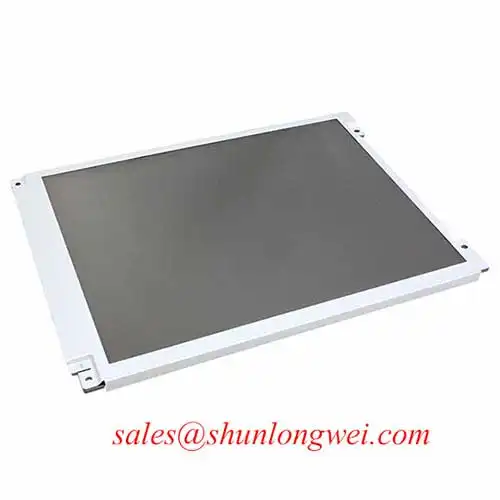
The N116B6-L05 is an 11.6-inch a-Si TFT-LCD module engineered for streamlined integration into compact, portable systems. It delivers a core specification of 1366x768 WXGA resolution driven by a standard LVDS Interface. Key engineering benefits include simplified driver board matching and the enablement of slim, lightweight device profiles. Its reliance on an industry-standard interface directly addresses the challenge of controller selection, providing a proven and widely supported integration path for cost-sensitive portable designs requiring a standard WXGA display.
Application Scenarios & Value
Streamlining Integration in Portable and Embedded Systems
For engineering teams developing portable diagnostic equipment, compact Human-Machine Interfaces (HMIs), or specialized netbooks, minimizing development cycles and simplifying the bill of materials is paramount. The primary challenge often lies in sourcing a display that combines a compact form factor with a non-proprietary, easy-to-drive interface. The N116B6-L05 directly meets this need. Its 11.6-inch diagonal and slim profile are ideal for space-constrained enclosures. Critically, its standard 1-channel, 6-bit LVDS interface with a 40-pin connector allows engineers to leverage a vast ecosystem of off-the-shelf controller boards and single-board computers (SBCs), drastically reducing the need for custom hardware development and accelerating time-to-market. The native 1366x768 WXGA resolution provides the necessary pixel density for clear, readable user interfaces without overburdening system graphics processors.
While the N116B6-L05 offers an excellent balance for 11.6-inch applications, systems requiring a more compact footprint for handheld devices might consider the G101EVN01.0, which provides a 10.1-inch alternative. For a deeper understanding of the core technology, explore The Ultimate Guide to TFT-LCD.
Key Parameter Overview
Decoding the Specs for System Integration
The technical specifications of the N116B6-L05 are tailored for efficiency and compatibility in portable electronics. The parameters below highlight its suitability for straightforward integration into a wide range of applications.
| Feature | Specification |
| Display Characteristics | |
| Screen Size | 11.6 inches |
| Resolution | 1366(RGB)×768, WXGA |
| Panel Technology | a-Si TFT-LCD, Liquid Crystal |
| Brightness | 200 cd/m² (Typ.) |
| Contrast Ratio | 500:1 (Typ.) (TM) |
| Surface Treatment | Glare (Haze 0%) |
| Interface & Electrical | |
| Signal Interface | LVDS (1 ch, 6-bit), 40 pins Connector |
| Backlight System | WLED |
| Supply Voltage | 3.3V (Typ.) |
| Mechanical & Environmental | |
| Outline Dimensions | 268(W) × 159.5(H) × 5.2(D) mm |
| Operating Temperature | 0 ~ 50 °C |
| Storage Temperature | -20 ~ 60 °C |
Technical Deep Dive
The Engineering Impact of the LVDS Interface
The choice of a display interface has significant implications for system design, particularly regarding signal integrity, power consumption, and electromagnetic interference (EMI). The N116B6-L05 utilizes a LVDS Interface (Low-Voltage Differential Signaling), a critical feature that simplifies integration, especially in compact designs where electrical noise is a major concern. Think of LVDS as a dedicated, shielded highway for video data. Unlike older parallel interfaces that use single-ended signals susceptible to noise, LVDS uses two wires with opposite-polarity signals for each data stream. The receiver interprets the difference between these signals, effectively canceling out common-mode noise picked up along the cable path. This inherent noise immunity allows for higher data rates over longer distances with lower power and reduced EMI, eliminating the need for extensive shielding and simplifying PCB layout for the design engineer.
Frequently Asked Questions
What are the key considerations when selecting a controller board for the N116B6-L05?
The primary requirement is to match the display's native specifications. You will need a controller that supports a 1-channel, 6-bit LVDS output, is configured for a 1366x768 resolution, and can provide the necessary 3.3V power supply for the panel logic. The 40-pin connector is a standard pitch, making cable sourcing straightforward.
How does the WLED backlight system impact the design of battery-powered devices?
The White LED (WLED) backlight is significantly more power-efficient than older Cold Cathode Fluorescent Lamp (CCFL) technology. For a battery-powered device, this translates directly to longer operational life between charges. Furthermore, WLEDs generate less heat, simplifying thermal management within the enclosure and contributing to the overall reliability and longevity of the system.
For further inquiries or to request a quote on the N116B6-L05 module, please contact our technical sales team for assistance with your specific application requirements.