Content last revised on January 22, 2026
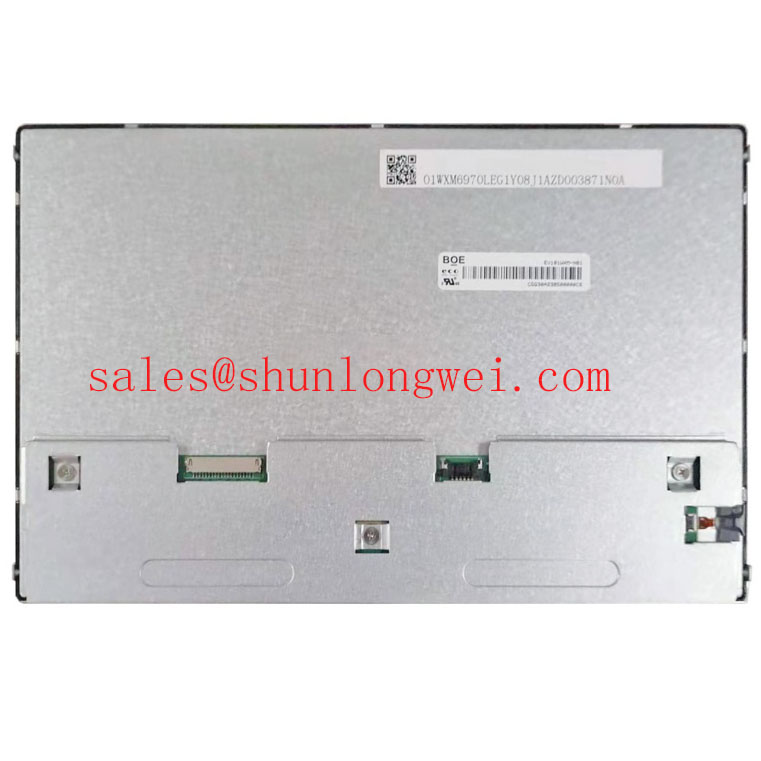
BOE NT156WHM-N32: 15.6-inch HD Slim eDP Display for Portable Systems
The BOE NT156WHM-N32 is a 15.6-inch a-Si TFT-LCD module engineered for streamlined integration into mainstream, thin-and-light notebook computers. It delivers a practical balance of performance and efficiency, featuring a 1366x768 HD resolution, a low-power WLED backlight, and a modern eDP interface. Key benefits include a significantly simplified system design enabled by its slim profile and reduced cabling complexity. This display directly addresses the need for cost-effective, power-efficient panels in high-volume portable device manufacturing. For systems requiring a standard 15.6-inch HD panel with minimal integration overhead and a maximum thickness of 3.2mm, the NT156WHM-N32 is a well-suited choice.
Application Scenarios & Value
System-Level Benefits in Portable and Mainstream Computing
The design philosophy of the NT156WHM-N32 is centered on enabling efficient manufacturing and reliable performance in portable computing platforms. Its combination of a standard 15.6-inch diagonal size, HD resolution (1366x768), and a WLED backlight system makes it an excellent candidate for mainstream laptops, educational devices, and portable terminals where battery life and form factor are key considerations. The panel's slim 3.2mm maximum thickness is a critical enabler for modern, thin-chassis industrial designs. What is the primary benefit of its slim design? It allows for more compact and lightweight end-product designs without sacrificing screen size. This focus on essential features provides a dependable visual interface optimized for typical productivity and media consumption tasks.
For designers evaluating different panel options, the NT156WHM-N32 provides a benchmark for standard HD performance. For applications demanding higher pixel density or different form factors, related products such as the G156BGE-L01 or the G156XW01 V1 may present alternative feature sets.
Key Parameter Overview
Decoding the Specs for Simplified System Integration
The technical specifications of the BOE NT156WHM-N32 are tailored for straightforward implementation into a wide range of host systems. The panel's electrical and mechanical characteristics are designed to minimize design complexity and ensure compatibility with standard components.
| Display Characteristics | |
|---|---|
| Panel Type | a-Si TFT-LCD, LCM |
| Resolution | 1366(RGB)×768 [WXGA] |
| Brightness | 220 cd/m² (Typ.) |
| Contrast Ratio | 500:1 (Typ.) |
| Display Colors | 262K (6-bit) |
| Response Time | 12 (Typ.)(Tr+Td) ms |
| Viewing Angle | 45/45/20/40 (Typ.)(CR≥10) |
| Interface & Electrical Parameters | |
| Signal Interface | eDP (1 Lane), 30 pins Connector |
| Supply Voltage | 3.3V (Typ.) |
| Backlight System | WLED, 15K hours (Min.) with LED Driver |
| Mechanical & Environmental | |
| Active Area | 344.232(W)×193.536(H) mm |
| Outline Dimensions | 359.5(W)×223.8(H) mm |
| Outline Depth | 3.2 (Max.) mm |
| Surface Treatment | Glare (Haze 0%) |
| Operating Temperature | 0 ~ 50 °C |
Download the NT156WHM-N32 datasheet for detailed specifications and performance curves.
A standout feature is the WLED backlight system, which is crucial for power efficiency. Think of it as switching from traditional incandescent bulbs to modern LEDs in a home; the WLED backlight provides the necessary brightness for visual clarity while consuming significantly less power, a factor that directly contributes to longer battery life in a portable device. Furthermore, its specified operating temperature range of 0 to 50°C aligns with the expected environment for commercial and consumer-grade notebooks.
Technical Deep Dive
The eDP Interface Advantage in Modern System Design
A critical element simplifying the integration of the NT156WHM-N32 is its eDP (Embedded DisplayPort) 1.2 interface. This modern standard offers distinct advantages over older interfaces like LVDS, particularly for compact designs. The single-lane eDP connection reduces the number of required conductors, which in turn minimizes cable bulk and complexity within the device chassis. This reduction in wiring also helps to lower the potential for electromagnetic interference (EMI), a key consideration for RF-sensitive systems. Why is the eDP interface important? It enables thinner designs and simpler connectivity. The migration from LVDS to eDP is analogous to upgrading from a bulky, 25-pin parallel printer cable to a slim, efficient USB cable. Both transfer the necessary data, but the latter does so with far fewer wires, simplifying connection, reducing clutter, and enabling a more compact device design.
Frequently Asked Questions (FAQ)
What does the 'eDP (1 Lane)' interface specification mean for system design?
The eDP (Embedded DisplayPort) with a single lane signifies a modern, high-speed digital interface that requires fewer physical connections compared to older standards like LVDS. For designers, this translates to simplified motherboard layouts, reduced cable complexity, lower potential for electromagnetic interference (EMI), and the ability to create thinner and lighter end-products.
What is the engineering implication of the Glare (Haze 0%) surface treatment?
A Glare surface treatment, with 0% haze, means the screen does not have a matte layer to diffuse ambient light. From an engineering perspective, this results in higher perceived contrast and more vibrant colors as light from the backlight passes directly through to the viewer. This makes it well-suited for controlled lighting environments where maximizing visual "pop" is desired, though it may be more susceptible to reflections in brightly lit conditions.
For inquiries regarding the NT156WHM-N32 or to discuss the specific requirements of your application, please contact our technical support team for a detailed consultation.