Content last revised on September 10, 2026
GV121WXM-N80: A High-Brightness WXGA Display Engineered for Industrial Reliability
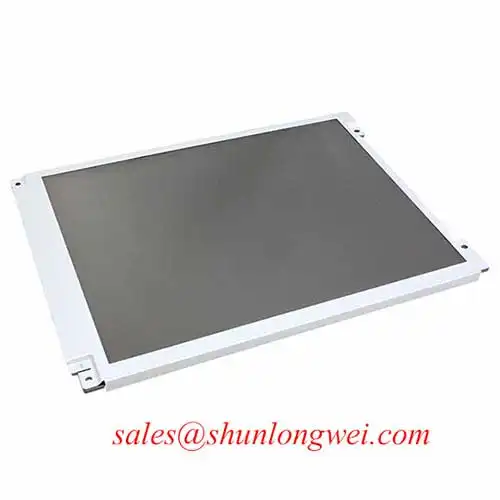
The BOE GV121WXM-N80 is a 12.1-inch a-Si TFT-LCD module engineered to deliver exceptional visual performance and robust reliability in demanding operational environments. Its value proposition is centered on providing consistent image clarity across wide viewing angles and extreme temperatures. Key specifications include a 1280x800 WXGA resolution, a high brightness of 600 cd/m², and an operational temperature range of -20 to 70°C. This combination offers two primary engineering benefits: enhanced readability in variable lighting conditions and dependable performance in thermally challenging settings. For system designers, this means a display that maintains its optical integrity whether installed in a factory HMI or a medical diagnostic cart. For applications requiring a different resolution or interface within a similar size class, this model provides a robust baseline for evaluation.
Application Scenarios & Value
System-Level Benefits in Industrial and Medical HMIs
The GV121WXM-N80 is optimally suited for integration into systems where visual data must be interpreted quickly and accurately from multiple perspectives. Its technical attributes directly address common challenges in industrial automation, process control, and medical instrumentation. For systems requiring consistent performance across a broad temperature spectrum, the related G121STN01.0 offers an alternative feature set for consideration.
Consider an industrial Human-Machine Interface (HMI) on a factory floor. The environment often has fluctuating ambient light and can experience significant temperature swings. The 600 cd/m² brightness of the GV121WXM-N80, combined with its antiglare surface treatment, ensures that operators can clearly read critical process data without being hindered by reflections or dimness. This is a direct contributor to operational efficiency and error reduction. What is the benefit of its ADS display technology? It provides symmetrical, ultra-wide viewing angles of 89/89/89/89 degrees, ensuring that color and contrast do not shift, even when viewed from a sharp angle. This is crucial for panels that are monitored by multiple team members simultaneously.
In the medical field, devices like patient monitors and diagnostic equipment demand color accuracy and consistency. The ADS technology, which functions similarly to IPS (In-Plane Switching), delivers superior color fidelity compared to traditional TN panels. This ensures that medical professionals see accurate and repeatable visual information, which is a non-negotiable requirement for diagnostic confidence. The 12.1-inch diagonal and 1280x800 WXGA resolution provide a detailed canvas for displaying complex graphical data and vital signs clearly, supporting better decision-making.
Key Parameter Overview
Decoding the Specs for Environmental and Optical Performance
The specifications of the GV121WXM-N80 are tailored for designers who prioritize long-term reliability and visual quality in their systems. The parameters below highlight the module's capability to perform in non-consumer environments while delivering a superior user experience. Understanding these metrics is the first step in leveraging the full potential of this display, as detailed in The Ultimate Guide to TFT-LCD.
| Parameter | Specification |
| Manufacturer | BOE |
| Display Technology | a-Si TFT-LCD, ADS |
| Screen Size | 12.1 inches |
| Resolution | 1280(RGB)×800, WXGA |
| Luminance | 600 cd/m² (Typ.) |
| Viewing Angle | 89/89/89/89 (Typ.)(CR≥10) |
| Contrast Ratio | 1000:1 (Typ.) |
| Interface Type | LVDS (1 ch, 8-bit), 20 pins Connector |
| Operating Temperature | -20 ~ 70 °C |
| Storage Temperature | -30 ~ 80 °C |
| Backlight | WLED, 30K hours (Typ.), W/O Driver |
Application Vignette
Solving Off-Axis Viewing Challenges in a Process Control Panel
A common engineering challenge in designing process control systems is ensuring HMI legibility for operators who are often moving and monitoring multiple stations. A traditional display with limited viewing angles can cause data misinterpretation, as colors and contrast shift dramatically when viewed off-center. This can lead to incorrect machine adjustments or delayed responses to alerts. The GV121WXM-N80 directly mitigates this risk through its ADS panel technology.
Imagine a control panel mounted at waist height. An operator standing directly in front of it sees clear, accurate data. However, when they move to an adjacent station and glance back at the panel from a 45-degree angle, a lesser display would show washed-out colors, making it difficult to distinguish between a green 'Normal' status and a yellow 'Warning' status. The GV121WXM-N80's full 89-degree viewing cone in all directions ensures that the color rendering remains stable and true, regardless of the operator's position. This consistent visual fidelity is not a luxury; it is a core component of system safety and usability. By specifying this display, an engineer eliminates a significant variable that could otherwise compromise the effectiveness of the entire control interface.
Frequently Asked Questions
How does the -20 to 70°C operating temperature range impact system design?
This wide temperature range provides significant design flexibility. It allows the GV121WXM-N80 to be deployed in unheated outdoor enclosures, vehicle cabins, and non-climate-controlled industrial facilities without requiring complex and costly heating or cooling subsystems. This simplifies the overall mechanical design, reduces power consumption, and enhances system reliability by minimizing potential points of failure associated with thermal management hardware.
What is the primary advantage of ADS (Advanced Super Dimension Switch) technology for an industrial HMI?
The primary advantage is consistent and accurate color reproduction from nearly any viewing angle. Unlike standard TN panels that experience significant color inversion and contrast shift when viewed off-axis, ADS technology ensures that what an operator sees from the side is the same as what they see from the front. This is crucial for interfaces where color-coded information (e.g., alarms, status indicators) is used, preventing misinterpretation and improving safety. This feature is a key differentiator between consumer-grade and industrial displays.
Is the GV121WXM-N80 suitable for outdoor-facing applications?
With a brightness of 600 cd/m², this display offers excellent visibility for indoor and shaded outdoor environments. For direct sunlight applications, a display with higher luminance (typically 1000 cd/m² or more) would be recommended for optimal readability. However, its robust operating temperature range and antiglare surface make it a strong candidate for applications like covered kiosks, vehicle dashboards, or control panels shielded from direct, intense sunlight.
From a strategic procurement and design perspective, the GV121WXM-N80 offers a compelling balance of performance, environmental resilience, and optical quality. Its specifications are not just numbers on a datasheet; they represent tangible engineering advantages that translate into more reliable, usable, and robust end-systems. By selecting a display with these inherent capabilities, design teams can reduce integration complexity and increase the operational lifetime of their products, delivering greater value to their customers.