Content last revised on September 10, 2026
P1210SVF1MB00 Tianma 12.1" SVGA Industrial TFT-LCD Module
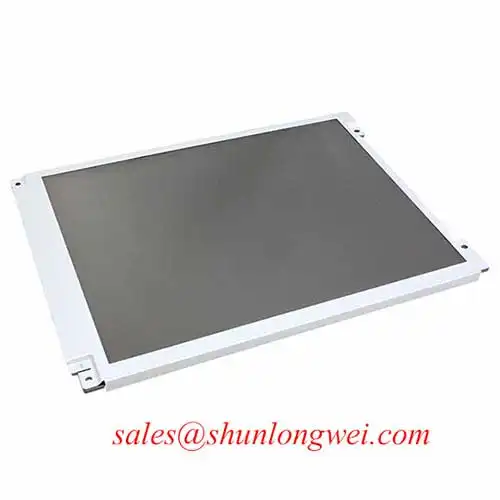
Streamlining industrial visualization integration, the P1210SVF1MB00 delivers an all-in-one 12.1-inch display solution featuring a built-in LED driver. Core specifications include an 800x600 SVGA resolution, a high 1000:1 contrast ratio, and a bright 500 nits luminance. This architecture explicitly minimizes external BOM count and accelerates physical deployment. Does this module require an external power inverter? No, the integrated backlight driver directly accepts a 12V input, removing the need for external power boards. For industrial HMIs requiring standardized LVDS connectivity and prolonged backlight lifespan, this 12.1-inch module provides the optimal balance of integration and visual performance.
Application Scenarios & Value
Resolving Spatial Constraints in Rugged PLC Control Panels
Engineers often face rigid space limitations and severe electromagnetic interference when designing modern Human-Machine Interfaces (HMI) for factory floors. In traditional setups, routing power to an external display inverter introduces potential points of failure and occupies valuable PCB real estate. The P1210SVF1MB00 mitigates this by embedding the LED driver directly into the display chassis. By utilizing a standardized LVDS (1 ch, 6/8-bit) interface, it drastically reduces wiring complexity between the main Industrial PC (IPC) motherboard and the screen.
Consider a SCADA system operator station deployed near heavy stamping machinery. The persistent vibrations demand highly reliable internal connections. The integrated driver removes a bulky intermediate board, directly contributing to mechanical ruggedness. Furthermore, the 500 cd/m² brightness and anti-glare surface treatment ensure that operators can read critical machine data without straining, even under intense overhead factory lighting. While this model is ideal for standard SVGA requirements, for designs demanding wider viewing angles and IPS panel technology, the related G121EAN01.4 offers a high-performance alternative.
Technical Deep Dive
Decoding the Impact of Integrated LVDS and Power Architecture
The engineering elegance of the P1210SVF1MB00 lies in its unified signal and power architecture. By leveraging a Low-Voltage Differential Signaling (LVDS) connection, the module operates with exceptional signal integrity. Using LVDS in an industrial setting is akin to running a dedicated, noise-isolated data highway; it effectively neutralizes common-mode noise, preventing display flickering even when routed near high-voltage motor drives. The selectable 6-bit or 8-bit input allows developers to scale their graphics processing bandwidth based on the specific MCU capabilities.
Equally critical is the internal thermal and electrical management of the WLED backlight. The integrated LED driver acts much like an internal pacemaker for the display, precisely regulating the 12V input to deliver consistent current across the 8S4P LED array without external clutter. This precise current regulation is the primary reason the backlight achieves an impressive Mean Time Between Failures (MTBF) of 50,000 hours. Consequently, this engineering approach dramatically lowers the total cost of ownership, making it a cornerstone for long-term industrial display deployments.
Key Parameter Overview
Highlighting Essential Metrics for System Integration
| Critical Metric | Specification Highlight | Engineering Implication |
|---|---|---|
| Display Resolution | 800(RGB)×600 [SVGA] | Standardized format for legacy and modern PLC software. |
| Luminance & Contrast | 500 nits | 1000:1 | Ensures optimal visibility in high-ambient light environments. |
| Signal Interface | LVDS (1 ch, 6/8-bit), 20-pin | Reduces EMI and simplifies cabling to the host controller. |
| Backlight Architecture | WLED, Built-in LED Driver | Operates directly on 12V; eliminates external inverter boards. |
| Thermal Endurance | -20°C to 70°C (Operating) | Maintains liquid crystal response times in unconditioned facilities. |
Download the P1210SVF1MB00 datasheet for detailed specifications and performance curves.
Frequently Asked Questions
Addressing Core Integration Hurdles
- What is the primary benefit of its built-in LED driver?
It minimizes BOM complexity and accelerates system integration by removing the need for third-party inverter boards. - Why is a 1000:1 contrast ratio critical?
It guarantees precise data visualization and crisp graphical rendering in brightly lit industrial environments, minimizing operator reading errors. - How does the LVDS interface specifically impact EMI in the final product?
By utilizing low-voltage differential pairs, the P1210SVF1MB00 inherently rejects common-mode noise. This allows the display to operate flawlessly even when installed in proximity to electrically noisy equipment, ensuring stable data transmission without heavily shielded cables.
As industrial automation hardware shifts toward more compact, reliable architectures, selecting a highly integrated TFT-LCD module fundamentally dictates overall system longevity. By consolidating power management and prioritizing signal integrity, this component provides a decisive strategic advantage for next-generation control panel designs.