
Content last revised on February 10, 2026
TX20D28VM2BPB: 8.0-inch WVGA TFT-LCD for High-Reliability Visual Interface Design
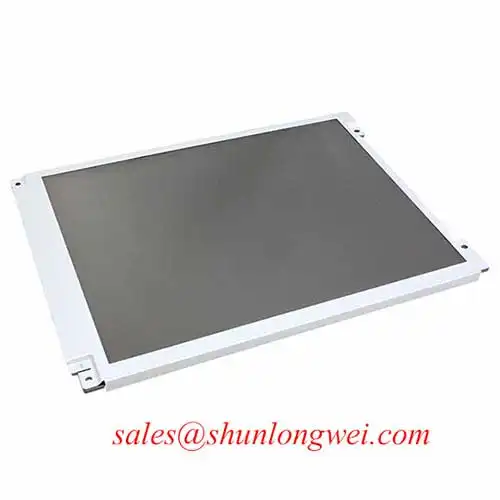
The TX20D28VM2BPB is an 8.0-inch WVGA TFT-LCD module engineered for applications demanding consistent visual clarity and operational robustness. Delivering a resolution of **800 x 480 pixels**, a typical brightness of **440 cd/m²**, and a stable **LVDS interface**, it provides a solid foundation for industrial and medical user interfaces. Key benefits include excellent image quality and simplified system integration. Its balanced performance ensures dependable readability in controlled environments, making it a strategic choice for developing cost-effective and reliable Human-Machine Interfaces (HMIs). For systems requiring higher brightness for outdoor use or different resolutions, alternative models offer specialized performance characteristics.
Application Scenarios & Value
Engineering Dependable HMIs for Industrial and Medical Instrumentation
The TX20D28VM2BPB is engineered to meet the demands of applications where clear, reliable visual information is paramount. Its 8.0-inch screen size and WVGA 800 x 480 resolution offer an ideal balance between information density and physical footprint, making it a prime candidate for integration into industrial control panels, factory automation systems, and medical monitoring devices. The primary engineering challenge in these environments is ensuring long-term operational reliability and straightforward integration with embedded systems. The module’s standard LVDS (Low-Voltage Differential Signaling) interface directly addresses this challenge by providing a robust, low-EMI connection to a wide range of single-board computers and controllers, simplifying the design process and accelerating time-to-market.
Its typical brightness of 440 cd/m² and a 600:1 contrast ratio ensure that user interfaces are sharp and legible in typical indoor and factory floor lighting conditions. While this module is optimized for such environments, for applications that require larger screen real estate and higher pixel density, designers might consider the G101EVN01.0, which offers a different set of specifications for more complex graphical interfaces.
Key Parameter Overview
Decoding the Specifications for System Integration
The technical specifications of the TX20D28VM2BPB are tailored for straightforward implementation and dependable performance in its target applications. The following parameters are central to its design and utility.
| Parameter | Specification |
| Manufacturer | KOE (formerly Hitachi) |
| Display Size | 8.0 inches |
| Resolution | 800 (RGB) x 480 [WVGA] |
| Brightness | 440 cd/m² (Typ.) |
| Contrast Ratio | 600:1 (Typ.) |
| Interface Type | LVDS (1 ch, 6-bit) |
| Operating Temperature | -20°C to 70°C |
| Storage Temperature | -30°C to 80°C |
| Backlight | WLED |
| Supply Voltage | 3.3V (Typ.) |
Technical Deep Dive
A Closer Look at the LVDS Interface and its Impact on System Design
A critical feature of the TX20D28VM2BPB is its LVDS interface. For a system designer, this is more than just a connection standard; it's a foundational element for achieving electromagnetic compatibility (EMC) and signal integrity. Think of the LVDS interface as a dedicated, high-speed lane on a highway, designed specifically for data. Unlike older parallel interfaces which are like wide, slower city streets with many intersections (crosstalk points), LVDS uses two wires with opposing, low-voltage signals to transmit data. This differential signaling method inherently cancels out a significant amount of electromagnetic noise that would otherwise be radiated.
This has a tangible engineering benefit: systems incorporating the TX20D28VM2BPB are less likely to interfere with other sensitive electronics, a crucial factor in medical devices and complex industrial machinery. Furthermore, it allows for longer cable runs between the display and the main processor board without significant signal degradation, offering greater flexibility in mechanical design and enclosure layout. This simplification helps reduce the need for extensive filtering and shielding, contributing to a more streamlined and cost-effective development cycle as outlined in resources on LVDS interface standards.
Frequently Asked Questions (FAQ)
What is the primary benefit of the WVGA resolution on an 8.0-inch screen?
The 800 x 480 WVGA resolution on the TX20D28VM2BPB provides a pixel density that is well-suited for displaying clear text, graphics, and control elements in typical HMI applications without requiring significant processing power to drive a higher-resolution screen. This makes for a responsive and cost-effective system.
How does the LVDS interface simplify the connection to a single-board computer (SBC)?
The LVDS interface uses a standardized, low pin-count connector. This simplifies the wiring harness and reduces potential points of failure compared to older, wide-bus parallel interfaces. Many industrial and embedded SBCs feature a native LVDS port, allowing for a direct and reliable plug-and-play connection.
Is the 440 cd/m² brightness suitable for outdoor use?
A brightness of 440 nits is optimized for indoor environments, including brightly lit factory floors or medical facilities. It is not recommended for applications in direct, bright sunlight where a "sunlight readable" display with a brightness of 800 cd/m² or higher would be necessary for optimal visibility.
What does the -20°C to 70°C operating temperature range mean for my design?
This temperature range ensures the display can operate reliably in a variety of controlled and semi-controlled industrial environments, from cool-temperature storage areas to machine enclosures that may experience elevated heat levels. It provides a robust operational window for most indoor industrial and commercial applications.
A Strategic Component for Mainstream Industrial Interfaces
The TX20D28VM2BPB represents a strategic choice for engineering teams focused on developing reliable and cost-effective user interfaces for the mainstream industrial and medical markets. By integrating proven technologies like the WVGA resolution and a standard LVDS interface, it provides a stable and predictable platform that minimizes design risks and integration complexity. This focus on core performance makes it a valuable component for systems where operational dependability and long-term availability are key business drivers. For further reading on selecting displays for specific environments, explore our guides on industrial HMI solutions.