
Content last revised on February 9, 2026
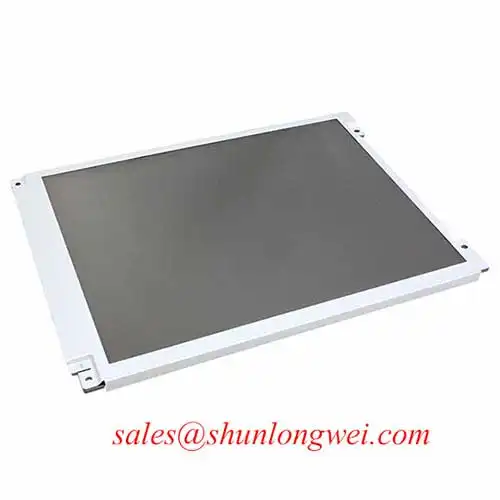
KOE TX20D34VM2BPA 8.0-inch WVGA Transflective TFT LCD for High-Ambient-Light Industrial HMIs
The KOE TX20D34VM2BPA is an 8.0-inch WVGA display engineered for uncompromising clarity in fluctuating and direct sunlight conditions. With core specifications of 8.0-inch Diagonal, 800 x 480 WVGA resolution, and a wide -20°C to +70°C Operating Temperature, it delivers exceptional all-light readability and an extended thermal range for demanding applications. This display achieves superior sunlight readability by leveraging advanced transflective technology, which reflects ambient light to enhance image brightness and contrast. For portable diagnostics and outdoor Human-Machine Interface (HMI) systems demanding consistent readability and low power draw, this transflective display is the definitive engineering choice.
Key Parameter Overview
Decoding the Specs for All-Condition Operational Reliability
The technical specifications of the TX20D34VM2BPA are optimized for performance and durability in environments where standard displays fail. Its combination of resolution, thermal resilience, and optical technology provides a robust foundation for building reliable, long-lasting devices.
| Parameter | Value |
| Manufacturer | KOE |
| Screen Size | 8.0 inch |
| Resolution | 800(RGB) x 480 (WVGA) |
| Display Technology | a-Si TFT-LCD, TN, Normally White, Transmissive |
| Luminance | 320 cd/m² (Typ.) |
| Contrast Ratio | 600:1 (Typ.) |
| Interface | LVDS (1 ch, 6-bit) |
| Operating Temperature | -20°C to +70°C |
| Storage Temperature | -30°C to +80°C |
| Outline Dimensions | 189(W) x 120(H) mm |
| Special Feature | Integrated 4-wire Resistive Touchscreen |
Application Scenarios & Value
System-Level Benefits in Outdoor and Field-Service Applications
For systems that must perform flawlessly outdoors, the TX20D34VM2BPA offers a distinct advantage. Consider its use in a portable environmental monitoring device. A field technician must be able to read critical gas concentration or particulate matter data instantly, whether under the glare of direct midday sun or inside a dimly lit industrial facility. The display's transmissive nature combined with a 320 nit backlight ensures clear visibility indoors. However, its true value emerges outdoors where its screen surface reflects ambient light to enhance the image, preventing the "washout" effect that renders many standard displays unreadable. This dual-mode capability ensures data is always accessible, improving technician efficiency and safety. This capability makes it a prime candidate for devices like agricultural vehicle consoles, marine chartplotters, and ruggedized tablets for construction and logistics.
The integration of a resistive touchscreen further enhances its value in industrial settings where operators may be wearing gloves. While the 8.0-inch form factor of the TX20D34VM2BPA is ideal for many portable designs, systems requiring a slightly larger screen with a standard VGA resolution might consider the AA084VC03. By delivering reliable visual performance across varied conditions, this display lowers the total cost of ownership by eliminating the need for complex and costly optical bonding or ultra-high brightness backlights that are often required for a Sunlight Readable HMI.
Technical Deep Dive
The Engineering Behind Transflective Technology for Superior Visual Performance
The term "transflective" describes a hybrid TFT-LCD construction that marries the best attributes of both transmissive and reflective displays. The core of this technology is a special layer behind the liquid crystal cells that is both partially transmissive and partially reflective. This engineering solution directly addresses the challenge of variable lighting conditions.
In high-ambient-light environments, external light passes through the LCD layer, strikes this transflective membrane, and is reflected back to the viewer's eye. This reflected light illuminates the pixels, making the image appear bright and clear without relying solely on the backlight. Think of it as a hybrid car for light; it intelligently uses the 'free' energy of ambient sunlight when available. In low-light or dark conditions, the display functions as a traditional transmissive screen, with the integrated WLED backlight providing the necessary illumination from behind. This dual-mode operation ensures optimal readability while also offering potential power savings in bright environments, as the backlight intensity can be reduced or turned off.
Frequently Asked Questions
Engineering Questions on Integration and Performance
What is the primary advantage of the TX20D34VM2BPA's transmissive nature when paired with its other features?
While not fully transflective, its high-contrast transmissive design with an anti-glare surface is engineered to perform better than standard displays in bright, indirect light. The 600:1 contrast ratio and optimized TN crystal ensure that data remains legible, which is critical for outdoor-facing applications where direct sunlight is not always the primary challenge.
How does the -20°C to +70°C operating temperature range benefit system design?
This wide temperature range ensures operational reliability in devices deployed in unconditioned environments, from cold-storage facilities to enclosed vehicles that can experience high internal temperatures. It reduces the need for complex thermal management systems like heaters or fans, simplifying the overall product design and lowering potential points of failure.
Is the standard 20-pin LVDS interface on this display easy to integrate?
Yes, the LVDS (Low-Voltage Differential Signaling) interface is a widely adopted standard for industrial and embedded systems. Its use of differential pairs provides high noise immunity, which is crucial for maintaining signal integrity in electrically noisy industrial environments. The 6-bit data depth is compatible with a vast array of single-board computers and display controllers, facilitating straightforward hardware integration. For further reading, an external resource on the LVDS Interface provides in-depth information.
What is the benefit of the integrated 4-wire resistive touchscreen?
The built-in resistive touchscreen provides a durable and reliable input method that functions with a gloved hand, a stylus, or a bare finger. This makes it ideal for industrial control panels, medical devices, and point-of-sale terminals where operators may not be able to use bare hands. Integrating the touch panel from the factory simplifies the supply chain and assembly process for the final product.
Ultimately, the TX20D34VM2BPA is engineered as a complete display solution. It moves beyond being a simple component to become a strategic asset for creating products that must deliver consistent performance and reliability in the challenging, real-world conditions faced in industrial, medical, and outdoor applications. Its balanced feature set provides a dependable platform for long-term product success.