


Content last revised on January 21, 2026
UG-9664HDDAG01 OLED: -40°C to 85°C Operation, 96x64 Display
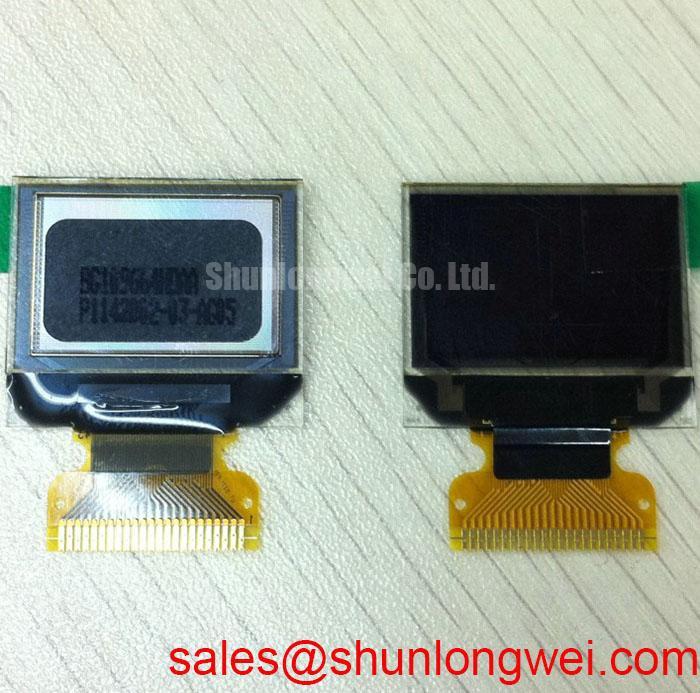
Engineered for operational integrity in demanding physical environments, the Univision UG-9664HDDAG01 Graphic OLED module sets a standard for resilience. Its self-emissive display technology provides inherent structural advantages over traditional LCDs, creating a component built for dependability. This module offers a 96x64 resolution, an extreme -40 to 85°C operating temperature range, and a 1500G shock tolerance. Key benefits include extreme environment survivability and superior visual clarity from any angle. For engineers questioning how to ensure display reliability under intense mechanical stress, the UG-9664HDDAG01's solid-state construction and high shock rating provide a validated solution, eliminating the typical failure points of backlit assemblies.
Meeting the Demands of Ruggedized Field Equipment
The proliferation of IoT and portable diagnostic tools into uncontrolled environments places new demands on component durability. System designers are increasingly tasked with integrating human-machine interfaces that can provide failure-free performance from arctic-cold to desert-heat conditions, all while enduring the rigors of mobile use. The UG-9664HDDAG01 directly addresses this strategic need. What makes this OLED suitable for harsh environments? Its solid-state design and -40°C to 85°C operating range. This capability allows for deployment in applications where conventional displays would require costly and complex heating or cooling subsystems, simplifying the overall system architecture and enhancing the total cost of ownership, a critical factor explored in the difference between industrial and consumer displays.
Deployment Scenarios Demanding Unfailing Readability
The specific performance characteristics of the UG-9664HDDAG01 make it a prime candidate for systems where data visibility and component endurance are paramount. Its design provides robust performance across a spectrum of challenging industrial and portable applications.
- Handheld Diagnostic Instruments: In automotive, geological, or utility field-service tools, devices are subject to drops, vibration, and temperature extremes. The module's high shock resistance and wide temperature range ensure data remains accessible.
- Outdoor Asset Monitoring: Equipment such as utility meters, environmental sensors, and agricultural controllers requires displays that are instantly readable at power-on, even when ambient temperatures are well below freezing.
- Unheated Industrial Control Panels: For control interfaces on heavy machinery or in remote installations like pipelines and substations, this display provides reliable operation without the need for enclosure heaters, reducing system complexity and power consumption.
- Portable Communication and GPS Devices: The compact form factor and low power draw are advantageous for battery-powered equipment designed for emergency services or outdoor recreational use. For portable devices requiring high-shock immunity, the UG-9664HDDAG01's 1500G rating makes it a more durable choice than typical consumer-grade displays.
These applications underscore the value of components specifically built for resilience, a core topic for engineering displays in heavy machinery.
Data-Driven Assessment: Key Specifications
Technical evaluation of the UG-9664HDDAG01 is grounded in its datasheet parameters. The following tables provide a structured overview of its capabilities.
Display Characteristics
| Parameter | Value |
|---|---|
| Display Technology | Passive Matrix OLED (PMOLED) |
| Resolution | 96 (W) x 64 (H) pixels |
| Emitting Color | Yellow |
| Viewing Angle | >160° |
| Integrated Driver IC | SSD1306 |
| Interface Support | 8-bit 6800/8080 Parallel, 3/4-wire SPI, I2C |
Environmental & Reliability Ratings
| Parameter | Value |
|---|---|
| Operating Temperature Range | -40°C to +85°C |
| Storage Temperature Range | -40°C to +90°C |
| Shock Resistance | 1500 G, 0.5ms, half sine wave |
Parameter Interpretation: Operating TemperatureThe -40°C to +85°C operating range is a critical performance metric. Think of the liquid crystals in a standard TFT-LCD as being like water; they have a distinct freezing and boiling point where performance degrades rapidly. The UG-9664HDDAG01's OLED technology is fundamentally different. As a solid-state, self-emissive device, it lacks a liquid medium, behaving more like a robust semiconductor across its entire temperature specification. This eliminates the risk of freezing, slow response times in the cold, or washout in the heat that affects many LCD-based solutions.
A Factual Comparison for Informed Engineering Decisions
To support your design evaluation process, this section presents a side-by-side factual comparison between the UG-9664HDDAG01's OLED technology and a representative, similarly-sized TFT LCD module. This data is intended to help clarify the engineering trade-offs for specific application requirements.
| Feature | UG-9664HDDAG01 (OLED) | Typical Small TFT LCD |
|---|---|---|
| Operating Temperature | -40°C to +85°C | -20°C to +70°C (Standard) |
| Viewing Angle | >160° (Full) | Varies significantly by axis (e.g., 80/80/60/70) |
| Black Level / Contrast | True Black (Pixels off) / >2000:1 | Grayish (Backlight bleed) / ~500:1 |
| Response Time | ~10µs (Microseconds) | ~25ms (Milliseconds) |
| Structural Components | Self-emissive screen, driver IC | LCD glass, liquid crystal, backlight unit, diffuser, driver IC |
For projects where operating temperature or viewing angle are critical design constraints, the datasheet values of the UG-9664HDDAG01 present a clear advantage. For systems where a different set of visual or interface characteristics is required, the AA057VF12 provides an alternative technology to evaluate.
The Engineering Behind Environmental Resilience
The UG-9664HDDAG01's resilience is not an accidental feature but a direct result of its underlying OLED technology. Unlike TFT LCD modules, which require a separate backlight unit, polarizers, and a layer of liquid crystal, this module's pixels generate their own light. This structural simplification is key. By eliminating the backlight assembly—often a point of failure due to vibration or thermal stress—the design has fewer mechanical components that can fail. The absence of liquid crystal means there is no medium to freeze or degrade at temperature extremes, ensuring consistent response times and clarity. This inherent simplicity translates directly into the high shock (1500G) and wide temperature ratings documented in the product specifications.
For technical inquiries or to request a datasheet for the UG-9664HDDAG01, please use our contact form to specify your project's requirements. Our team can provide the necessary documentation to support your design and procurement process.