
Content last revised on September 10, 2026
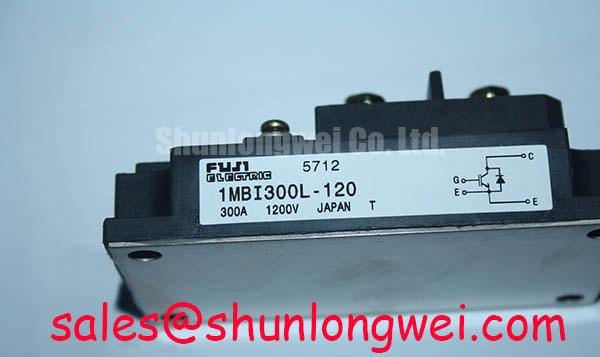
Fuji Electric 1MBI300L-120 IGBT Module | 1200V 300A High-Performance Switching
The 1MBI300L-120 represents a cornerstone in high-power industrial electronics, offering a robust single-element IGBT configuration designed for demanding switching environments. This Fuji Electric module is specifically engineered to handle high current loads while maintaining exceptional thermal stability, making it a critical component for power conversion stages in large-scale industrial machinery. By integrating a high-speed IGBT chip with a fast-recovery diode, it addresses the dual challenges of conduction efficiency and switching speed.
UVP: High-efficiency power regulation for heavy industrial loads requiring superior thermal margins.
Core Specs: 1200V | 300A | Pc 2100W
Key Benefits: Maximizes system uptime through high short-circuit ruggedness; reduces cooling requirements via optimized VCE(sat) characteristics.
How does the 1MBI300L-120 improve efficiency? It minimizes switching losses in high-frequency inverter stages through its optimized internal capacitance and gate charge. For 400V industrial drives prioritizing thermal margin, this 1200V 300A module provides an ideal power-to-footprint ratio.
Application Scenarios & Value
Achieving System-Level Benefits in High-Power Industrial Inverters
In the realm of Variable Frequency Drive (VFD) design, the 1MBI300L-120 excels as the primary switching element for the output stage. Its 300A rating is particularly suited for managing the inductive load profiles of large AC motors. A common challenge for engineers is the high starting torque requirements of industrial conveyor belts, which cause massive current surges. The 1MBI300L-120 addresses this with a high pulse current capability, ensuring the module operates within its Safe Operating Area (SOA) even during transient overload conditions.
Beyond motor control, this module is a staple in Uninterruptible Power Supply (UPS) systems and Solar Inverter architectures. In high-capacity UPS applications, the low saturation voltage (VCE(sat)) directly translates to lower operational costs by reducing energy waste as heat. For systems requiring even higher current handling within the same technology family, the 1MBI400N-120 offers a 400A capability, whereas the 2MBI300N-120 provides a dual-IGBT (half-bridge) configuration for more compact phase-leg designs. Integrating this module into a Renewable Energy system often requires precise Gate Drive isolation to maintain signal integrity against high dv/dt noise.
Key Parameter Overview
Decoding the Specs for Enhanced Thermal Reliability
The following technical data is derived from the official Fuji Electric documentation to support precise engineering evaluation.
| Characteristic | Symbol | Rating / Value |
|---|---|---|
| Collector-Emitter Voltage | VCES | 1200V |
| Continuous Collector Current | IC | 300A (at Tc=25°C) |
| Maximum Collector Dissipation | Pc | 2100W |
| Saturation Voltage | VCE(sat) | 2.80V (Typical) |
| Junction Temperature | Tj | Up to +150°C |
| Isolation Voltage | Visol | 2500V AC (1 minute) |
Download the 1MBI300L-120 datasheet for detailed specifications and performance curves.
Technical & Design Deep Dive
A Closer Look at the Low-Inductance Packaging for High-Speed Switching
The 1MBI300L-120 utilizes a specialized package designed to minimize internal stray inductance. In high-power switching, inductance is the "momentum" of electrical current; if the circuit is interrupted too quickly, this inductance causes voltage spikes that can exceed the VCES rating and destroy the silicon. By optimizing the internal bus-bar layout, Fuji Electric allows engineers to use faster turn-off speeds, which reduces Switching Loss without necessitating oversized Snubber Circuits.
To understand the importance of Thermal Resistance (Rth(j-c)) in this module, consider a bottleneck in a water cooling system. The Rth(j-c) is essentially the efficiency of the "heat pipe" between the IGBT chip and the module’s baseplate. A lower value ensures that the 2100W of potential dissipation can be moved effectively to the external heatsink. This allows the 1MBI300L-120 to maintain a stable VCE(sat) even at elevated temperatures, preventing thermal runaway in 24/7 industrial operations. Proper Thermal Management is not just about cooling; it is about extending the Power Cycling Capability of the module under fluctuating loads.
Industry Insights & Strategic Advantage
Alignment with Industry 4.0 and Energy Efficiency Standards
As global regulations for industrial energy efficiency (such as IEC 61800-9-2) become more stringent, the selection of power semiconductors like the 1MBI300L-120 becomes a strategic decision for OEMs. This module supports the transition toward high-efficiency Variable Frequency Drives that are essential for the smart factories of the future. By reducing the harmonic distortion and thermal waste in Motor Control systems, manufacturers can achieve significant reductions in the Total Cost of Ownership (TCO) for their end-users.
The reliability of the 1MBI300L-120 also aligns with the growing demand for Solid State Circuit Breakers and high-power Servo Drive systems used in robotics. In these applications, the ability to withstand short-circuit conditions (typically up to 10 microseconds) is a non-negotiable safety feature. Choosing a field-proven module from a leading manufacturer ensures that the system design complies with international safety standards while providing the ruggedness required for harsh industrial environments.
FAQ
How does the VCE(sat) of the 1MBI300L-120 affect overall system efficiency?
The typical VCE(sat) of 2.80V represents the voltage drop across the collector and emitter when the IGBT is fully on. A lower saturation voltage reduces conduction losses, meaning less energy is dissipated as heat, which allows for smaller heatsinks and higher Power Density in the inverter cabinet.
What are the critical considerations for the gate drive circuit of this module?
Given the 300A switching capability, the gate driver must provide sufficient peak current to charge the input capacitance quickly. Engineers should implement a Negative Gate Voltage during the off-state to prevent parasitic turn-on caused by high dv/dt transients through the Miller Clamp effect.
Can the 1MBI300L-120 be paralleled for higher current applications?
Yes, however, IGBT Paralleling requires careful consideration of VCE(sat) matching and symmetrical PCB layout. Since IGBTs have a positive temperature coefficient at high currents, they naturally tend to share current, but parasitic inductance in the wiring must be balanced to prevent dynamic current imbalance during switching.
Strategic integration of power components is the key to maintaining a competitive edge in industrial automation. The 1MBI300L-120 offers the reliability and performance necessary to meet the rigorous demands of modern power electronics, ensuring that your system architecture is prepared for the next generation of energy-efficient operation.