
Content last revised on August 28, 2026
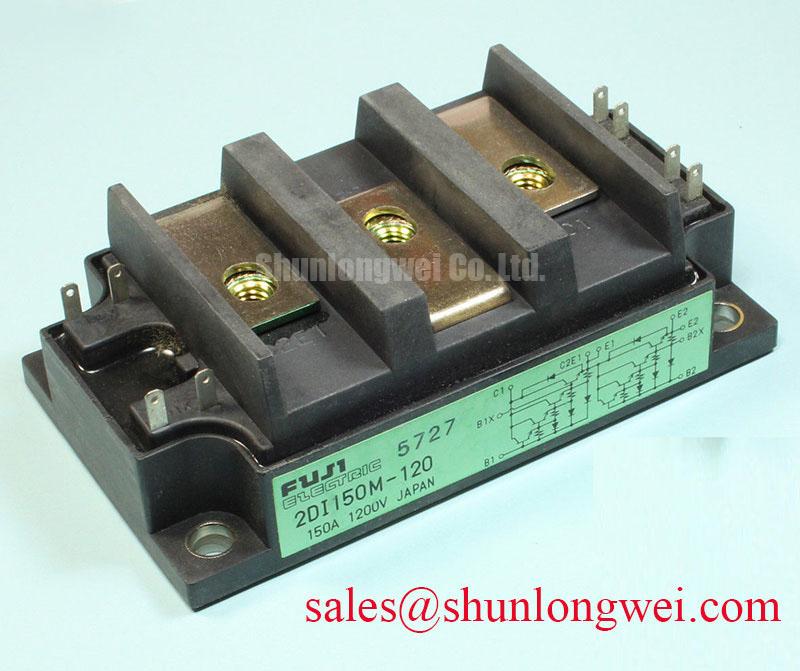
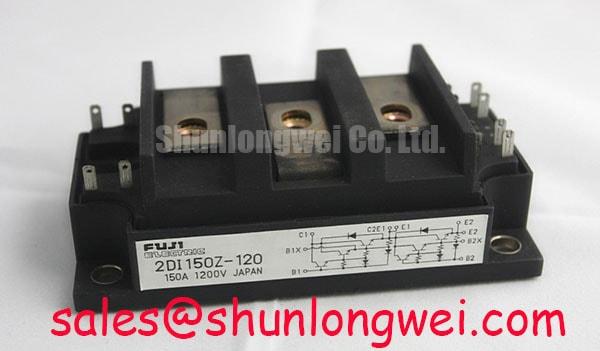
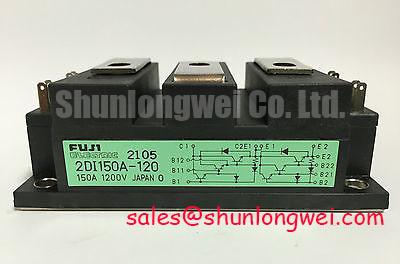
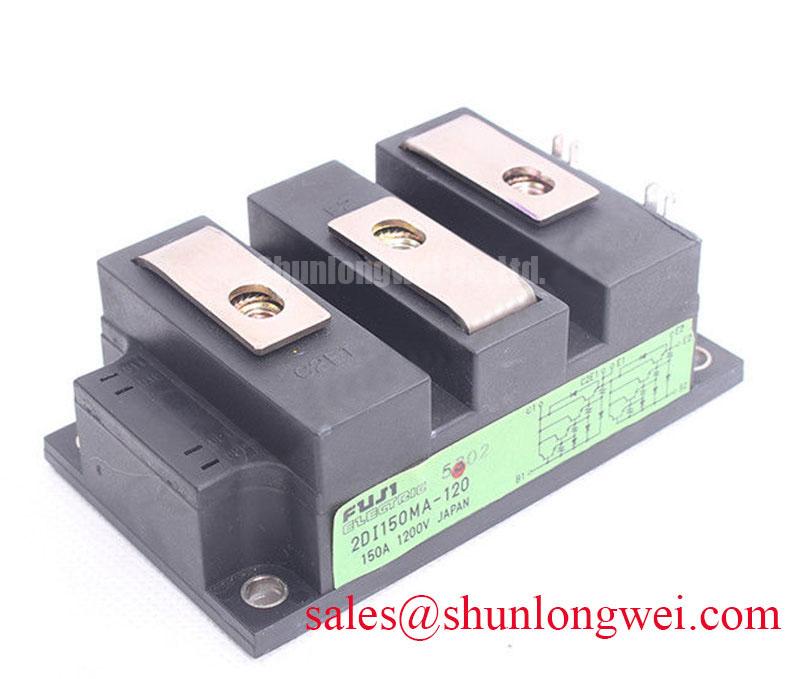
Fuji Electric 2DI150MA-120 GTR Transistor Module
The 2DI150MA-120 is a high-power Giant Transistor (GTR) Darlington module designed by Fuji Electric for demanding industrial applications requiring robust voltage blocking and high current amplification. Incorporating a dual-element structure with integrated fast freewheeling diodes, this device simplifies power-stage layouts while providing high DC current gain and exceptional thermal robustness.
Key Parameter Overview
Decoding the Specs for Enhanced Thermal and Electrical Reliability
For system designers and component evaluators, understanding the absolute ratings and electrical limits of the switching stage is vital to ensuring long-term operational margin. The following table highlights the critical electrical specifications of this module:
| Parameter Symbol | Technical Specification Value | Engineering Value & Value Interpretation |
|---|---|---|
| VCES / VCBO | 1200V | Collector-emitter voltage limits; guarantees headroom for 400V–480V AC line input topologies. |
| IC (Continuous) | 150A | Continuous DC collector current rating at baseplate temperature of 25°C. |
| ICP (Peak) | 300A | Maximum allowable peak current (pulse) to withstand inductive load kickbacks. |
| VCE(sat) (Max) | 2.8V | Maximum saturation voltage at rated current, directly influencing conduction losses. |
| hFE (Min) | 100 | DC current gain to reduce base drive power requirements. |
| VIsol | 2500V AC | RMS isolation voltage for 1 minute between terminals and baseplate. |
Application Scenarios & Value
Achieving System-Level Benefits in High-Power Conversion
For industrial systems prioritizing thermal margins, this 1200V module is the optimal choice. GTR Darlington configurations are highly suited for low-to-medium frequency applications where high current capacity must be managed with minimal drive complexity. The module is regularly evaluated for integration into high-voltage environments such as Variable Frequency Drives (VFD), AC and DC motor control units, and industrial battery chargers. By integrating the freewheeling diode directly into the NPN Darlington pair structure, it eliminates the parasitic path inductance that typically leads to voltage spikes during switching transitions.
Additionally, the integrated design serves as a reliable building block in heavy industrial equipment like welder power systems and larger high-efficiency inverter AC units. When comparing related options within similar footprints, if a system demands higher current density under modern switching profiles, designers may evaluate alternative topologies. For instance, the related 2MBI200NB-120 offers a higher collector current rating of 200A using modern IGBT technology, while the QM150DY-24 provides an alternative Darlington configuration with 1200V blocking capability.
Technical & Design Deep Dive
A Closer Look at the Darlington Configuration and Thermal Path Design
The core advantage of the 2DI150MA-120 lies in its internal Darlington pair arrangement. By cascading two bipolar junction transistors (BJTs) on a single substrate, the device achieves a high current gain (hFE ≥ 100). Think of this as a hydraulic lever: a tiny input force (base current) controls a massive output force (collector current). This significantly relaxes the drive requirements of the control board compared to standard single BJTs, allowing simpler driver circuits to switch up to 150A of continuous load current.
To mitigate the high thermal generation that accompanies large power dissipation (up to 1 kW per module), Fuji Electric utilizes a copper baseplate with high-purity alumina ceramics for insulation. This construction keeps the thermal resistance from junction-to-case (Rth(j-c)) extremely low. Keeping this thermal path short prevents localized hot spots, preserving the integrity of the silicon die during transient overload events. Proper design of the external gate drive, including a slight negative base bias during turn-off, is recommended to minimize storage time and turn-off losses in inductive load switching applications.
Frequently Asked Questions
How does GTR technology differ from modern IGBT modules in terms of driving and switching?
Unlike modern field-effect gate drives that are strictly voltage-controlled, GTR Darlington modules are current-driven devices. They require continuous base current to stay in the on-state, resulting in higher drive power losses compared to modern IGBT structures. However, their physical robustness and simplicity make them highly reliable replacements in legacy industrial drives.
What is the primary role of the integrated freewheeling diode inside the module?
The integrated diode provides a low-impedance commutation path for inductive currents when the main transistor switches off. This prevents massive inductive voltage surges (L*di/dt) from exceeding the collector-emitter breakdown voltage, thereby securing the device's safe operating area (SOA).
How does the 2500V AC isolation rating affect heatsink mounting?
The 2500V AC isolation rating guarantees that the internal electrical components are fully isolated from the copper mounting plate. This allows multiple modules to be mounted on a single shared heatsink without the need for additional external insulating pads, optimizing thermal transfer to the cooling medium.