Content last revised on September 10, 2026
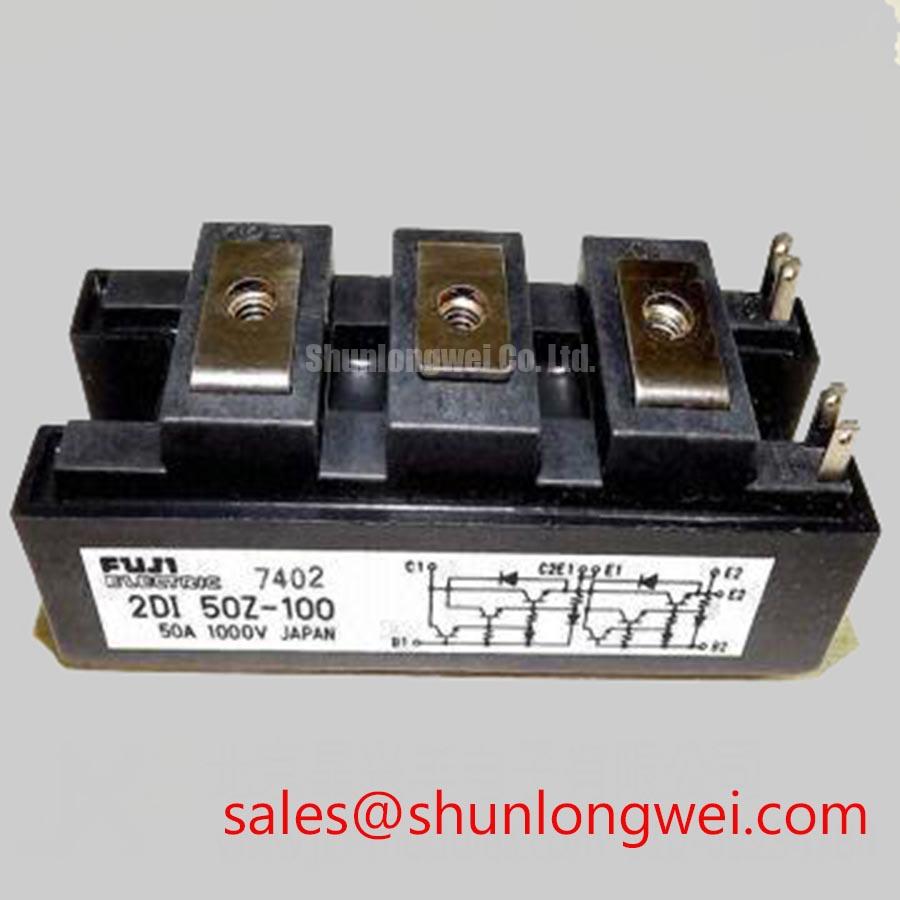
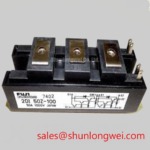
2DI50Z-100 Fuji Electric 1000V 50A Power Transistor Module
The 2DI50Z-100 is a high-performance bipolar Darlington transistor module designed for robust power switching in industrial environments. By integrating two high-gain Darlington units into a single package, it simplifies the architecture of power conversion stages while maintaining superior thermal stability. For systems operating on 440V or 480V AC lines, the 1000V Vces rating provides the critical voltage headroom required to absorb inductive spikes without risking semiconductor failure.
Best fit: For legacy industrial motor drives and high-voltage DC choppers prioritizing thermal reliability over high switching frequencies, the 2DI50Z-100 remains a benchmark solution for power density and ease of drive circuitry.
Key Parameter Overview
Decoding the Specs for Enhanced Thermal Reliability
Engineering precision begins with understanding the core limitations and capabilities of the power stage. The 2DI50Z-100 is characterized by its high current gain and significant voltage blocking capability. Unlike modern high-frequency IGBTs, this bipolar module excels in low-to-medium frequency applications where saturation losses and thermal management are the primary design constraints.
| Main Specification | Official Value | Engineering Significance |
|---|---|---|
| Collector-Emitter Voltage (Vceo) | 1000V | Ensures safe operation in 440V-480V AC industrial power grids. |
| Collector Current (Ic) | 50A | Supports medium-duty power loads in VFD and UPS systems. |
| Collector Power Dissipation (Pc) | 400W | Reflects the module's capacity to handle internal heat at Tc=25°C. |
| DC Current Gain (hFE) | 100 (Min) | Reduces the drive current requirements for simplified gate/base control. |
| Thermal Resistance (Rth(j-c)) | 0.31 °C/W | Determines the efficiency of heat transfer to the cooling assembly. |
Download the 2DI50Z-100 datasheet for detailed specifications and performance curves.
Application Scenarios & Value
Achieving System-Level Benefits in High-Voltage Power Conversion
In the context of Variable Frequency Drives (VFD) and high-capacity Uninterruptible Power Supplies (UPS), the 2DI50Z-100 serves as the critical switching element. A common engineering challenge involves managing the high inrush currents during the startup of induction motors. The 50A continuous rating, coupled with a high pulse current capability, allows engineers to design robust power stages that withstand the transient thermal stresses typical of industrial automation.
For designers working on AC Motor Drives, the 1000V Vceo is not merely a safety margin; it is a necessity for managing the back-EMF generated during rapid deceleration. When compared to lower voltage modules, this 1000V rating significantly reduces the need for complex and expensive snubber networks. For systems requiring higher current handling, such as heavy-duty lifting equipment, the 2MBI200NB-120 offers a 1200V Vces with a 200A rating.
The 2DI50Z-100 is also extensively utilized in DC Chopper stages and Induction Heating systems. Its Darlington configuration provides a high input impedance relative to standard bipolar transistors, allowing for more efficient base drive designs. To ensure long-term field reliability, engineers often refer to comprehensive testing protocols, such as how to test a power module with a multimeter, to maintain system integrity during routine maintenance.
Technical Deep Dive
Analyzing the Darlington Configuration for Long-Term Reliability
The internal architecture of the 2DI50Z-100 utilizes a cascaded transistor arrangement known as a Darlington pair. Think of this as a "force multiplier" for electrical current; a small base current is amplified by the first stage, which then drives the second, much larger power transistor. This results in a very high hFE, making the module compatible with lower-power control electronics. Analytically, if a standard transistor is like a manual lever, the Darlington pair is like a hydraulic press—allowing for the control of massive power with minimal effort.
Thermal management in this module is dictated by its Rth(j-c) of 0.31 °C/W. This value represents the "thermal bottleneck" between the silicon junction and the module's baseplate. A lower thermal resistance means that heat generated during high-load switching can be more effectively moved to the heatsink. In high-density power cabinets, this efficiency is the deciding factor in whether a system requires active liquid cooling or can rely on traditional forced-air ventilation. Understanding why Rth matters is essential for calculating the safe operating area (SOA) in varying ambient temperatures.
Frequently Asked Questions
How does the Rth(j-c) of 0.31 °C/W directly impact heatsink selection?
The thermal resistance dictates the maximum allowable power dissipation based on your heatsink's temperature. With an Rth(j-c) of 0.31 °C/W, even with a high-performance heatsink, the 2DI50Z-100 requires careful calculation of the total thermal path to ensure the junction temperature never exceeds its rated limits during peak 50A operation.
What is the primary benefit of the 1000V Vceo(sus) in inductive load switching?
Inductive loads, such as motors, create large voltage spikes during turn-off. The 1000V sustaining voltage allows the 2DI50Z-100 to survive these transients without entering a latch-up or breakdown state, which is critical for the reliability of DC Choppers and VFDs.
Can the 2DI50Z-100 be used in high-frequency PWM applications?
While the 2DI50Z-100 is highly robust, bipolar modules generally have slower switching speeds compared to modern IGBTs. It is optimized for low-to-medium frequency PWM where conduction losses (Vce(sat)) are a more significant concern than switching losses.
How can I verify if a 2DI50Z-100 module is still functional in the field?
Field technicians can use a multimeter to check for collector-emitter shorts or base-emitter junction degradation. A detailed walkthrough of this process can be found in our guide on testing power modules with a multimeter.
Strategically, as industrial power systems transition toward more efficient architectures, the 2DI50Z-100 remains a vital component for maintaining and upgrading existing infrastructure. For procurement managers and engineers, selecting a module with a proven 1000V | 50A track record ensures that system-level reliability is not compromised by contemporary trends toward miniaturization at the expense of voltage margin.