


Content last revised on September 10, 2026
Fuji 6MBI100S-120: Engineering Analysis of a 1200V, 100A Six-Pack IGBT Module
An In-Depth Review for Power System Design Engineers
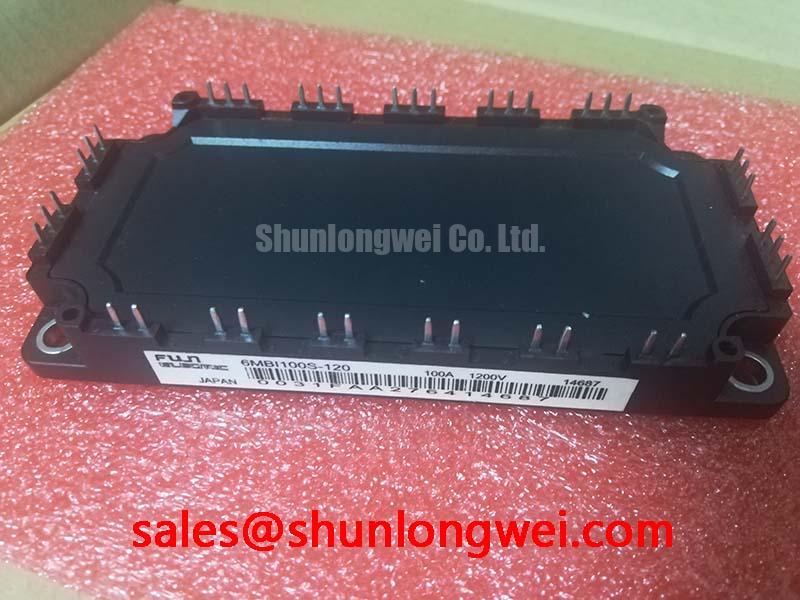
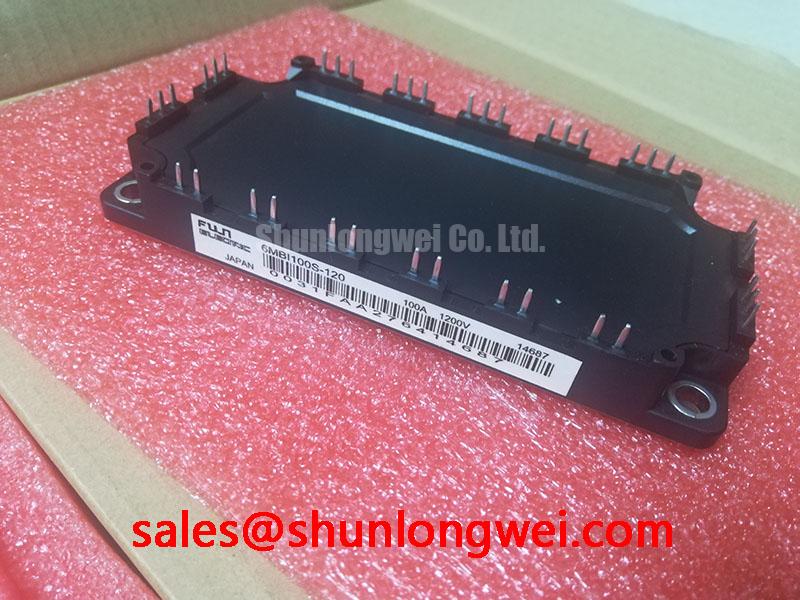
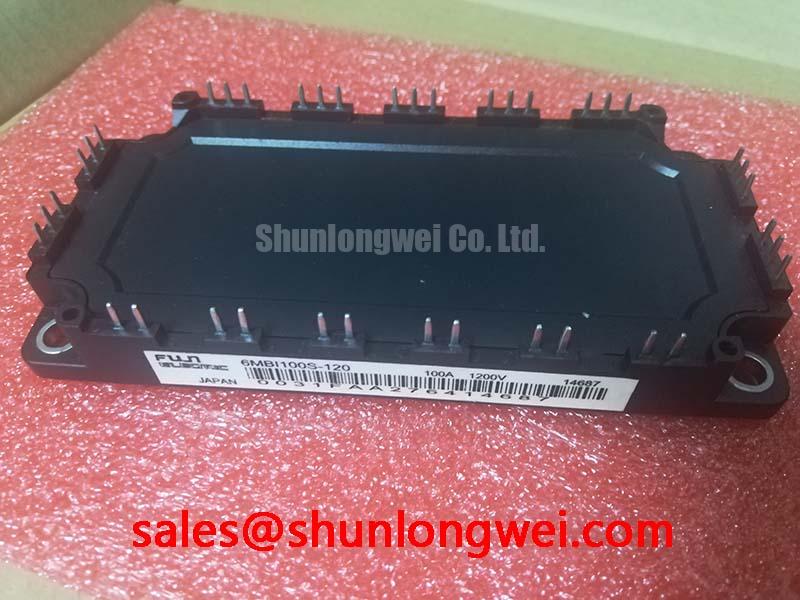
The Fuji Electric 6MBI100S-120 is a 1200V/100A six-pack IGBT module engineered for high-efficiency power conversion, delivering reduced conduction losses to optimize performance in demanding industrial applications. With key specifications of 1200V | 100A | VCE(sat) 2.2V (typ), this module offers robust thermal performance and simplified system integration. It directly addresses the engineering need for a reliable power stage in systems where balancing efficiency and thermal management is critical. For AC drives requiring predictable performance under heavy loads, its low saturation voltage is a defining advantage for minimizing heat dissipation.
Key Parameter Overview
Decoding the Specs for High-Efficiency Power Conversion
The technical specifications of the 6MBI100S-120 are foundational to its performance in power conversion systems. The following table highlights the critical parameters that directly influence design choices, from thermal management to gate drive configuration. A low collector-emitter saturation voltage (VCE(sat)) is particularly important as it directly correlates to lower conduction losses, a key factor in overall system efficiency.
| Parameter | Value | Conditions |
|---|---|---|
| Collector-Emitter Voltage (VCES) | 1200V | Tj = 25°C |
| Continuous Collector Current (IC) | 100A | Tc = 80°C |
| Collector-Emitter Saturation Voltage (VCE(sat)) | 2.2V (typ), 2.7V (max) | IC = 100A, VGE = 15V, Tj = 25°C |
| Total Power Dissipation (PC) | 540W | Per IGBT, Tc = 25°C |
| Thermal Resistance (Rth(j-c)) | 0.23 °C/W (IGBT), 0.42 °C/W (FWD) | Junction to Case |
| Gate-Emitter Voltage (VGES) | ±20V | - |
| Operating Junction Temperature (Tj) | +150°C | - |
Download the 6MBI100S-120 datasheet for detailed specifications and performance curves.
Application Scenarios & Value
System-Level Benefits in Industrial Motor Control and Power Supplies
The 6MBI100S-120 is best suited for applications where efficiency and reliability are paramount. Its six-pack configuration, containing six IGBTs and six free-wheeling diodes in a three-phase bridge, is purpose-built for three-phase AC motor control and power conversion systems.
A primary engineering challenge in designing a Variable Frequency Drive (VFD) is managing the heat generated by the power module, especially in compact enclosures. The 6MBI100S-120's typical VCE(sat) of 2.2V at its nominal 100A rating directly mitigates this issue. Think of VCE(sat) as the "voltage toll" the device charges when it's fully on; a lower toll means less energy is wasted as heat. This allows for smaller heatsink selection or operation at higher ambient temperatures without derating, contributing to a more compact and cost-effective final design. The module's performance is crucial for adhering to efficiency standards like IEC 61800-5 for adjustable speed drives.
Its application scope includes:
- AC Motor Drives and Servo Drives
- Uninterruptible Power Supplies (UPS)
- General Purpose Inverters
- Welding Power Supplies
For systems demanding higher current capacity, the related 2MBI200NB-120 offers a 200A rating within a similar voltage class.
Technical Deep Dive
Implications of the S-Series Trench Gate Structure
The performance of the 6MBI100S-120 is rooted in its S-Series chip technology from Fuji Electric. This generation utilizes a trench gate structure, a significant evolution from older planar gate designs. Imagine the current flow path in an IGBT like water flowing through a field. A planar gate is like a wide, shallow channel, while a trench gate is like a deep, narrow trench. The trench structure creates a more direct and lower-resistance path for the current, which is the physical mechanism that achieves the low VCE(sat) of 2.2V. This design not only reduces static conduction losses but also allows for a more optimized trade-off with switching losses, making the module effective across a range of Pulse Width Modulation (PWM) frequencies commonly used in industrial automation.
Frequently Asked Questions (FAQ)
How does the VCE(sat) of 2.2V (typ) influence thermal design?
A lower VCE(sat) directly reduces power loss during conduction (P_loss = VCE(sat) * IC). With less power being converted to heat, the required performance from the cooling system is reduced. This allows engineers to specify a smaller, more cost-effective heatsink or to achieve higher power density within the same thermal envelope.
What is the primary function of the integrated Free Wheeling Diodes (FWD)?
The integrated FWDs provide a safe path for the inductive motor current to flow when an IGBT turns off. This is essential in any inductive load application, such as a motor drive, to prevent catastrophic voltage spikes that would otherwise destroy the IGBT. The co-packaging of these diodes simplifies the power stage design significantly.
Is the 6MBI100S-120 suitable for hard-switching topologies?
Yes, its specifications, including defined turn-on (Eon) and turn-off (Eoff) energies, are characterized for hard-switching applications. The datasheet provides curves to help engineers calculate switching losses at their specific operating frequency and conditions, which is crucial for overall loss budgeting.
What does the "six-pack" configuration mean for system integration?
A "six-pack" or "6-in-1" module contains all six necessary IGBTs and FWDs to create a complete three-phase inverter bridge in a single package. This drastically simplifies PCB layout, reduces component count, minimizes stray inductance compared to discrete solutions, and streamlines the manufacturing assembly process.
Strategic Design Considerations
Integrating the 6MBI100S-120 module into a power system design offers a strategic path to achieving a balance of performance, thermal stability, and manufacturing simplicity. Its well-defined characteristics for losses allow for precise and predictable system modeling, reducing design cycle time. For engineering teams focused on developing reliable and efficient mid-power industrial inverters, this module provides a proven, integrated solution that minimizes both electrical and thermal design complexity.