
Content last revised on November 4, 2026
2MBI200VA-060 Operational Boundaries: Terminal-to-Baseplate Insulation Assessment
Before reconnecting a removed module, isolate it from the drive and inspect the terminal-to-baseplate insulation path with test conditions appropriate to the module’s datasheet and the equipment service procedure. The specified product ratings are 600 V and 200 A; they do not establish an insulation-test voltage or acceptance threshold. Do not apply a megohmmeter setting or pass criterion based on an unverified listing or a generic module rule.
For a heavy-duty variable-frequency AC motor drive, record the condition of the power terminals, mounting surface, and surrounding insulation before cleaning or reassembly. Dust, conductive residue, and moisture can affect surface leakage paths, while a damaged or contaminated interface can complicate interpretation of an insulation measurement. Remove external contamination using a process approved for the equipment, then test the isolated module and its surrounding assembly according to the applicable documentation. Keep the test leads, connections, and module state consistent when comparing results with a known-good unit or earlier maintenance records.
Terminal-to-baseplate insulation results depend on test voltage, measurement duration, temperature, humidity, connected circuitry, and instrument characteristics. Confirm that the module is disconnected from gate-drive boards, snubbers, sensors, and other paths that could influence the reading or be exposed to the test. Where an insulation reading is unexpected, repeat the measurement after checking the test setup and inspect for residue, damaged insulation, loose hardware, or an unintended conductive path. A single reading should not be treated as proof of internal substrate damage.
Clearance and creepage are assembly-level considerations, not values established by the 600 V and 200 A ratings alone. Preserve the original equipment’s insulating barriers and conductor spacing, and account for contamination, altitude, enclosure conditions, and the applicable safety requirements when assessing a modified layout. If dust accumulation is recurring, investigate the enclosure and maintenance controls rather than assuming that cleaning the module alone resolves the underlying condition.
For a comparison point during sourcing review, the 2MBI50J-060 is another Fuji Electric model page; its ratings and physical configuration must be compared against the circuit, mounting, and drive documentation before considering it. For broader context on thermal interfaces and cooling approaches, consult The Advanced Thermal Management Revolution.
2MBI200VA-060 Operational Boundaries: Heatsink Contact and Switching Coordination
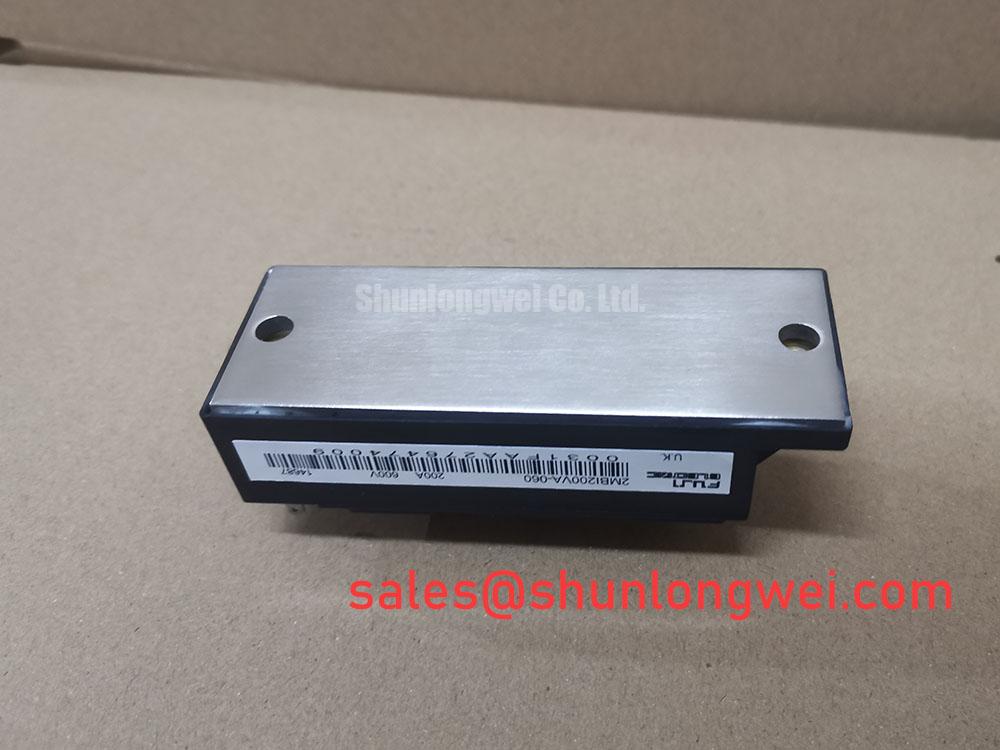
When removing or installing the module, inspect the heatsink contact surface for debris, burrs, corrosion, and signs of uneven pressure. A clean, flat interface supports repeatable thermal contact; the required interface material, application method, mounting sequence, and fastener torque must come from the module documentation or the drive manufacturer’s service instructions. The model designation and headline electrical ratings do not specify a thermal-interface thickness, allowable baseplate curvature, or mounting torque.
Apply the specified thermal interface material evenly and avoid trapping particles or leaving large unfilled regions. Tighten fasteners in the sequence prescribed for the equipment so that pressure is distributed across the mounting surface. If the baseplate or heatsink appears warped, do not try to compensate by increasing fastener force; check the relevant flatness limits and mounting procedure. Uneven clamping can change contact conditions and may also stress the assembly mechanically.
Thermal performance must be assessed in the installed system. Check that the heatsink, airflow path, cooling hardware, and temperature monitoring are functioning as intended, then compare operating conditions with the drive’s service limits. A temperature rise may involve more than the module interface: switching conditions, load profile, cooling performance, and the condition of adjacent components can all affect observations. Use recorded operating data and the equipment’s established alarm limits to guide diagnosis.
In a motor-drive bridge, gate-drive coordination is a separate but related integration concern. Dead time must prevent simultaneous conduction of complementary switches while remaining compatible with the controller, driver propagation delays, and the switching behavior of the installed circuit. There is no dead-time value established by the supplied 600 V and 200 A ratings. Review the schematic and driver documentation, then validate timing at the relevant gate and power nodes under controlled conditions.
Design tip: Keep complementary gate-drive paths organized and minimize shared return impedance so switching transients are less likely to disturb the opposing device’s control signal; confirm the result by observing the actual gate waveforms in the assembled drive.
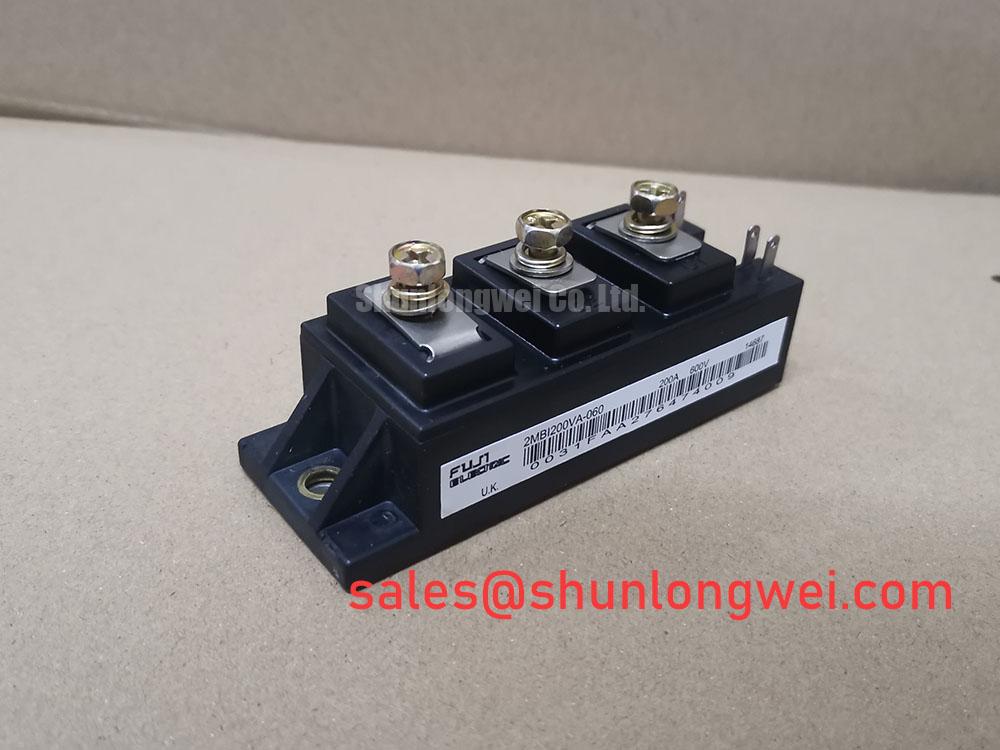
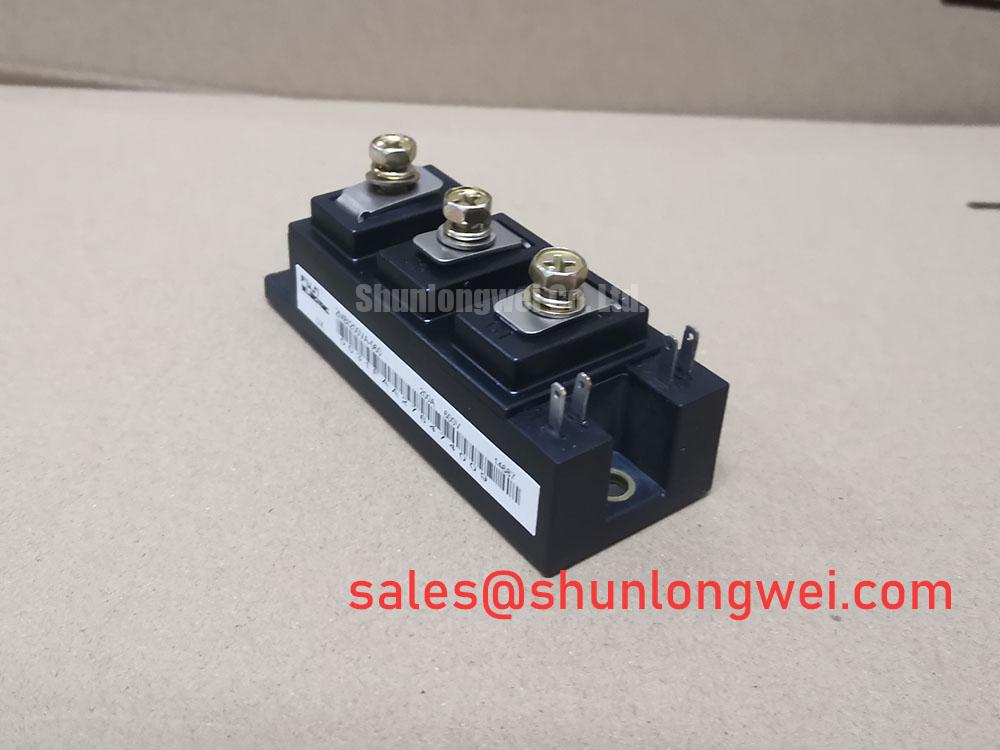
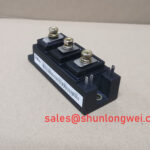
When evaluating the 2MBI200VA-060 for a heavy-duty variable-frequency AC motor drive, check the mounting pattern, terminal arrangement, electrical topology, and cooling interface against the original assembly. The phrase “Fuji Power Module” identifies the package family at a broad level; it does not replace the mechanical drawing or terminal diagram needed for a service fit check.
2MBI200VA-060 Circuit Protection and Switching-Dissipation Assessment
When retrofitting a module into a legacy drive board, review the external turn-on and turn-off gate-resistor networks before energizing the power stage. The resistor values influence switching speed, switching losses, ringing, and the stress seen by the gate-drive circuit. The correct balance depends on the driver, gate-loop layout, DC-link conditions, load, and switching frequency; the 600 V and 200 A ratings do not specify gate-resistor values or guarantee compatibility with an existing board.
Compare the original and replacement circuit diagrams for gate connections, auxiliary terminals, emitter returns, and any separate sense paths. Do not infer terminal functions from package appearance or a similar model number. If the module provides an auxiliary emitter connection in the applicable configuration, route its driver return separately from high-current power paths as directed by the manufacturer’s layout guidance. This helps reduce common-emitter voltage disturbance, but the terminal assignment must be verified from the exact pinout.
Inspect the gate loop for unnecessary area and shared conductor length. Parasitic inductance can interact with gate capacitance and switching current, producing ringing or unwanted gate-voltage excursions. Where a drive shows oscillation, use a suitably configured oscilloscope measurement at the module gate and its reference point, with probing practices that avoid adding significant loop area. Adjustments to external gate resistance should be evaluated against both switching loss and transient behavior rather than chosen from a generic rule.
The Miller interval is relevant because collector-voltage transitions couple through the device’s gate-collector capacitance. If the driver impedance or return path is inadequate, the resulting gate disturbance may increase the risk of unintended turn-on. Review the driver’s sink capability, any Miller clamp or active-clamp provisions actually present in the circuit, and the physical separation of control and power returns. These are system-level design considerations; do not assume that a protection feature is built into this module unless it is stated in the exact device documentation.
Protection review should include the drive’s overcurrent response, desaturation or equivalent detection, soft shutdown behavior, and fault-energy management where those functions exist in the system. A short-circuit withstand time, surge-current rating, transient thermal limit, or junction-temperature recovery window cannot be inferred from the headline current rating. Use the applicable datasheet curves and the drive protection design when evaluating fault behavior. During commissioning or repair, observe the power-stage response with appropriate isolation and measurement equipment, and compare measured peaks with the documented limits.
Fuji Electric’s pages on brake chopper IGBT modules and RC-IGBT modules describe other product categories and circuit roles. They can provide context when reviewing a drive topology, but they do not establish interchangeability with the 2MBI200VA-060. For any candidate installation, compare the exact device ratings, pinout, switching characteristics, thermal requirements, and mechanical drawing with the drive design.