Content last revised on February 9, 2026
AUO B150XG05 V0: A Robust 15.0-inch XGA Display for Industrial Systems
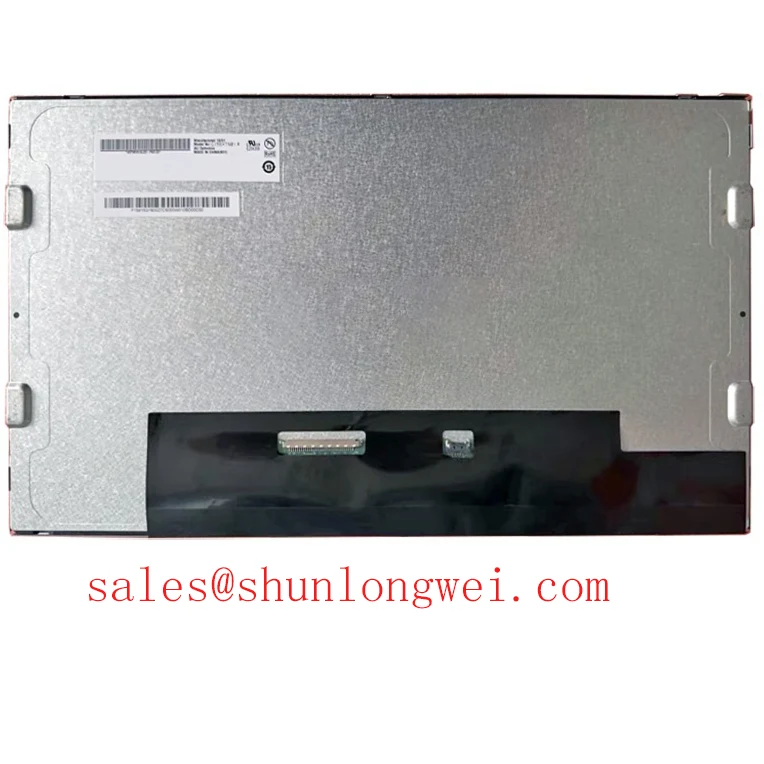
The AUO B150XG05 V0 is a 15.0-inch a-Si TFT-LCD module delivering a classic 1024 x 768 XGA resolution, engineered for longevity and consistent performance in demanding applications. With key specifications of 15.0" | 1024x768 XGA | CCFL Backlight | LVDS Interface, it provides a durable and easily integrable display solution. Its proven design ensures reliable visual output for industrial control systems and legacy equipment retrofits. What is the primary benefit of its standard interface? The LVDS interface ensures straightforward integration with a wide range of industrial motherboards and single-board computers. For industrial HMIs requiring proven XGA resolution with robust environmental tolerance, the B150XG05 offers a reliable and efficient display solution.
Key Parameter Overview
Decoding the Specs for System Integration
The technical specifications of the B150XG05 are tailored for industrial and specialized computing applications where reliability and compatibility are paramount. The panel’s performance is defined by a balance of established and dependable technologies.
| Feature | Specification |
|---|---|
| Screen Size | 15.0 inches |
| Resolution | 1024(RGB)×768, XGA |
| Panel Technology | a-Si TFT-LCD, TN, Normally White, Transmissive |
| Luminance | 280 cd/m² (Typ.) |
| Contrast Ratio | 500:1 (Typ.) |
| Interface Type | LVDS (1 ch, 6-bit) |
| Backlight System | CCFL |
| Supply Voltage | 3.3V (Typ.) |
| Module Weight | 620g (Max.) |
Download the B150XG05 datasheet for detailed specifications and performance curves.
Application Scenarios & Value
Achieving System-Level Reliability in Industrial Environments
The B150XG05 V0 is optimally suited for integration into systems where a long-established, reliable display format is a primary engineering requirement. For an OEM designing a control panel for a Computer Numerical Control (CNC) machine, the challenge is ensuring a clear, stable display that integrates seamlessly with existing industrial computing hardware. The B150XG05 V0's **1024x768 XGA** resolution is a standard in the industrial automation sector, guaranteeing software compatibility without the need for UI redesign. Its use of a standard **LVDS** interface simplifies the electrical connection to embedded systems and single-board computers, significantly reducing design and validation time. This focus on proven technology makes it a strong candidate for next-generation systems as well as for extending the life of field-deployed equipment through component-level upgrades. This panel's characteristics are ideal for applications such as Human-Machine Interfaces (HMI), factory automation equipment, and specialized medical diagnostic displays that prioritize stability over cutting-edge resolution. For designs requiring higher brightness or a more modern LED backlight, the related G150XTN03.0 offers an alternative feature set.
Technical Deep Dive
A Closer Look at Integration and Longevity
The engineering value of the B150XG05 V0 lies in its architecture, which prioritizes backward compatibility and straightforward implementation. The choice of a **1 channel, 6-bit LVDS** interface is a critical design element. Think of the LVDS interface as a universal highway for video data; its standardized nature ensures that the display can "talk" to a vast number of existing controller boards without the need for special translator chips or complex driver development. This is a significant advantage for engineers working on system refreshes or developing new products on established platforms, as it minimizes non-recurring engineering costs and accelerates time-to-market. Furthermore, the panel's design with a CCFL backlight, while a more traditional technology, is well-understood and provides a known performance baseline, which is critical for maintenance and support planning in long-lifecycle industrial products. This design philosophy aligns with the needs of sectors that value operational predictability, a principle detailed in the comparison between industrial and consumer displays.
Frequently Asked Questions (FAQ)
Engineering and Procurement Clarifications
What are the primary benefits of the B150XG05 v0's 1024x768 XGA resolution in industrial applications?
The XGA resolution is a widely adopted standard in the industrial sector. This ensures that most HMI software and legacy graphical interfaces will render correctly without scaling artifacts or the need for costly software redevelopment, making it an ideal choice for both new systems and retrofits.
How does the LVDS interface facilitate system integration?
The Low-Voltage Differential Signaling (LVDS) interface offers excellent noise immunity over short-to-medium distances, which is crucial in electrically noisy industrial environments. Its standardized protocol simplifies driver development and hardware compatibility, allowing for faster integration with a wide variety of industrial motherboards. For a deeper understanding, referring to a resource on the LVDS interface can provide additional context.
Is this panel suitable for replacing older 15-inch displays?
Yes, its standard 15.0-inch form factor, XGA resolution, and common LVDS connector make the B150XG05 V0 a strong candidate for upgrading or repairing older industrial panels, test equipment, and kiosk systems that were designed around these specifications.
What is the significance of the TN (Twisted Nematic) panel type?
TN panels are known for their fast response times, which is beneficial for reducing motion blur in applications displaying moving graphics or data. This technology provides a cost-effective and reliable solution for delivering clear visual information in typical industrial and commercial use cases.
The B150XG05 represents a strategic choice for system designs that prioritize proven technology, interface standardization, and long-term product stability. It provides a robust foundation for a wide array of industrial and commercial display applications where reliability is the most critical metric.