
Content last revised on September 10, 2026
Mitsubishi CM10MD-12H IGBT Module: Engineering Efficiency in Compact CIB Architectures
Product Overview and Engineering Highlights
Streamlining Low-Power Motion Control with Integrated 7-Pack Technology
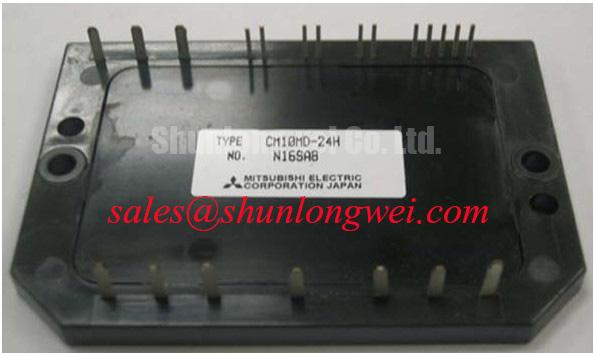
The Mitsubishi CM10MD-12H is a specialized IGBT Module belonging to the Converter-Inverter-Brake (CIB) family, designed specifically for low-power AC servo drives and general-purpose inverters. By integrating a 3-phase converter bridge, a 3-phase inverter, and a dedicated brake circuit into a single compact package, this module serves as a cornerstone for engineers aiming to reduce system footprint while maintaining high switching efficiency. The CM10MD-12H operates at a collector-emitter voltage of 600V and a collector current of 10A, making it a precise fit for 220V class industrial applications. For compact AC servo drives requiring 600V 10A ratings with minimal assembly complexity, the CM10MD-12H is the industry-standard choice.
- UVP Statement: Maximizing power density through an integrated CIB topology that eliminates parasitic inductance between discrete stages.
- Core Specs: 600V | 10A | Vce(sat) 2.4V (Typical).
- Key Benefit 1: Reduces PCB complexity by consolidating 7 IGBTs and a diode bridge.
- Key Benefit 2: Low gate drive power requirements simplify auxiliary power supply design.
What is the primary benefit of the CM10MD-12H integrated structure? It drastically reduces stray inductance and simplifies PCB routing compared to using multiple discrete power components.
Key Parameter Overview
Decoding the Specs for Enhanced Switching Performance
The following technical specifications represent the absolute maximum ratings and electrical characteristics of the CM10MD-12H under standard operating conditions. These parameters are critical for calculating thermal margins and selecting appropriate gate drivers.
| Symbol | Parameter Description | Typical/Max Value |
|---|---|---|
| Vces | Collector-Emitter Voltage (Tj=25°C) | 600V |
| Ic | Collector Current (DC) | 10A |
| Vce(sat) | Collector-Emitter Saturation Voltage (Ic=10A) | 2.4V |
| Ptot | Maximum Power Dissipation (Per IGBT) | 40W |
| Viso | Isolation Voltage (60Hz, AC 1 minute) | 2500V |
| Tj | Operating Junction Temperature | -40 to +150°C |
Download the CM10MD-12H datasheet for detailed specifications and performance curves.
Application Scenarios & Value
Achieving System-Level Benefits in High-Efficiency Inverter Designs
The Mitsubishi CM10MD-12H is engineered to solve the "space vs. performance" dilemma in low-power automation. Engineers often face challenges with thermal management when using discrete components in small enclosures; the CM10MD-12H addresses this by utilizing a high-thermal-conductivity baseplate that ensures uniform heat distribution across all power stages. In AC servo drives, the integration of the brake IGBT allows for controlled deceleration of inductive loads, a critical requirement for precision positioning. This module also finds extensive use in PWM inverters for small fans and pumps where IEC 61800-3 compliance for electromagnetic compatibility is easier to achieve due to the reduced loop area of the internal busbars. While this model is ideal for 10A systems, for those requiring significantly higher power handling, the CM50DY-24H offers 1200V 50A capabilities. For further insights on how these components fit into broader systems, see our guide on IGBT modules in high-efficiency power systems.
Technical Deep Dive
A Closer Look at the Low-Loss Integrated CIB Toplogy
The internal architecture of the CM10MD-12H utilizes Mitsubishi's optimized 3rd generation IGBT technology. One defining feature is the low saturation voltage (Vce(sat)), which minimizes conduction losses during the "on" state. In a Variable Frequency Drive (VFD) application, switching losses often dominate; however, the CM10MD-12H features an optimized gate structure that balances turn-on speed with dv/dt control, helping to suppress noise without requiring oversized snubber circuits. The thermal resistance from junction to case (Rth(j-c)) is tightly controlled, allowing for a smaller heatsink volume. This is a critical factor for engineers designing according to "Green Automation" standards where energy efficiency and material reduction are paramount. Understanding these nuances is essential for effective IGBT selection and long-term reliability in harsh industrial environments.
Frequently Asked Questions
Engineering Insights for Implementation
What is the primary advantage of the CIB configuration in the CM10MD-12H?
The CIB (Converter-Inverter-Brake) configuration provides a complete power stage in one housing. This drastically reduces the number of interconnects, which in turn minimizes parasitic inductance and improves the overall reliability of the motor drive by reducing potential failure points in the power loop.
How does the 2.4V Vce(sat) rating impact the thermal design for a 10A load?
A Vce(sat) of 2.4V at 10A results in approximately 24W of conduction loss per IGBT at a 100% duty cycle. In a typical 3-phase PWM application, the effective losses are lower, but this specific rating allows engineers to calculate the required heatsink Thermal Resistance to keep junction temperatures safely below the 150°C limit during peak operation.
Is a negative gate voltage required for turning off the CM10MD-12H?
While the CM10MD-12H can be operated with a simple 0V/15V gate drive, using a small Negative Gate Voltage (e.g., -5V) is recommended in high-noise environments to prevent parasitic turn-on caused by the Miller effect, especially during high dv/dt switching events in the inverter bridge.
From a strategic perspective, the CM10MD-12H represents a mature, highly reliable solution for the global transition toward decentralized motor control. As industrial systems move toward localized "smart" drives, the ability to integrate full power conversion into space-constrained housings will remain a decisive factor in TCO (Total Cost of Ownership) optimization.