Content last revised on September 10, 2026
EL640.200-UX: High-Performance TFEL Display for Extreme Operating Environments
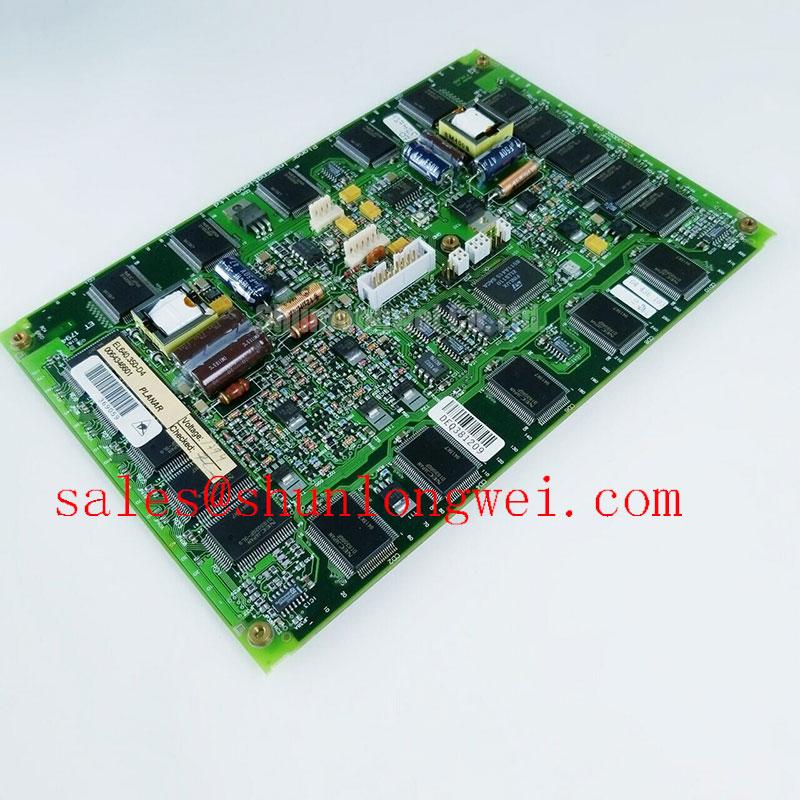
The EL640.200-UX is a rugged 9.6-inch Thin Film Electroluminescent (TFEL) display engineered for unwavering performance in applications where conventional displays fail. Its solid-state design delivers exceptional visual clarity and reliability across extreme temperatures, shock, and vibration. For systems deployed in avionics, military, or heavy industrial settings that demand absolute operational integrity, the EL640.200-UX provides a proven, long-life display solution.
Key Parameter Overview
Decoding the Specs for Environmental Resilience
The technical specifications of the EL640.200-UX are a direct reflection of its purpose: to provide clear, reliable data in the harshest conditions. Unlike standard TFT-LCD panels, which can freeze or suffer from degraded performance, the core TFEL technology ensures consistent operation. The sub-1ms response time is particularly critical, rendering motion and data updates without the smearing or ghosting seen on slower liquid-crystal technologies.
| Parameter | Value |
|---|---|
| Display Technology | Thin Film Electroluminescent (TFEL) |
| Resolution | 640 x 200 pixels |
| Response Time | < 1 ms |
| Viewing Angle | > 160° |
| Typical Contrast Ratio | >40:1 @ 500 lux |
| Active Area | 224.21 x 95.83 mm |
| Interface | 4-bit / 8-bit LCD Type |
Application Scenarios & Value
System-Level Benefits in Mission-Critical HMIs
With its exceptional resilience, the EL640.200-UX is the optimal choice for HMIs in applications where failure is not an option. Consider the challenge of designing a control panel for geological survey equipment used in arctic conditions. Standard LCDs would require heaters to even power on, adding complexity, cost, and a point of failure. The EL640.200-UX, with its wide operating temperature range, functions instantly, providing critical data without delay. Its solid-state construction is inherently resistant to the intense vibration of drilling machinery, a condition that could easily damage the delicate liquid crystal cells and backlight assemblies of other displays. This makes it a cornerstone for building truly resilient, `rugged HMI` systems.
What is the primary benefit of its solid-state design? Unmatched reliability in high-shock and wide-temperature environments. This core strength makes it ideal for systems in aerospace, defense, and demanding industrial automation. While a standard industrial display like the G121XCE-L01 is suitable for controlled factory environments, the EL640.200-UX is specifically engineered for the unpredictable and extreme conditions encountered in the field.
Technical Deep Dive
The Intrinsic Robustness of TFEL Technology
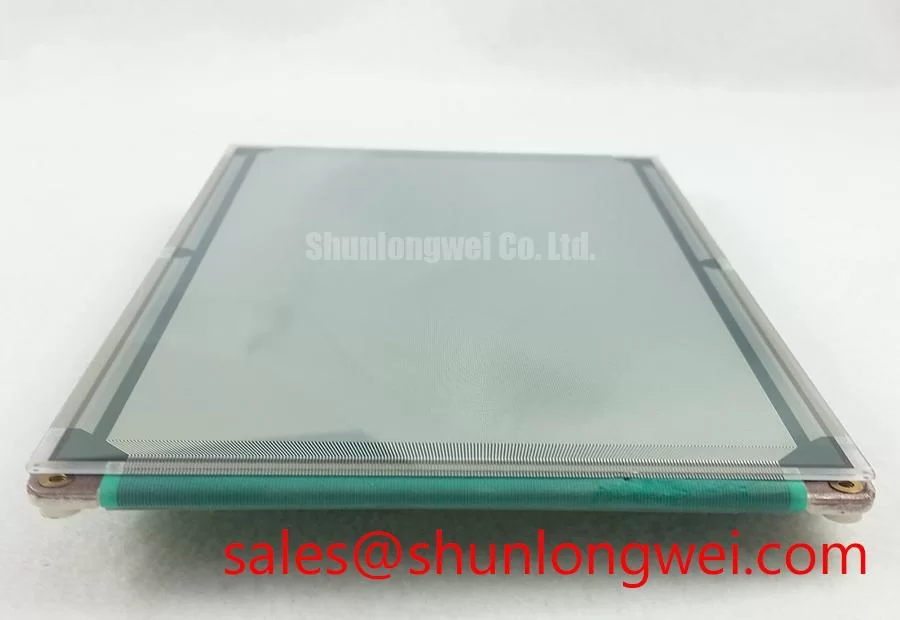
The superior durability of the EL640.200-UX stems directly from its Thin Film Electroluminescent technology. Unlike liquid crystal displays, a TFEL panel is entirely solid-state. It consists of an inorganic phosphor layer sealed between dielectric layers and electrodes on a glass substrate. There is no liquid to freeze or boil, no backlight to fail, and no complex polarizer layers that can degrade with humidity or UV exposure. Think of it like an integrated circuit that emits light; its structure is fundamentally more robust than the layered sandwich of a TFT LCD. When voltage is applied to the row and column matrix, the phosphor at the intersection emits light directly, resulting in an exceptionally fast response time of less than 1 millisecond. This structural simplicity is the key to its long operational life and its ability to withstand shock and vibration that would be catastrophic for other display types.
Frequently Asked Questions (FAQ)
What makes the EL640.200-UX's TFEL technology inherently more rugged than a standard industrial TFT LCD?
The key difference is its solid-state, inorganic construction. TFEL displays lack the liquid crystal fluid and complex layered assemblies (like polarizers and backlights) found in LCDs. This eliminates failure modes related to freezing, boiling, mechanical shock separating layers, or backlight degradation, resulting in a display that is fundamentally more durable in extreme environments.
How does the <1ms response time benefit applications with moving imagery or rapid data updates?
A response time of under 1ms ensures that pixel transitions are virtually instantaneous. For an engineer designing an avionics display or a vehicle-mounted `process control panel`, this means video, scrolling text, and updating gauge readouts appear crisp and free of motion blur or "ghosting." This level of clarity is critical for immediate and accurate interpretation of vital information.
What are the main considerations when interfacing the EL640.200-UX with a modern embedded system?
The EL640.200-UX is designed for straightforward integration using a standard 4-bit or 8-bit LCD-type parallel interface. Engineers should ensure their selected microcontroller or system-on-chip (SoC) has a compatible parallel display controller or sufficient GPIOs to drive the data lines (D0-D3/D7), along with control signals like M, FLM, LP, and CP. The display includes an onboard frame buffer, which simplifies timing and allows compatibility with a wide range of lower-cost video controllers.
Strategic Advantage
Ensuring Long-Term System Viability
Integrating the EL640.200-UX is a strategic decision that prioritizes total cost of ownership (TCO) and system reliability over initial component price. For OEMs building high-value capital equipment intended for a service life of 10-20 years, the longevity of this display is a significant advantage. Its proven durability reduces the likelihood of costly field service calls and display replacements, directly impacting the operational availability and reputation of the final product. More information on this philosophy can be found in our guide to industrial vs. consumer displays and the principles of engineering for extremes.