


Content last revised on September 10, 2026
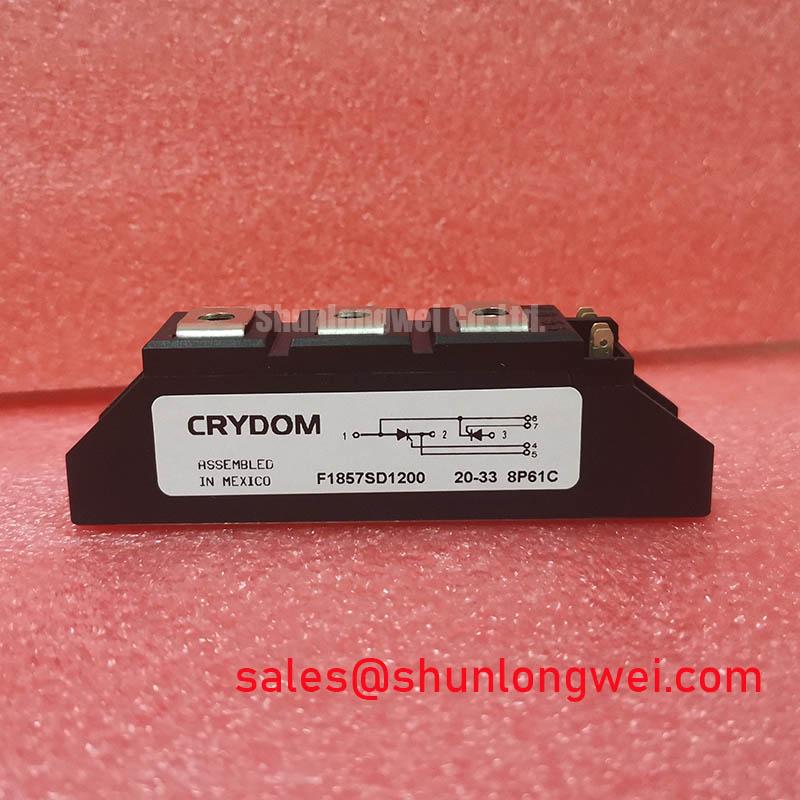
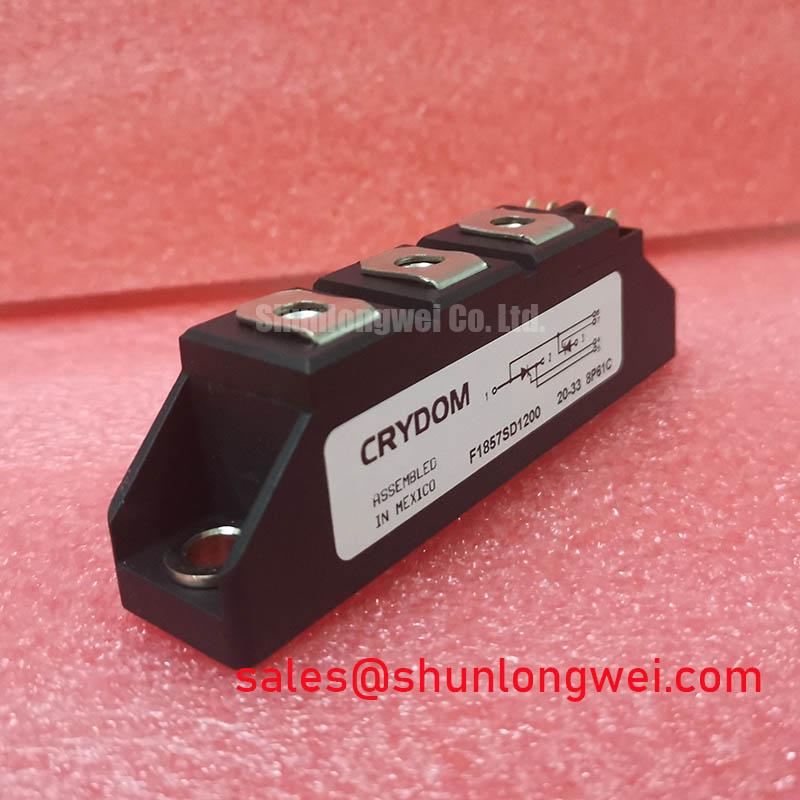
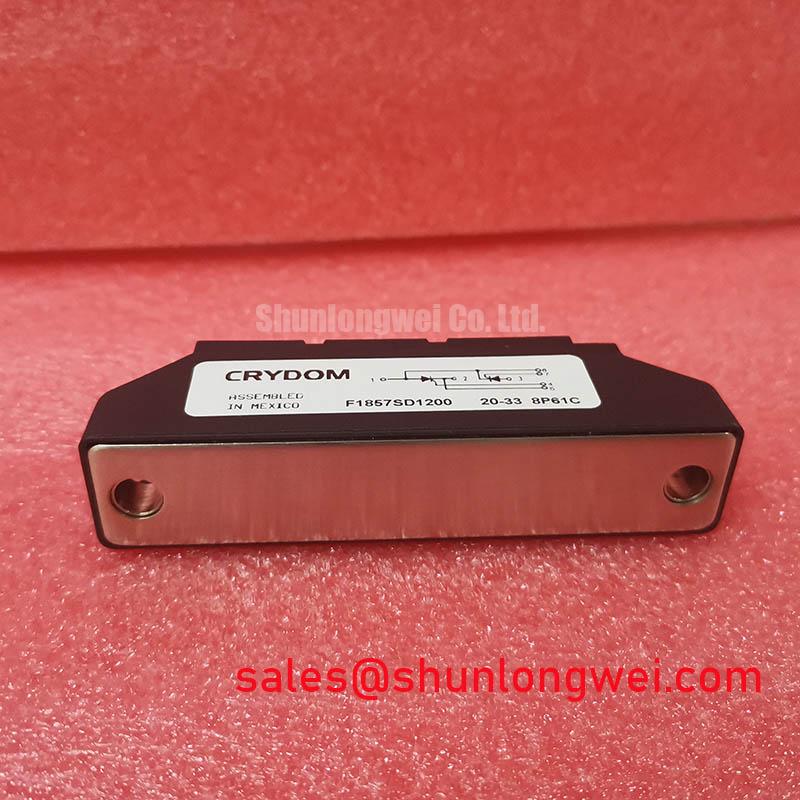
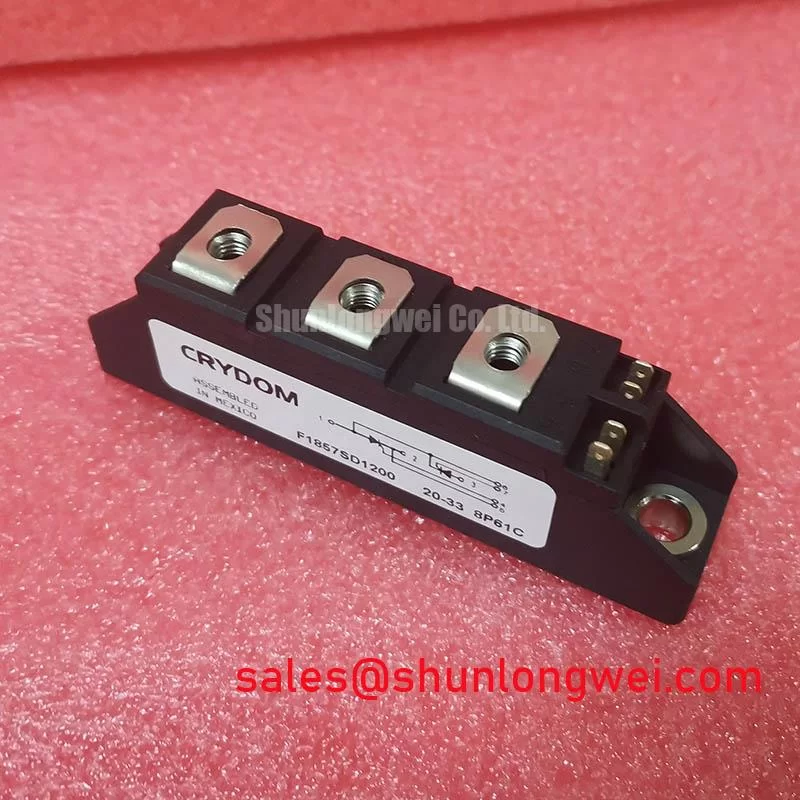
F1857SD1200 Crydom 1200V 55A Power Diode Module
The F1857SD1200 by Crydom (a brand of Sensata Technologies) is a high-performance power diode module designed for robust rectification in industrial power systems. Engineered to provide 1200V peak repetitive reverse voltage and a 55A average forward current, this module excels in maintaining circuit integrity under significant electrical stress. Its Series Diode configuration allows for streamlined integration into bridge circuits and high-voltage DC bus architectures, offering engineers a reliable solution for voltage blocking and power conversion.
UVP Statement: Superior thermal management and high isolation voltage for space-constrained industrial rectification applications.
- Top Specs: 1200V V_RRM | 55A I_F(AV) | 2500 Vrms Isolation.
- Key Benefits: Minimized thermal fatigue via high-density packaging; simplified safety compliance through robust dielectric strength.
- For industrial rectification stages requiring 1200V isolation in a compact footprint, the F1857SD1200 provides an ideal balance of power density and thermal reliability.
Key Parameter Overview
Decoding the Specs for Enhanced Thermal Reliability
The following technical specifications represent the operational boundaries of the F1857SD1200. Understanding these values is critical for calculating heat sink requirements and ensuring the longevity of the power stage.
| Specification Parameter | Official Value | Engineering Significance |
|---|---|---|
| Peak Repetitive Reverse Voltage (V_RRM) | 1200V | Ensures safety margins in 480V and 600V AC line applications. |
| Average Forward Current (I_F(AV)) | 55A | Rated at Tc=85°C, providing high current density in small enclosures. |
| Maximum Forward Voltage Drop (V_F) | 1.35V | Directly influences conduction losses and overall system efficiency. |
| Max. Surge Current (I_FSM) 60Hz | 1500A | Protects against transient inrush and short-circuit conditions. |
| Thermal Resistance (R_thJC) | 0.50 °C/W | Efficient heat transfer from junction to baseplate, reducing derating needs. |
| Isolation Voltage (V_ISOL) | 2500 Vrms | UL-recognized isolation simplifies chassis grounding and safety layout. |
Download the F1857SD1200 datasheet for detailed specifications and performance curves.
Application Scenarios & Value
Achieving System-Level Benefits in High-Efficiency Power Conversion
The F1857SD1200 is frequently deployed in Variable Frequency Drives (VFD) and uninterruptible power supplies (UPS) where input rectification is a critical stage. Engineers often face the challenge of managing heat in compact control cabinets. By utilizing the 0.50 °C/W thermal resistance of this module, designers can optimize their thermal management strategies, potentially reducing the size of the required heatsink.
In Battery Charging Systems for heavy machinery, the high I_FSM rating of 1500A is vital. This surge capability allows the module to withstand the initial charging currents of massive capacitor banks without degradation. For systems requiring even higher current handling, the related SKKD162/16 offers a significantly higher current rating while maintaining similar 1200V blocking capabilities.
What is the primary benefit of its high isolation voltage? It eliminates the need for external insulation barriers between the module and the heatsink, reducing assembly complexity and total cost of ownership (TCO).
Technical Deep Dive
Analyzing Thermal Performance and Mechanical Integrity
The architecture of the F1857SD1200 relies on high-reliability materials that mitigate the effects of coefficient of thermal expansion (CTE) mismatch. Think of the thermal resistance as a "highway" for heat; a lower value like 0.50 °C/W ensures that heat doesn't "traffic jam" at the junction, which would otherwise lead to premature semiconductor failure. This is particularly important in Power Cycling environments, where the load fluctuates frequently, such as in robotic welding or elevator control.
Crydom’s design incorporates a robust baseplate that ensures uniform pressure distribution across the internal semiconductor dies. This mechanical consistency prevents localized hot spots—a common failure mode in lower-quality modules. This level of reliability engineering is what allows the F1857SD1200 to operate within the stringent requirements of IEC 61800-3 for industrial drive systems. Furthermore, the 1200V rating provides a necessary safety buffer against reflected waves and line voltage transients common in harsh electrical environments.
Frequently Asked Questions
How does the R_thJC of 0.50 °C/W directly impact heatsink selection?
A lower R_thJC allows the device to dissipate heat more effectively into the heatsink. For the F1857SD1200, this means you can maintain a lower junction temperature even at the full 55A load, allowing for a smaller heatsink volume or higher ambient temperature operation compared to modules with higher thermal resistance.
What is the advantage of the 2500 Vrms isolation for system integration?
The 2500 Vrms isolation rating allows the F1857SD1200 to be mounted directly onto a common metal heatsink that may be grounded to the chassis. This simplifies the mechanical design and ensures compliance with international safety standards like UL, as the internal live parts are safely isolated from the mounting surface.
Can this module handle 1200V peak transients in a 480V AC system?
Yes. In a 480V AC system, the peak voltage is approximately 678V. The 1200V V_RRM of the F1857SD1200 provides a safety margin of nearly 2x, which is standard practice to protect against inductive spikes and line noise.
Is the series diode configuration suitable for a three-phase bridge?
The "SD" (Series Diode) configuration contains two diodes connected in series with a center tap. To form a full three-phase bridge, three F1857SD1200 modules are typically used, providing a symmetrical and thermally distributed rectification stage.
Strategic consideration of the F1857SD1200 involves evaluating the long-term reliability of the rectification stage against the total system footprint. For engineers prioritizing modularity and thermal efficiency, this Crydom component serves as a foundational building block for high-uptime industrial power electronics.