Content last revised on September 10, 2026
G185XW01 V0: An In-Depth Technical Review of the 18.5-inch Industrial WXGA Display
Engineering Insights for System Integrators
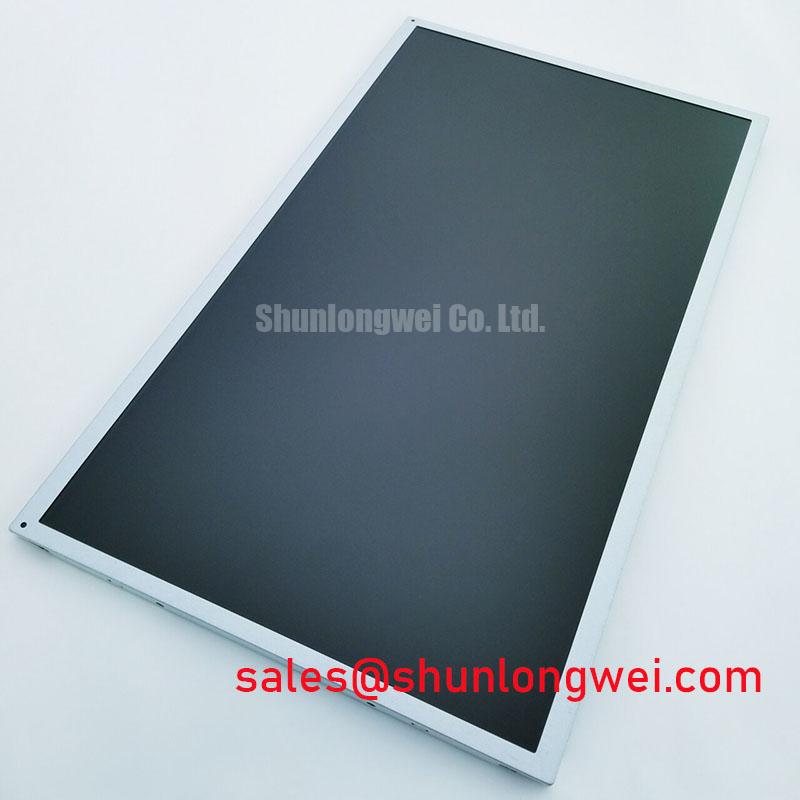
The AUO G185XW01 V0 is an 18.5-inch a-Si TFT-LCD module designed to deliver consistent visual performance in environments where consumer-grade displays falter. This display provides a robust foundation for industrial human-machine interfaces (HMIs), information kiosks, and specialized control systems. Key specifications include: 18.5-inch Diagonal | 1366x768 WXGA | -20 to 70°C Operating Temperature. Its primary engineering benefits are exceptional thermal resilience and enhanced visibility in variable lighting. This module directly addresses the need for a durable display that can be integrated into systems deployed outside of typical climate-controlled office settings. Best fit for industrial control panels requiring proven reliability and a standard 16:9 aspect ratio, the G185XW01 V0 excels where environmental resilience is a non-negotiable design parameter.
Application Scenarios & Value
System-Level Benefits in Industrial and Commercial Deployments
The G185XW01 V0 is engineered for applications that demand higher operational reliability than standard desktop monitors can provide. Its core value lies in its ability to maintain performance across a wide thermal spectrum and in challenging ambient light conditions.
A high-fidelity engineering scenario is the deployment of a supervisory control and data acquisition (SCADA) terminal on a factory floor. In such an environment, ambient temperatures can fluctuate significantly, from cold startups in winter to high heat near machinery in the summer. The G185XW01 V0's wide operating temperature range of -20 to 70°C ensures the display remains operational and reliable without requiring complex and costly localized climate control systems for the HMI enclosure. The anti-glare surface treatment becomes critical here, mitigating reflections from overhead industrial lighting and ensuring that operators can read critical process data accurately and without eye strain, directly impacting both safety and productivity. The standard LVDS interface simplifies connection to a wide range of industrial single-board computers (SBCs) and controllers, reducing integration complexity.
- Industrial Automation: Ideal for HMI panels for machinery control, process monitoring, and factory floor information systems.
- Public Information Kiosks: Suitable for semi-outdoor or indoor kiosks in transportation hubs, retail environments, and ticketing machines where ambient temperatures are not strictly controlled.
- Medical & Test Equipment: Provides a clear, stable display for diagnostic equipment and instrumentation that requires a reliable screen with a standard aspect ratio.
While the G185XW01 V0 offers a versatile WXGA resolution, for systems requiring higher pixel density for detailed schematics or full HD video content, the related G190EAN01.1 provides a 19-inch platform with a 1280x1024 (SXGA) resolution.
Key Parameter Overview
Decoding the Specs for Environmental Resilience
The technical specifications of the G185XW01 V0 are centered on delivering durability and consistent optical performance. Below is a summary of the key metrics that are critical for design-in decisions. The wide operating temperature range is a defining feature. Think of it as the difference between a standard passenger car tire and a dedicated all-weather tire; while the standard tire works well in ideal conditions, the all-weather version is engineered to maintain its integrity and performance in both freezing cold and high heat, ensuring reliability when it matters most. Similarly, this display's thermal range ensures operational dependability across diverse industrial environments.
| Feature | Specification | Engineering Implication |
|---|---|---|
| Screen Size | 18.5 inches | Provides a large, clear viewing area suitable for complex UIs and data visualization. |
| Resolution | 1366(RGB)×768, WXGA | Standard 16:9 aspect ratio, ideal for modern HMI software and video content. |
| Brightness | 300 cd/m² (Typ.) | Sufficient for typical indoor and industrial environments. |
| Viewing Angle | 85/85/80/80 (Typ.)(CR≥10) | Allows for clear off-axis viewing, critical for panels that are not always viewed from a direct-on position. |
| Operating Temperature | -20 ~ 70 °C | Enables deployment in unconditioned environments, reducing system thermal management costs. |
| Storage Temperature | -20 ~ 70 °C | Ensures component stability during transport and storage in non-ideal conditions. |
| Interface Type | LVDS (1 ch, 8-bit), 30 pins Connector | Industry-standard interface ensures compatibility with a broad range of controllers. For a deeper understanding of this interface, see this LVDS application note. |
| Surface Treatment | Anti-Glare, Hard coating (3H) | Improves readability in bright light and adds a layer of physical durability. |
Download the G185XW01 V0 datasheet for detailed specifications and performance curves.
Frequently Asked Questions (FAQ)
How does the -20 to 70°C operating temperature range of the G185XW01 V0 reduce total cost of ownership?
This wide temperature range allows the display to be integrated into systems without requiring auxiliary heating or cooling components within the enclosure. This simplifies the mechanical design, reduces the bill of materials (BOM), lowers power consumption, and minimizes potential points of failure, leading to a lower total cost of ownership over the product's lifecycle.
What is the primary benefit of the G185XW01 V0's anti-glare surface?
Its primary benefit is enhanced readability in industrial or commercial settings with strong overhead or ambient lighting by diffusing reflections that would otherwise obscure the screen.
Is the WXGA (1366x768) resolution sufficient for modern industrial HMI applications?
Yes, for a vast range of applications. WXGA provides a clear and detailed view for most process control diagrams, data readouts, and soft key interfaces. It strikes an effective balance between detail and performance, avoiding the higher data processing and cost overhead of Full HD panels where such resolution is not strictly necessary.
What does the "1 channel, 8-bit" LVDS interface signify for a system designer?
This specifies a common and cost-effective TFT-LCD interface that requires a single LVDS transmitter on the host controller. The 8-bit color depth supports 16.7 million colors, providing rich and accurate color representation for graphical user interfaces. This standard configuration simplifies driver board selection and speeds up the system integration process.
Industry Insights & Strategic Advantage
Meeting the Demand for Robust and Reliable HMIs
The increasing digitalization of industrial processes, often termed Industry 4.0, places greater emphasis on the reliability of the Human-Machine Interface. The HMI is no longer just a display; it is a critical point of control and data interaction. A display failure can lead to significant downtime and potential safety issues. The G185XW01 V0 aligns with this strategic need by offering a component designed for longevity and resilience. By selecting a display with industrial-grade specifications, system designers can extend the mean time between failures (MTBF) of the overall system. This focus on durability is a key differentiator from consumer-grade displays and is a strategic advantage for manufacturers of industrial machinery and control systems who build their brand on reliability and uptime. This product's design philosophy acknowledges that in industrial applications, the long-term operational costs and reliability far outweigh the initial component price, a principle championed by manufacturers like AUO.
Strategic Outlook for System Design
Choosing a display like the G185XW01 V0 is a strategic decision that prioritizes system-level reliability and a lower total cost of ownership. Its robust environmental specifications provide engineers with a reliable building block, de-risking deployment in challenging settings. This allows design teams to focus on software and system-level features rather than on mitigating the failures of a less-suitable component. For projects where operational uptime and long-term performance are paramount, the G185XW01 V0 presents a technically sound and commercially prudent solution, ensuring the user interface remains a dependable asset throughout the system's service life.