

Content last revised on September 10, 2026
F4-100R06KL4: A 600V Four-Pack IGBT Module Engineered for High-Frequency Power Conversion
Driving Efficiency and Compactness in Demanding Inverter and Drive Applications
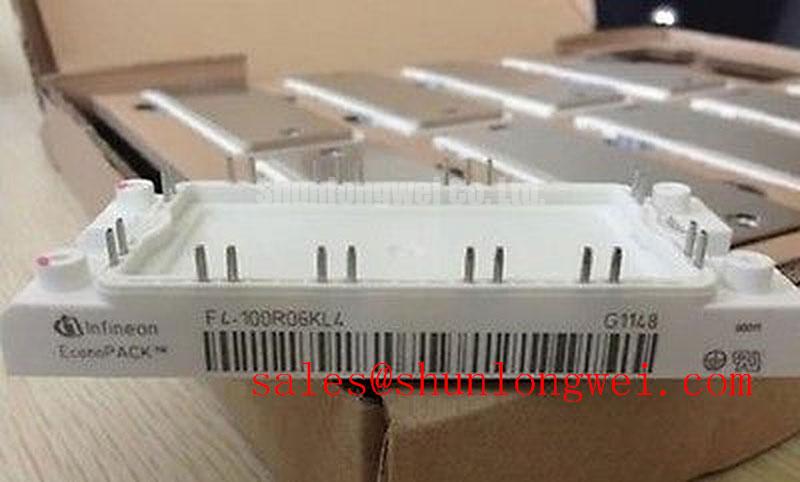
The Infineon F4-100R06KL4 is a 600V, 100A (nominal) IGBT module designed to deliver robust performance and high efficiency in a compact EconoPACK™ 2 package. Featuring a four-pack (H-bridge) configuration, this module provides an integrated solution for power conversion systems. Its architecture, balancing low conduction and switching losses, makes it a strategic component for engineers developing high-frequency motor drives, uninterruptible power supplies (UPS), and solar inverters. For systems requiring higher current handling within a similar package, the related F4-150R06KL4 offers a direct upgrade path.
Key Parameter Overview
Decoding the Specs for Enhanced Thermal Reliability and Switching Performance
The specifications of the F4-100R06KL4 are tailored for applications where thermal management and efficient switching are critical design considerations. The module's low thermal resistance from junction to case (RthJC) is a key enabler for compact heatsink design and improved power density.
| Parameter | Value | Engineering Significance |
|---|---|---|
| Collector-Emitter Voltage (Vces) | 600 V | Provides the necessary voltage margin for 230V to 400V AC line applications, ensuring reliability against voltage transients. |
| Continuous Collector Current @ Tc=80°C (Ic,nom) | 100 A | Defines the nominal current handling capability, suitable for mid-power motor drives and inverters. |
| Collector-Emitter Saturation Voltage @ Ic=100A (VCEsat) | 1.70 V (Typ. @ Tvj=25°C) | A lower VCEsat directly translates to reduced conduction losses, which is critical for overall system efficiency, especially under high load conditions. |
| Total Switching Energy @ Ic=100A (Ets) | 10.5 mJ (Typ. @ Tvj=125°C) | Quantifies the energy lost during turn-on and turn-off. This low value is essential for maintaining high efficiency in applications with high switching frequencies. |
| Thermal Resistance, Junction-to-Case (RthJC) | 0.27 K/W (per IGBT) | Indicates superior heat transfer from the silicon die to the module's baseplate, simplifying thermal management and enhancing long-term reliability. |
| Maximum Junction Temperature (Tvj max) | 150°C | Specifies the maximum allowable operating temperature of the semiconductor, providing a robust operational ceiling for industrial environments. |
Application Scenarios & Value
Achieving System-Level Benefits in High-Frequency Power Conversion
The F4-100R06KL4 is engineered to address the core challenges in modern power electronics: efficiency, power density, and reliability. Its integrated H-bridge topology is particularly advantageous in applications that require bidirectional power flow or full four-quadrant control of AC motors.
- Variable Frequency Drives (VFDs): In a VFD, precise motor control is paramount. The module's low switching energy (Ets) of 10.5 mJ allows for higher PWM frequencies. This results in smoother motor operation, reduced audible noise, and smaller external filter components, directly contributing to a more compact and cost-effective system design.
- Solar Inverters: For grid-tied solar applications, maximizing energy harvest is the primary goal. The low collector-emitter saturation voltage (VCEsat) minimizes conduction losses during the DC-AC conversion process. This improvement in efficiency means more of the power generated by the photovoltaic panels is delivered to the grid, enhancing the overall return on investment of the solar installation.
- Uninterruptible Power Supply (UPS) Systems: Reliability is non-negotiable in UPS systems. The F4-100R06KL4's robust thermal design, evidenced by its low RthJC, ensures efficient heat dissipation during both charging and inverter modes. This prevents overheating under critical load conditions, safeguarding the system's availability and extending its operational lifespan. The integrated four-pack configuration also simplifies the inverter stage design compared to using discrete components.
Frequently Asked Questions (FAQ)
What is the primary benefit of the F4-100R06KL4's Four-Pack (H-Bridge) configuration?
The primary benefit is system integration. It combines four IGBTs and four freewheeling diodes in a single, thermally optimized package, significantly simplifying the layout and assembly of a full-bridge inverter stage for applications like motor drives or UPS systems.
How does the typical VCEsat of 1.70V impact system design?
A low VCEsat directly reduces the power dissipated as heat during conduction (P = VCEsat * Ic). For a design engineer, this means less heat to manage, allowing for a smaller, lower-cost heatsink or the ability to operate at higher output currents within the same thermal envelope, thereby increasing power density.
What does the Total Switching Energy (Ets) of 10.5 mJ signify for high-frequency applications?
Switching energy is the power lost each time an IGBT turns on or off. A lower Ets is crucial for efficiency in systems with high switching frequencies (e.g., >10 kHz). Imagine it like a tiny, fixed "energy tax" for every switching event. The lower the tax, the less power is wasted, which is why this module is well-suited for high-frequency inverter designs where these events happen thousands of times per second.
Is the EconoPACK™ 2 package suitable for industrial environments?
Yes, the EconoPACK™ 2 is a well-established industrial standard package known for its reliability. It features screw terminals for secure connections and an isolated baseplate that simplifies mounting onto a heatsink while ensuring electrical isolation, making it a robust choice for demanding industrial settings.
Strategic Integration for Future-Ready Systems
The F4-100R06KL4 is more than just a set of specifications; it is a strategic component that aligns with key industry trends. As regulations push for higher efficiency standards and market demands for smaller, more powerful equipment intensify, the need for thermally efficient and low-loss modules becomes critical. This device provides the foundational building block for creating next-generation power converters that are not only compliant but also competitive, offering a clear path to reducing both system size and operational energy costs.